

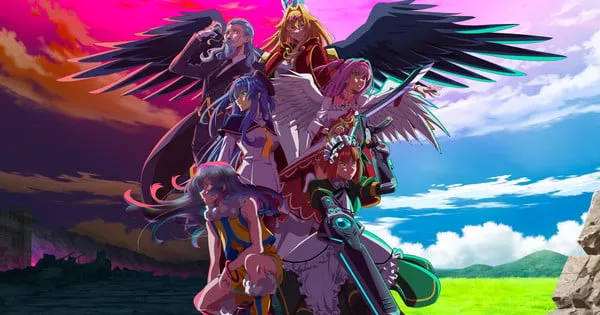
A Wild Last Boss Appeared! is an isekai anime that arrived with an ambitious proposal in the current landscape. The protagonist, a legendary player of an MMO called Exgate Online, wakes up in the body of his most powerful female character, Lufas Maphaahl, but with a major twist: he was transported to the same game world, only 200 years in the future. In early 2026, the series immediately stands out for its premise that flips the common logic of stories about a character trapped in a game, focusing on the discovery of a world that has changed profoundly after the fall of the legend he himself embodies.
Why is this concept so relevant now? The answer lies in market saturation. While many productions follow repetitive formulas, this anime seeks a fresh take by investigating the long-term consequences of a player's actions in the game. Thus, the plot unfolds like a mystery, with Lufas (or rather, the player inside her) trying to understand what happened over those two centuries and why her legacy is viewed in such a complex way. The great triumph, therefore, is not just arriving in a new world, but immersing in a past that the protagonist himself helped create, without being fully aware of it.
A Rich World with Poor Characters
The series' strongest point, without a doubt, is its world-building. The narrative masterfully explores the contrast between the golden age under Lufas's rule and the current state of the kingdom, all without overwhelming the viewer with excessive information. Thanks to the protagonist also learning, the exposition occurs organically and intriguingly. However, all that care disappears when it comes to the cast. Although Lufas is a fascinating figure in flashbacks, the version guiding the story—the player in her body—oscillates between bland and unpleasant attitudes, especially in his interactions with women. The rest of the main group, in turn, consists of flat, underdeveloped archetypes, which ends up harming scenes that could have been much more impactful.
Technical Excellence Saves the Experience
Despite the narrative flaws, the technical production is a spectacle in itself. The animation is consistently fantastic, with vast landscapes, colorful hair dancing in the wind, and a starry sky that create truly stunning visuals. This visual polish is the soul of the fight scenes, which are explosive and full of energy, greatly enhancing the entertainment. Additionally, the soundtrack features memorable themes, and Ami Koshimizu's vocal performance as Lufas—a confused figure who must maintain an intimidating facade—is flawless. Therefore, even with weak characters, the art direction and fluid animation are more than enough reasons to keep watching the series.
In a landscape where video game isekais are common, A Wild Last Boss Appeared! stands out for its ambition and high-level technical execution. Its concepts about identity and legacy are refreshing and promise deeper development in the second season, already confirmed. Thus, the series shapes up as a visually unmissable adventure, but one that requires patience from the viewer with its unengaging cast. For fans of the genre seeking breathtaking animation, it's well worth watching, keeping expectations in check for the human aspect of the story.