

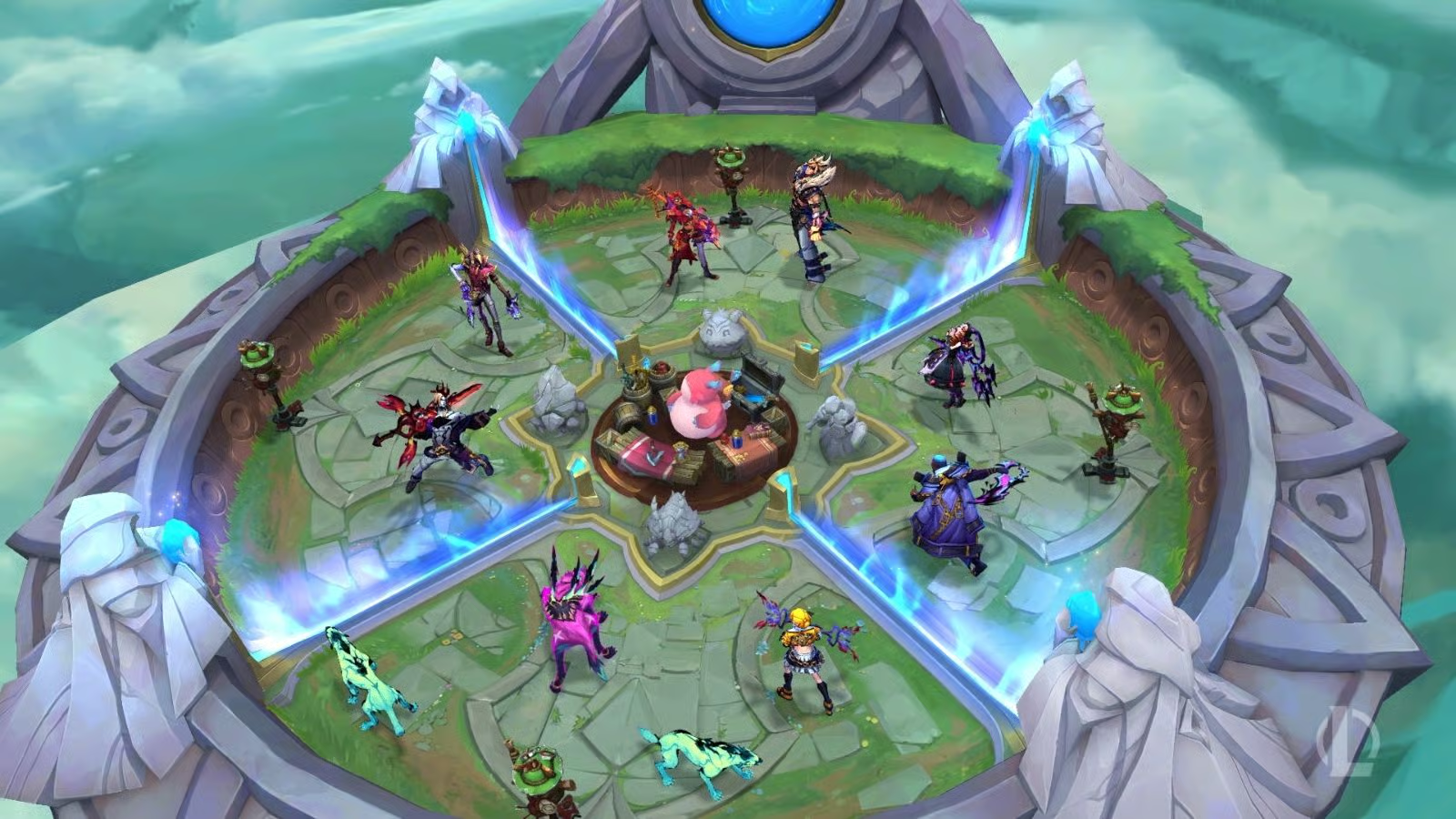
The Arena mode is League of Legends' 2v2 format: four duos drop into an arena that shrinks each round, fighting until only one team remains. Along the way, each round delivers augments — modifiers that change the rules of engagement — and a downed partner can return to combat via revive. No towers, no minions, and no prolonged farming: it's pure survival in short rounds.
What is Arena Mode?
Arena was born as a Riot Games experiment outside of Summoner's Rift and has returned in revamped versions, featuring new visuals, updated augments, and a special item per match. The concept is straightforward: instead of a 5v5 that often exceeds 30 minutes, you play 2 versus 2 in 15 to 20-minute matches, with almost immediate combat.
Each match brings together four duos. In each round, teams face off in pairs; the loser loses a heart, and the duo that depletes their heart reserve is eliminated — the last one standing wins. It's the ideal format for those looking to test duo compositions that the Rift rarely allows, to play with a friend without relying on eight other people, and to practice damage trading mechanics at an accelerated pace. For more content like this, follow our games coverage.
How It Works
More important than memorizing champion names is understanding Arena's three core mechanics: rounds, augments, and revives. These are what determine the winner in this mode.
Rounds
Each round pairs the surviving duos, and the confrontation takes place on a map smaller than any lane on the Rift. The duo that loses the engagement loses a heart; without hearts, they are eliminated. The play area also shrinks as the match progresses — the classic ring of fire — forcing teams to meet sooner and turning the end of the match into controlled chaos.
Augments
At the end of each round, each player chooses an augment from the options offered by the match. Augments can boost stats, modify abilities, or even create new rules for the engagement — and the combination chosen by the duo defines the team's playstyle: a duo stacking damage augments becomes a burst team, while another prioritizing healing turns into a sustain composition. In addition to these, rounds provide gold and item choices, so the build evolves alongside the strategy.
Revive
When a partner falls, they aren't necessarily out of the round: there's a revive area on the map, and by staying on it for a few seconds, the ally returns to combat — usually once per round. The catch is that the area is contested: the enemy can occupy it or punish anyone trying to revive in the middle of the fight. This risk ensures that every round has genuine comebacks until the very last second.
Tier List by Archetype
Important notice: the list below is by archetype, not by champion. The Arena meta changes with every patch — what's strong today might weaken with the next update — so specific champion rankings become outdated within weeks. Therefore, no position here is a final verdict: it's a starting point. Check the updated meta in the game client before forming your duo. The rapid pace of changes is part of the mode's charm — and one of the most talked-about aspects of gaming pop culture.
In general terms of format, archetypes perform as follows:
- Tier S — Duelists and Tanks: Overall, duelists and durable champions dominate the Arena meta because the mode rewards those who win direct confrontations.
- Tier A — Control: Strong when the duo works together, turning the shrinking map into a zoning advantage.
- Tier B — Pure Support/Utility: On average, appears less as a protagonist but sustains attrition compositions — and can climb tiers depending on the patch.
Duelists
Duelist champions are those who win damage trades on equal footing: high mobility, focused damage, and some sustain resource. In Arena, they shine because rounds start at close range and fights are decided in seconds — there's no time for elaborate ambushes or farming until strong. Mobility advantage is golden on a shrinking map: the duelist chooses when to enter and exit the fray.
Control
The control archetype uses stuns, slows, and zoning areas to dictate the pace of the engagement. This style becomes stronger as the arena shrinks: with less room to escape, good zoning turns the map into a trap. The caveat is that control alone doesn't kill anyone — it needs a partner who can convert the vulnerability window into damage. In coordinated duos, however, it's one of the most consistent archetypes.
Tanks
Tanks survive the initial burst damage of a round and prolong the fight until the opponent makes a mistake. In Arena, where everyone gets augments and items, the ability to absorb the first combo and keep fighting is immensely valuable: while the tank holds, the partner racks up damage, and the enemy duo expends their own resources. Tank compositions also punish burst teams — if the first combo doesn't kill, the round turns into an attrition battle in favor of whoever can take more damage.
Support/Utility
The support and utility archetype provides healing, shields, and buffs that multiply the partner's value. In long rounds, sustain is key: the duo that returns to combat with more health wins the next trade. The weakness is the lack of self-damage — a support without a damage-dealing partner becomes a team that merely prolongs defeat. Therefore, it's a duo archetype: rarely a solo protagonist, almost always decisive in attrition compositions.
Best Duos
More than individual champions, Arena rewards role synergy. Duos that cover each other's weaknesses win more rounds than two damage dealers fighting for the same resources.
Damage + Control
The classic combination: control locks down the target, and damage converts the window into an elimination. In Arena, where combat starts up close, a good stun followed by the partner's burst can resolve the round in seconds — and reduces the risk of prolonged damage trades, where control alone loses its edge. It requires communication but offers the highest ceiling for quick matches.
Damage + Tank
The tank holds the front line and absorbs the initial combo; the damage dealer stays alive to rack up damage and clear the round. This is the most forgiving composition for mistakes: even if the opposing duo plays the first few seconds better, the tank prolongs the fight until the carry takes over. A good choice for those new to the mode.
Tank + Sustain
Duos that don't die: while the tank absorbs damage and sustain restores health, the round drags on until the fire ring shrinks and the opponent is forced to attack at a disadvantage. The trade-off is pace: the match takes longer, and accumulated enemy damage augments can break the strategy. Works best with duos who know their own playstyle.
Want to dive deeper into mechanics and champion lore? The Revista Pixel games hub features profiles and articles from the League of Legends universe and beyond.
Frequently Asked Questions
Is Arena a ranked mode?
Queue configurations change between seasons: in some periods, Arena is available with its own ranked queue; in others, it's just a normal queue. The configuration for each period is announced in the official client and in the patch notes — it's worth checking before queuing up.
How many augments do I choose per match?
Generally, one choice per round from the options offered by the match — and each player makes their own choices. The exact set of options and the frequency of choices vary by patch, so it's best to keep an eye on what's rotating in the mode.
How does revive work?
When downed in combat, a partner can return to the game by staying in the map's revive area for a few seconds, usually once per round. The area is contested: if the enemy controls it, the rescue can be costly — which turns every fall into a tactical decision.
Does the tier list change every patch?
Yes. Riot frequently adjusts champions, augments, and items, and the Arena meta moves along with them. That's why this guide is intentionally generic — for updated rankings, check the meta in the game client and the official patch notes.
For official information about the mode, rotation schedule, and patch notes, visit the official League of Legends website.