Is You Can See Everything a Documentary or Fiction?
Published on · Updated on
Nathan Fielder and Lance Oppenheim's A24 film mixes real footage from Elizabeth Holmes's final days of freedom with reconstructions starring Amanda Seyfried.
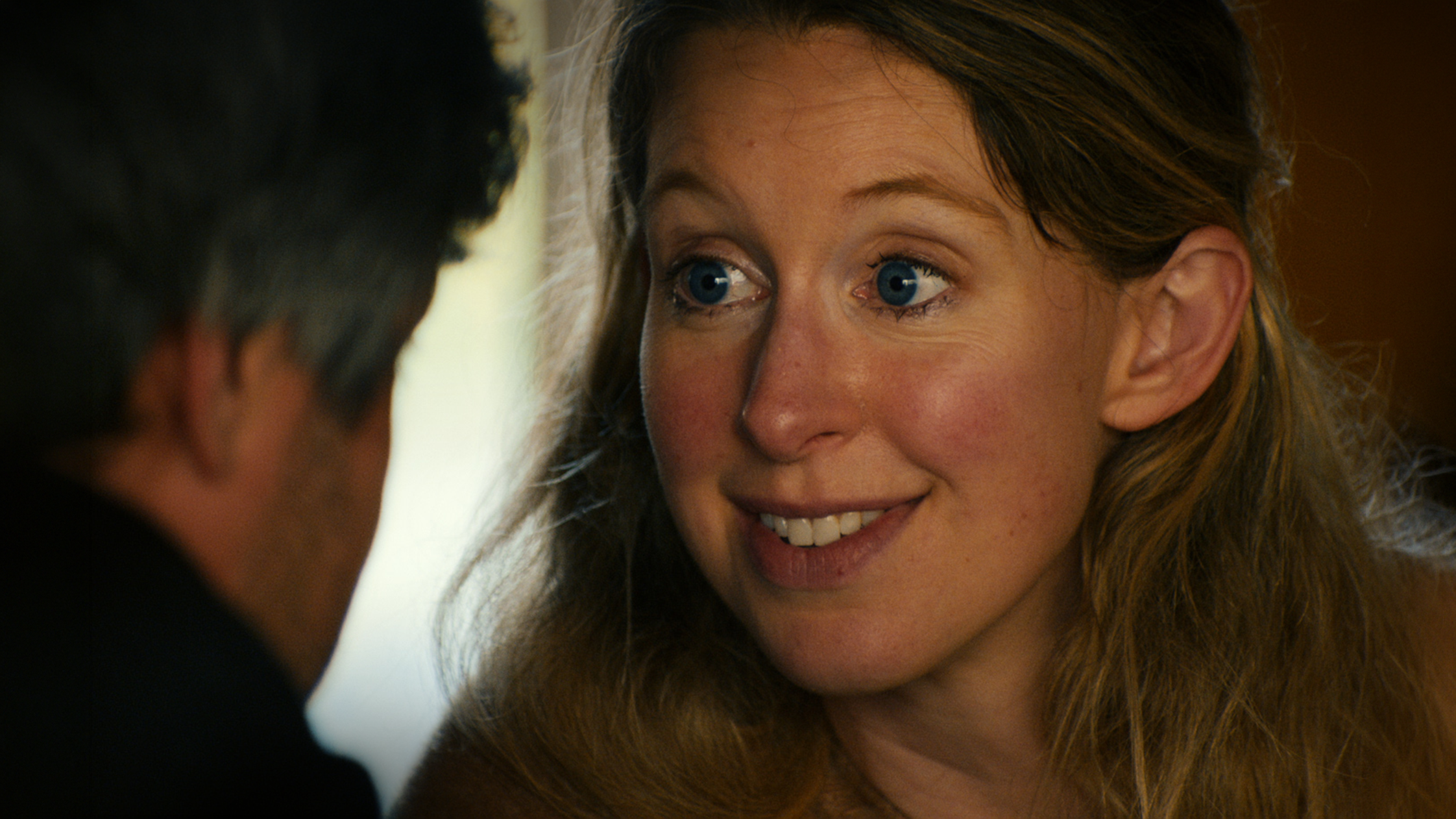
You Can See Everything is a documentary — one that borrows fiction's tools to reconstruct what it could not film. The A24 release directed by Nathan Fielder and Lance Oppenheim follows Theranos founder Elizabeth Holmes through the 34 days before she reported to prison in 2023, using real footage shot inside the beach house she shared with her partner, Billy Evans, and their two young children. Holmes appears as herself. Actress Amanda Seyfried, who played her in the Hulu series The Dropout, appears in staged scenes that recreate private conversations the cameras never captured.
The confusion over the film's format is not an accident. It is the engine of the movie. Fielder, whose work on Nathan for You and The Rehearsal repeatedly blurs reality and performance, was invited by Holmes and Evans to document their family life before her sentence began. The 174-minute result premiered as a secret screening at the Telluride Film Festival on September 6, 2026, became an unlikely box-office phenomenon in the United States and opens in Brazilian theaters on November 26 through Sony Pictures.
Documentary or fiction? The short answer
The film is officially a documentary. That is how it is listed in the catalogue of the 50th São Paulo International Film Festival, where it closed the program on October 29, and how A24 presents it: a production about the final days of freedom of one of Silicon Valley's most controversial founders. Its structure, however, is far removed from a classic observational documentary.
Critics have taken to calling it a meta-documentary or a documentary-fiction hybrid. The label fits because the film operates on two distinct layers. The first is raw record: cameras following Holmes at home, conversations with Fielder, her farewell to the family and her arrival at the federal prison camp in Bryan, Texas. The second is reconstruction, with actors, recreated dialogue and situations that took place without witnesses — and that the film chooses to stage rather than simply describe.
What the film does not do is invent a plot about Theranos. The central facts of the blood-testing company, Holmes's fraud conviction and her prison sentence are real and verifiable. Fiction enters as form, not as a substitute for events.
| Original title | You Can See Everything |
| Brazilian title | Tudo Pode Ser Visto |
| Directors | Nathan Fielder and Lance Oppenheim |
| Production | A24, Blow Out Productions and To Be Formed |
| Running time | 174 minutes (2h54) |
| World premiere | September 6, 2026, at the Telluride Film Festival |
| U.S. release | October 16, 2026 |
| Brazil release | November 26, 2026, via Sony Pictures |
| Declared genre | Documentary, with dramatized reconstructions |
What is real in You Can See Everything
The foundation of the film is an invitation from the couple themselves. In April 2023, a little over a month before Holmes was due to surrender to serve her sentence for defrauding investors, she and Evans allowed a film crew to live with them in a rented beach house in Del Mar, California. A24 gave the directors the freedom to walk away if nothing interesting emerged, with no deadline and no obligation to deliver a finished film.
What emerged was 34 days of obsessive documentation. According to the directors, the production moved to three cameras and two small crews, with no more than four people inside the house at a time, shooting up to 16 hours a day. One wide lens covered the whole house; the other two could stay wide or zoom in on a face at the exact moment of a reaction. The goal was to keep Holmes and Evans from knowing what interested the crew — because the crew often did not know either.
Some moments are unmistakably real: Fielder asking Holmes whether she lied about Theranos technology and getting a flat denial; the screening of The Dropout for Holmes, who asks to stop watching; the conversation about the Abbott and Costello routine "Who's on First?", which she says she finds funny and later admits she does not understand. The family routine, her departure for prison and the return to filming two years later, when Fielder follows Evans's new company Haemanthus, are also genuine footage.
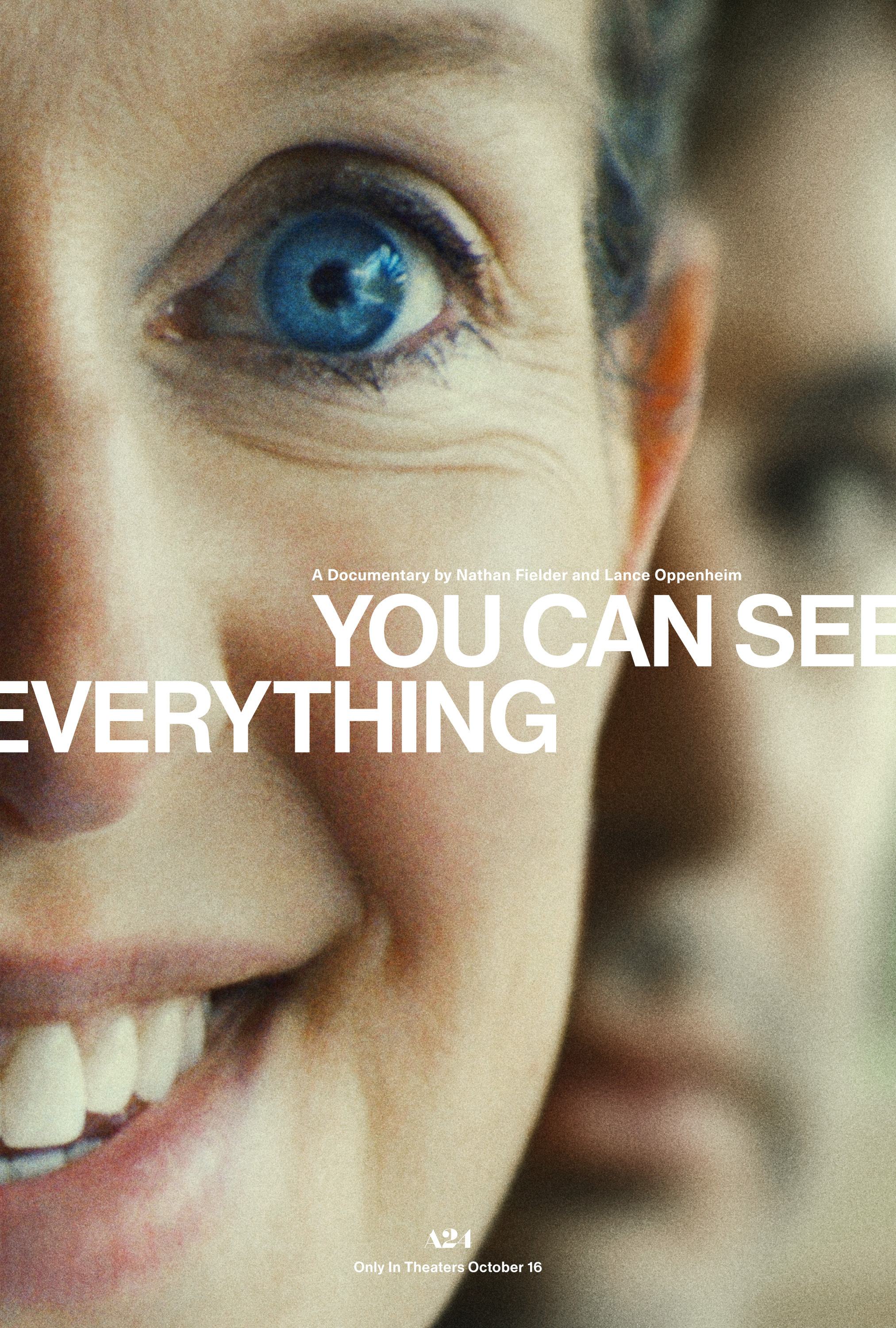
What is staged — and why
The turn comes roughly halfway through. With Holmes in prison and no access to interview her, Fielder calls Amanda Seyfried to discuss the footage. The actress had won an Emmy for playing Holmes in Hulu's The Dropout and agrees to return to the role. From then on, she performs in reconstructions of conversations the directors could not film, opposite Christopher Abbott as Billy Evans.
One sequence recreates a private negotiation between Fielder, Oppenheim and A24 executives that took place before shooting began. In it, Evans is said to have asked for a share of the documentary's profits while Holmes tended to their child in another room. Another reconstruction stages Fielder's prison visit. The film itself says the dialogue was assembled from Fielder's account and transcripts, and Seyfried appears variously as the actress, as Holmes and as herself reading the script and reacting to it.
This device is what makes viewers ask where documentation ends and invention begins. The film's own answer is uncomfortable: the reconstructions never pretend to be anything else. They are announced, discussed and challenged on screen. The effect is less "this is exactly what happened" and more "this is what the filmmakers concluded happened — and you are free to doubt it."
"We don't know what the story is. But we want to see what happens."
Why the format confuses so many viewers
Part of the confusion comes from the directors' careers. Fielder built his reputation on situations where the line between real and arranged is deliberately fuzzy. Lance Oppenheim came from documentary, with films such as Some Kind of Heaven, but shares a taste for staging that exposes the theatricality of everyday life. Pairing them with Elizabeth Holmes — a woman convicted of selling technology that did not work — sounds, at first glance, like a punchline waiting to happen.
The film turns that suspicion into its subject. Holmes chose a comedian famous for fictional scams to clean up her image after a real one? Fielder asks the question on camera. The answer is never entirely satisfying, and that is where the movie finds its best material: the impossibility of knowing whether Holmes is sincere, performing or simply believing her own version.
Variety critic Owen Gleiberman captured the unease directly:
"It's just about the furthest thing from a 'pure' documentary you've ever seen. That's part of its appeal — it's a one-of-a-kind reality-TV-as-hangout-movie psychodrama circus."
In the same review, Gleiberman writes that the film "overlaps reality, performance, greed, deception, and mental illness, bringing you into the head-spinning vortex where they all meet."
There is also a layer of ambiguity around Fielder himself. On screen, Seyfried questions whether he is softening Holmes in the reconstructions out of sympathy. The film does not resolve the doubt. It ends with a New York Times quote attributed to Holmes about The Dropout — "They're not playing me. They're playing a character I created" — which she says was misquoted. The reporter stands by the quote. One word changes everything, and the film leaves the dispute open.
What the film says about Elizabeth Holmes
Anyone expecting a complete retelling of the Theranos case will be disappointed on purpose. The film does not reconstruct the company's timeline, detail the faulty blood tests or interview the journalists who exposed the fraud. Its focus is Holmes in the present: the woman who, on the eve of prison, still insists she never lied.
Holmes became famous for promising comprehensive lab tests from a few drops of blood. Theranos was once valued at $9 billion and attracted investors including Rupert Murdoch and Larry Ellison, along with a board featuring George Shultz, Henry Kissinger and James Mattis. Investigations showed the technology did not work as advertised. In 2022, she was convicted of defrauding investors and sentenced to more than 11 years in prison.
In the documentary, she insists the Theranos device could run any test and that the problem was the chemistry, still under development. The explanation is technically hollow but revealing: Holmes treats a technology that did not exist as an engineering detail to be sorted out. The Abbott and Costello scene serves as a demonstration. She cannot explain the joke because she seems to need words to mean only what she decides they mean.
The film also exposes Billy Evans's role in managing her image. He appears licensing Holmes's likeness for billboards and an AI model, posting in her name on X and saying he holds power of attorney over her affairs while she is incarcerated. Their relationship becomes the film's second axis, at times eclipsing Theranos itself.
That choice has drawn important criticism. Theranos whistleblower Tyler Shultz praised the film's artistic merit but pointed to omissions: the device Holmes shows Fielder was not the rudimentary prototype that led to her conviction but an incomplete prototype of a future product; Holmes had been living at a $125 million estate during her trial; and she had refused to show audited financial statements to investors. In his view, the documentary creates enough doubt to suggest Holmes might not have been lying — something the facts of the case do not support.

Box office, reviews and release dates
The film became an unlikely phenomenon for a nearly three-hour documentary. Made for a reported $7 million, it had grossed $86.5 million worldwide as of November 13, according to Box Office Mojo and The Numbers. Its U.S. and Canadian opening weekend brought in $15.6 million, the second-best debut ever for a non-musical documentary behind Fahrenheit 9/11. In its third weekend it reached No. 1 at the domestic box office.
Critical reception matched the popular success. On Rotten Tomatoes, the film holds a 96% approval rating from 226 reviews with an average score of 9.30/10. On Metacritic, it has a score of 97 out of 100 from 42 critics, indicating "universal acclaim." On November 8, it dominated the Critics' Choice Documentary Awards, winning Best Documentary Feature, Best Director, Best Cinematography, Best Editing and Best Score.
Its cultural footprint extended beyond theaters. Viewership of The Dropout rose 186% after the release, and Saturday Night Live parodied the film on November 6 with a sketch titled Dru Can See Everything. Halloween costumes inspired by Fielder and Holmes spread online, and look-alike contests were held in New York and Los Angeles.
Release dates vary by market: Australia and New Zealand on November 12, the United Kingdom and Ireland on November 20, and Brazil on November 26, where it closed the 50th São Paulo International Film Festival and tickets went on presale on November 12. No streaming date has been announced.
For viewers who enjoy documentaries that interrogate their own status, it is worth comparing the film with other recent titles that turned nonfiction into a pop event, such as The Fall of El Mayo and Russell Brand: Open Secret. Neither, however, comes close to the degree of acknowledged staging that Fielder and Oppenheim put on screen.
Is it worth watching?
Yes, provided viewers accept the proposition: You Can See Everything is neither a lecture on Theranos nor a traditional documentary about a businesswoman's downfall. It is a film about the impossibility of knowing what is going on inside another person's head — and about how much the entertainment industry profits from that uncertainty. Holmes is the center, but the real subject is the gaze of the person filming, the person watching and the person choosing to believe.
The hybrid format is neither a flaw nor a marketing trick: it is the argument. The real footage exists and forms the backbone. The reconstructions with Amanda Seyfried exist and are identified as reconstructions. Between one layer and the other, the film builds the question in its title. You can see everything. Understanding is another matter.
Official trailer: A24 released a preview of You Can See Everything featuring footage from the Del Mar house and the conversations between Holmes and Fielder.
Watch the trailer on YouTube ↗The official trailer, released by A24, previews the film's tone: tight cameras, long silences and the tension between Holmes's warmth and Fielder's questions. For more film coverage from Revista Pixel, visit the film section.
Primary sources: A24's official film page; 50th São Paulo International Film Festival listing; Variety review; The Guardian review; Deadline's interview with the directors; NPR report.