
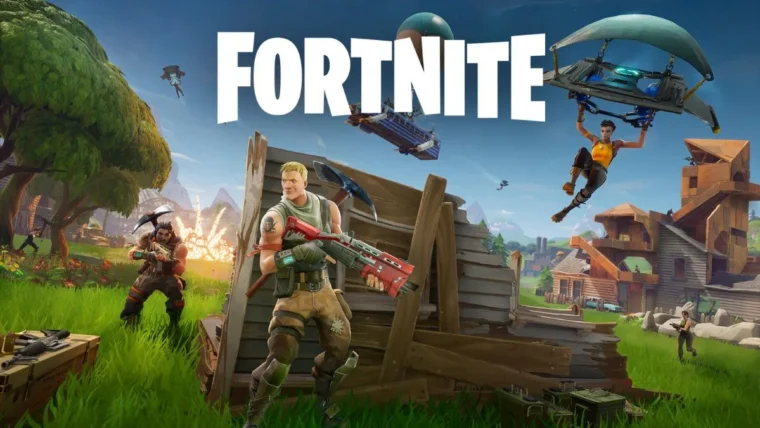
Fortnite, Epic Games’ battle royale phenomenon, not only dominates the online gaming scene in 2026 but also completes an impressive journey since its quiet beginnings. The question “when was Fortnite released?” has a layered answer, starting officially on September 26, 2017, for PC, Xbox One, and PlayStation 4. However, the story is more complex, as the game was born from a paid cooperative project called Save the World, launched in early access two months earlier. Leading this revolution is Epic Games, the company that redirected its efforts upon realizing the explosive potential of the free mode, transforming a title into a global entertainment platform. This matters because, in January 2026, Fortnite stands as one of the most influential games in the world, a rare case of longevity in an extremely competitive genre.
The evolution since launch is a case study. The Battle Royale mode, which drove its success, was developed in just two months by an internal team. As a result, it not only surpassed the game that inspired it, PlayerUnknown’s Battlegrounds, but also redefined the games-as-a-service model. Thanks to a winning formula of seasons, pop collaborations, and constant technical innovation in the Unreal Engine, the game built a loyal player base. In this way, what began as an experiment became an ecosystem with modes such as Creative, Rocket Racing, and Fortnite Festival, keeping the title always fresh and at the center of conversation.
The mobile saga and the Save the World legacy
Fortnite’s arrival on mobile was a chapter of its own, marked by bold and controversial strategies. The game reached iOS in March 2018, proving that console-grade experiences had a place on mobile devices. However, its journey on Apple’s platform suffered a significant setback in 2020, due to an epic legal battle between Epic Games and the Cupertino giant. On Android, meanwhile, Epic initially chose distribution outside the Google Play Store, which confused players. Only in 2020 did the title arrive on the official store, in an attempt to fight malicious clones. Meanwhile, the Save the World mode, whose initial packs cost between R$ 200 and R$ 750, never became free as planned. Epic Games redirected all of its resources to the overwhelming success of Battle Royale, leaving the PvE mode as a legacy for its founders.
Today, in 2026, Fortnite is an established universe. With more than eight years behind it, it defies the logic of live-service games, which often lose relevance within a few years. Epic Games keeps feeding the platform with new content, ensuring that the phenomenon born in 2017 keeps surprising. The remaining question is no longer when it began, but how much longer it will keep reinventing the future of online gaming.
💬 Comentários (0)
Deixe sua teoria ou opinião sobre esta matéria.
Nenhum comentário por enquanto. Seja o primeiro a comentar!