
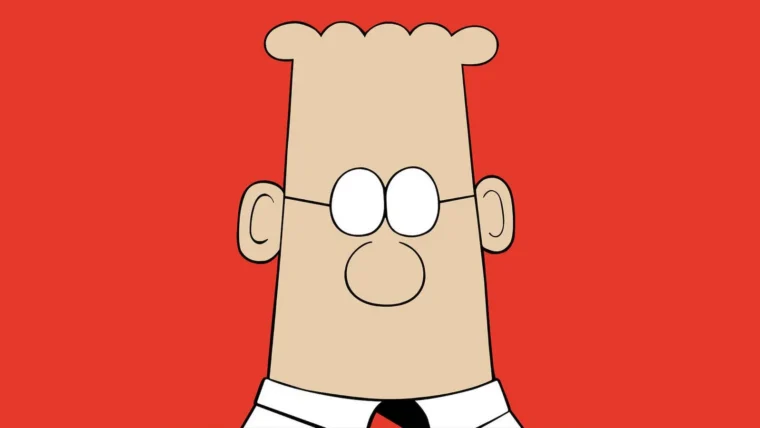
The world of comics and pop culture has lost one of its most influential names. Scott Adams, the creator of the iconic comic strip Dilbert, died on Wednesday, January 14, 2026, after an intense battle with metastatic prostate cancer. At 68, Adams had publicly confirmed the seriousness of his illness early last year, saying he expected to leave this world sometime in the summer. His death therefore closes a remarkable chapter for fans who followed his biting satires of corporate life for decades.
What happened, in effect, was the loss of an icon who shaped office humor for generations. That is why the news was immediately picked up by trade publications such as Variety. Adams’s relevance is undeniable, as Dilbert ran weekly in hundreds of newspapers and became a true cultural phenomenon. His passing is thus not only that of a cartoonist, but of a perceptive chronicler of the absurdity of modern corporate life.
Following his diagnosis, Adams opened up to fans about the disease. “I have the same cancer that Joe Biden has,” he said in an official statement, referring to the American president. “I also have prostate cancer that has spread to my bones.” Despite that, he kept his project alive and, since March 2023, had relaunched the strips as “Dilbert Reborn” on an online subscription platform, after being dropped from distribution in many U.S. newspapers over controversial remarks made on his show.
From programmer to comics legend
Scott Adams’s journey is a classic example of how personal experience feeds art. Before becoming a full-time cartoonist, he worked at a bank and as a computer programmer at Pacific Bell. It was precisely that life among hallways and cubicles that gave birth to Dilbert, his most famous character. Launched in 1986, the strip quickly captured the spirit of the times and, by 1994, was already published in more than 400 newspapers. Thanks to that overwhelming success, Adams left his conventional job in 1995 to devote himself solely to comics.
Yet his legacy goes far beyond newspaper pages. Dilbert came to life as an animated TV series, which ran for two seasons and even earned Emmy nominations. That adaptation is currently available to stream in the Netflix catalog. In addition, the character became synonymous with sharp criticism of the workplace, earning Adams major awards such as the National Cartoonists Society’s Reuben Award in 1997. In other words, he established a genre of humor all his own that still resonates today.
The future of the Dilbert universe, now in the hands of his team and school, remains an open question. Even so, the vast body of work already produced — from books such as “The Dilbert Principle” to the digital strips — ensures that his sarcasm and unique vision will live on. For Brazilian audiences, accustomed to enjoying his humor in both the comics and the series, the loss is significant. Adams’s work thus endures as a timeless testament to the dilemmas, frustrations, and absurdities we all face at work at some point.
💬 Comentários (0)
Deixe sua teoria ou opinião sobre esta matéria.
Nenhum comentário por enquanto. Seja o primeiro a comentar!