
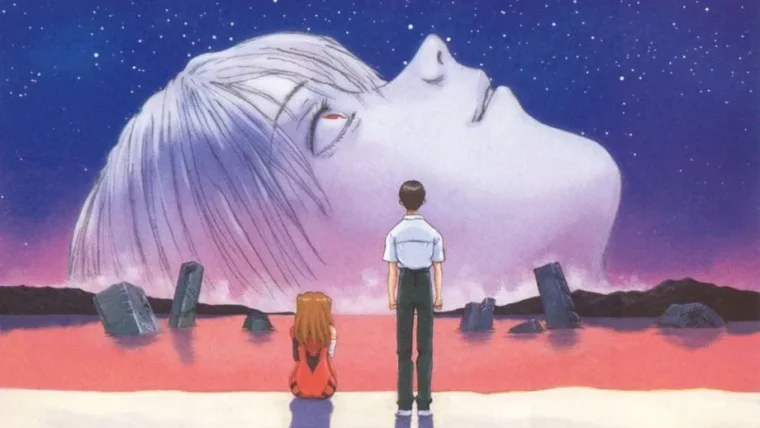
*The End of Evangelion* (1997) is not just a film; it is a cultural event that completely changed the idea of what an anime ending could be. Imagine a tsunami breaking through every barrier — that is what this film did.
Released as an alternate ending to the TV series *Neon Genesis Evangelion*, directed by Hideaki Anno and Kazuya Tsurumaki, the work sparked heated debate from its release and still divides opinions today. It was an unbelievable commercial success, grossing ¥1.45 billion in Japan in just a few months. Despite some early criticism, it earned its place in animation history, voted one of the 100 greatest animated films of all time by *Time Out* magazine. Its impact is so great that it won awards such as the 1997 Animage Anime Grand Prix and the Japan Academy Prize for Highest Public Sensation of the Year.
## A Fresh Look at the Ending
The film plays like a reworked version of the TV series’ final two episodes, episodes many viewers did not understand, or even rejected. The production was a real roller coaster, with delays and struggles around Hideaki Anno’s mental health, which ironically contributed to the emotional intensity and complexity of the result. The animation, by Gainax and Production I.G., is stunning, and the direction by Anno and Tsurumaki conveys the characters’ anguish with a force rarely seen.
## An Intense Journey
*The End of Evangelion* has two parts, “Air” and “Sincerely Yours,” which portray Shinji Ikari’s psychological collapse and the end of the fight against the secret organization SEELE in a far more intense way. While the series leaves many interpretations open, the film expands and intensifies the conflict, culminating in an attack on Tokyo-3 and an epic battle between Asuka and the Mass Production Evas. The film confronts us with complex issues such as trauma, depression, and the search for meaning, culminating in Shinji’s crucial decision: to reject Human Instrumentality, a kind of utopia that erases individuality. The ending, with Shinji on the beach beside a living Asuka, in a sea of LCL (the liquid filling the series’ sea), leaves its meaning ambiguous, fueling debate about what happened.
## A Contested but Undeniable Legacy
Opinions about the film are sharply divided. Its animation, direction, and emotional impact earn praise, but its obscure religious symbolism and the abstract nature of some scenes sparked controversy. Even so, its influence on animation and cinema is undeniable, a bold work of art that explores complex themes with great daring. Its availability across many formats, including Laserdisc, VHS, DVD, and Blu-ray, with special editions, proves its importance in pop culture. *The End of Evangelion* remains a provocative, disturbing film and, for many, a perfect and unforgettable conclusion to the *Neon Genesis Evangelion* saga.
💬 Comentários (0)
Deixe sua teoria ou opinião sobre esta matéria.
Nenhum comentário por enquanto. Seja o primeiro a comentar!