The Expanse: Why 'Remember the Cant' Defined Hard Sci-Fi
Published on · Updated on
The destruction of the Canterbury established the scientific realism of The Expanse, turning a desperate protest slogan into a monumental sci-fi rallying cry.
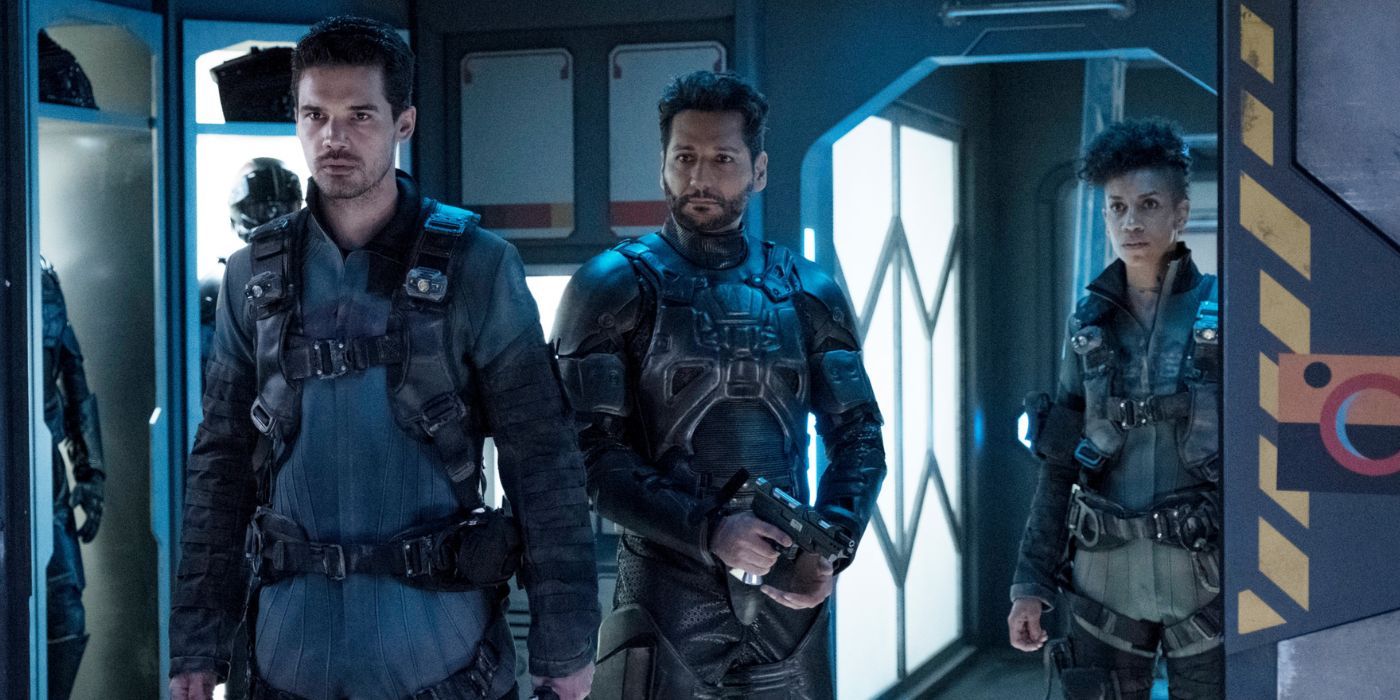
Over a decade after its pilot episode debuted on television, The Expanse stands as an undeniable benchmark in modern science fiction storytelling. Adapted from the acclaimed book series penned by James S.A. Corey (the pen name of collaborative authors Daniel Abraham and Ty Franck), the production set unprecedented standards for literary fidelity, demonstrating how rigorous Newtonian astrophysics and grounded geopolitical tensions can elevate television drama. At the emotional epicenter of this enduring legacy lies a concise three-word phrase that transformed sudden catastrophe into systemic revolution: "Remember the Cant".
The phrase originates in the final sequence of the premiere, when the colossal ice-hauler spaceship Canterbury is pulverized by nuclear torpedoes launched from an undetectable stealth warship. That unprovoked strike abruptly ruptured the delicate Cold War equilibrium maintained across the solar system between the United Nations of Earth, the Martian Congressional Republic Navy (MCRN), and the exploited laborers of the Asteroid Belt, represented by the Outer Planets Alliance (OPA). For audiences invested in high-caliber television and prestige streaming narratives, this brutal ambush was not merely a convenient plot device; it established the very political architecture of the entire saga.
The anatomy of a catalyst: how a desperate broadcast ignited a system-wide war
Unlike stereotypical proactive space commanders, James Holden (portrayed with compelling vulnerability by Steven Strait) begins his journey as an intensely reluctant officer devoid of political ambition. Having received a dishonorable discharge from the UN Navy, Holden sought nothing more than quiet anonymity running mundane ice transport routes between Saturn's rings and Ceres Station. However, when the Canterbury detects an unauthorized distress beacon from the derelict vessel Scopuli, his moral compass compels him to log the call and initiate an inspection.
What appeared to be a straightforward rescue mission proved to be a lethal ambush orchestrated by hidden geopolitical factions. While the shuttle crew inspected the beacon aboard the Knight, their home ship was vaporized in seconds, instantly killing dozens of working-class crewmates. Facing oxygen depletion and immediate execution in deep space, Holden made an impulsive decision: he recorded a video transmission detailing the ambush, naming Martian military technology found in the bait, and broadcast it on all emergency frequencies.
"My name is James Holden. The Canterbury water hauler was just destroyed by an unidentified warship utilizing advanced military tech. We did not provoke them; we were regular workers."
Holden's tactical calculation was straightforward survival insurance: if Martian or mercenary forces destroyed their tiny shuttle, the solar system would know who to blame. The geopolitical aftermath, however, spun wildly beyond his control. The video spread like wildfire across communication arrays from Ceres to Eros, crystallizing generations of simmering fury among Belters who had long endured economic subjugation under Earth and Mars.
Birth of a resistance slogan: the cultural reclamation of 'Remember the Cant'
Within hours, the affectionate nickname of the lost hauler — "the Cant" — became the unifying rallying cry of the OPA. Stencils bearing Holden's face and the phrase "Remember the Cant" were spray-painted across cargo docks and habitat bulkheads. To the working-class Belters who endured contaminated air and water rationing, the destruction of an unarmed civilian freighter symbolized the total disregard planetary superpowers held for human labor.
The series brilliantly deconstructs the conventional savior trope. Holden never sought martyrdom or armed rebellion, nor did he endorse extremist violence. By showing how his honest whistleblowing was co-opted into a weapon of war, the storytelling confronts viewers with the unpredictable gravity of communication in an interconnected world, as highlighted in retrospective coverage by CBR.
Hard science versus space fantasy: physics driving cinematic drama
What cemented the Canterbury incident as an enduring television milestone was its unflinching adherence to scientific plausibility. Where conventional space operas rely on artificial gravity plating, deflector shields, and convenient warp drives, The Expanse built its suspense on Newton's laws of motion and brutal thermodynamic constraints.
To reverse course, the vessel had to perform a punishing flip-and-burn maneuver, rotating 180 degrees and firing thrusters against momentum while crew members injected high-g medical stimulants ('the juice') to prevent vascular collapse. In the vacuum of space, combat is terrifyingly quiet; kinetic railgun rounds and torpedoes slice through unpressurized bulkheads, requiring combatants to remain suited to survive hull breaches.
| Story Element | Conventional Space Opera | Scientific Realism in The Expanse |
|---|---|---|
| Shipboard Gravity | Fictional anti-gravity deck plating | Continuous engine acceleration or centrifugal spin |
| Vacuum Engagements | Roaring sound effects and airplane banks | Absolute silence, vector thrusters, kinetic munitions |
| Signal Transmission | Instantaneous sub-space communication | Realistic light-speed transmission delays |
| Human Physiological Cost | Characters unaffected by extreme velocity | Bone density loss, stroke risk under extreme G-forces |
The accidental founding of the Rocinante crew
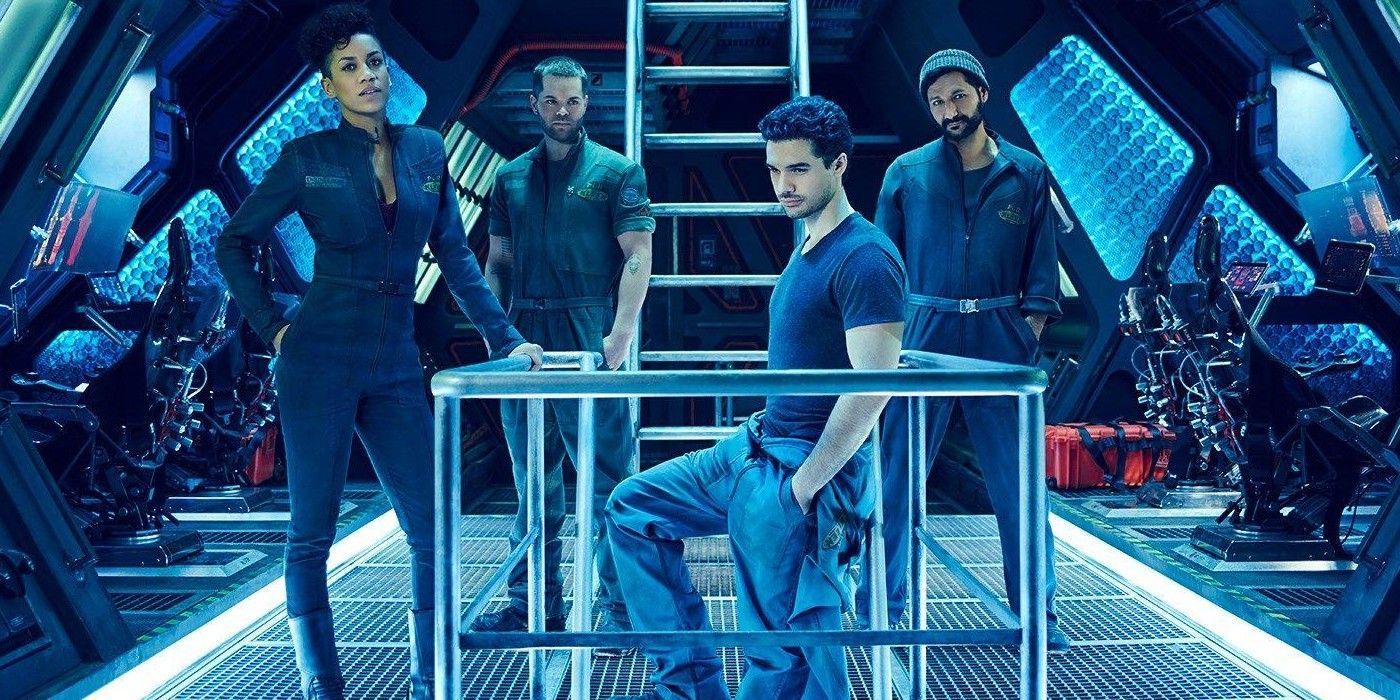
The Canterbury tragedy also served as the crucible that united four individuals who would have never bonded in everyday life. Pragmatic mechanic Amos Burton (Wes Chatham), shaped by violent survival on Baltimore's streets, relied entirely on the moral judgment of brilliant Belter engineer Naomi Nagata (Dominique Tipper). Alongside Martian pilot Alex Kamal (Cas Anvar), who sought redemption after walking away from military service, these loners were forced into survival mode.
Trapped inside the damaged shuttle and subsequently taking command of the Martian corvette Tachi — renamed the Rocinante — this makeshift unit formed an enduring family under relentless pressure. Their dynamic felt earned because it was forged through mutual vulnerability, ethical disagreements, and collective grief.
A timeless television milestone in contemporary streaming
Following its cancellation by Syfy after season three, the show was rescued by Amazon following a passionate fan-led campaign supported by industry champions and prominent creators. Concluding with six cohesive seasons and maintaining an exceptional 95% critical rating on Rotten Tomatoes, the series remains celebrated alongside the greatest speculative dramas ever produced.
More than a decade after its premiere, the memory of the Canterbury continues to resonate because it encapsulates what hard science fiction does best: confronting human frailties against the unforgiving canvas of the cosmos with unwavering authenticity. When enthusiasts proclaim "Remember the Cant", they honor television crafted with unmatched vision, intelligence, and humanity.