Is 'The Duchess' Based on a True Story? The Real Georgiana
Published on · Updated on
Saul Dibb's 2008 film adapts Amanda Foreman's biography of Georgiana Spencer, the Duchess of Devonshire whose life still fuels Bridgerton comparisons.
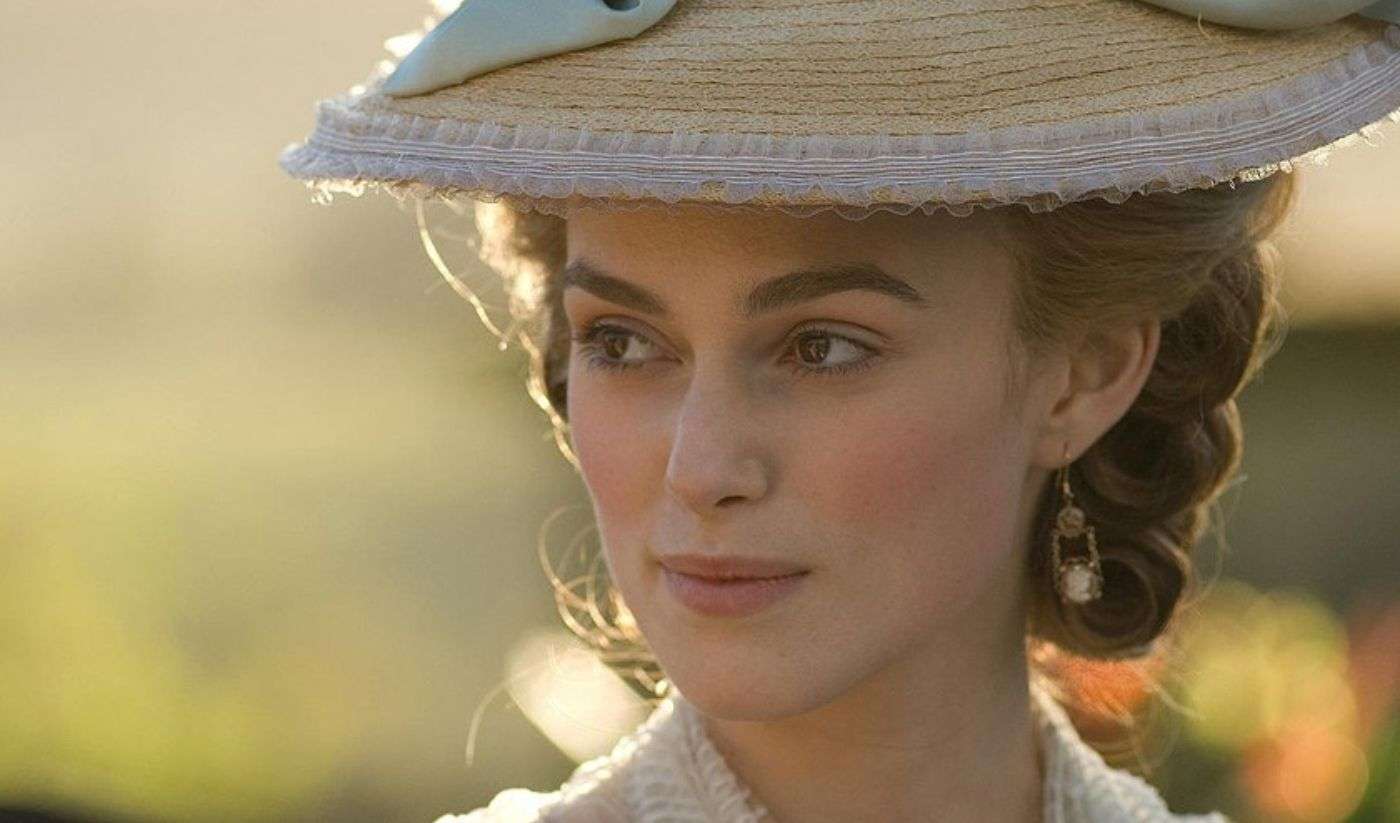
“The Duchess” is based on a true story: the life of Georgiana Spencer Cavendish (1757–1806), Duchess of Devonshire, one of the most closely watched women in eighteenth-century England. The 2008 film, directed by Saul Dibb and starring Keira Knightley, is now streaming on Prime Video and has resurfaced among period-drama fans for a simple reason: Georgiana’s story — an arranged marriage, a love triangle involving her best friend and a forbidden romance with a future prime minister — echoes Bridgerton and Queen Charlotte. The difference is that, in this case, almost all of it actually happened.
The screenplay did not come from an invented novel or a generic period series. It was adapted from the biography Georgiana, Duchess of Devonshire, published in 1998 by historian Amanda Foreman after years of research in the Cavendish family archives. That documentary foundation explains why the film gets the central facts right — and why, when it errs, the mistake usually lies in compressed timelines rather than in invented plot.
Where the screenplay of “The Duchess” comes from
The film’s origin is bibliographic, not fictional. Amanda Foreman began the project as a history dissertation and turned the research into the book that put Georgiana back at the centre of debates about the British aristocracy. The screenplay was written by Jeffrey Hatcher, Anders Thomas Jensen and Dibb himself — a trio that had to condense more than four decades of a life into 110 minutes.
The British production was mounted by Qwerty Films with Magnolia Mae Films, backed by BBC Films, France’s Pathé and Italy’s BIM Distribuzione, and distributed in the United States by Paramount Vantage. Before Dibb took over, the project had been linked to Danish director Susanne Bier, who left. Shooting took place at Twickenham Studios and at real aristocratic locations, including Chatsworth House, the historic seat of the Dukes of Devonshire, as well as Bath, Holkham Hall, Kedleston Hall, Somerset House and the Old Royal Naval College in Greenwich.
“A chance to take a character from late childhood — she’s married at 17 — into full adulthood, 10 years later.”
One correction is worth making, because it circulates widely in recommendation pieces: Foreman’s book is a biography, not a novel. Some promotional texts call it a “bestselling novel”, which blurs the nature of the source. The film dramatises private conversations and scenes that no archive records, but the skeleton of events comes from documents, letters and newspapers of the period.
Who was Georgiana, the Duchess of Devonshire
Georgiana was born on 7 June 1757 at Althorp, the Spencer family seat, and died on 30 March 1806, aged 48, at Devonshire House in London. The eldest daughter of John Spencer, 1st Earl Spencer, she married William Cavendish, 5th Duke of Devonshire in June 1774. He was nine years her senior and one of the richest men in the country. The ceremony took place days before she turned 17.
The marriage was brilliant on paper and unhappy in practice. The Duke was reserved, spent his evenings at card tables and had affairs throughout the union. Georgiana gave birth to two daughters — Georgiana Dorothy in 1783 and Harriet Elizabeth in 1785 — before the long-demanded male heir, William George Spencer, arrived in 1790. The pressure for a son, depicted bluntly in the film, was real and defined an aristocratic wife’s social worth.
In 1782, in Bath, Georgiana met Lady Elizabeth Foster, known as Bess, who had separated from her husband and lost custody of her children. Georgiana invited her to live with the couple. The Duke and Bess became lovers, and the household of three became public enough to scandalise the court. Bess had two children with the Duke, Caroline Rosalie and Augustus Clifford, and married him three years after Georgiana’s death, becoming Duchess of Devonshire herself.
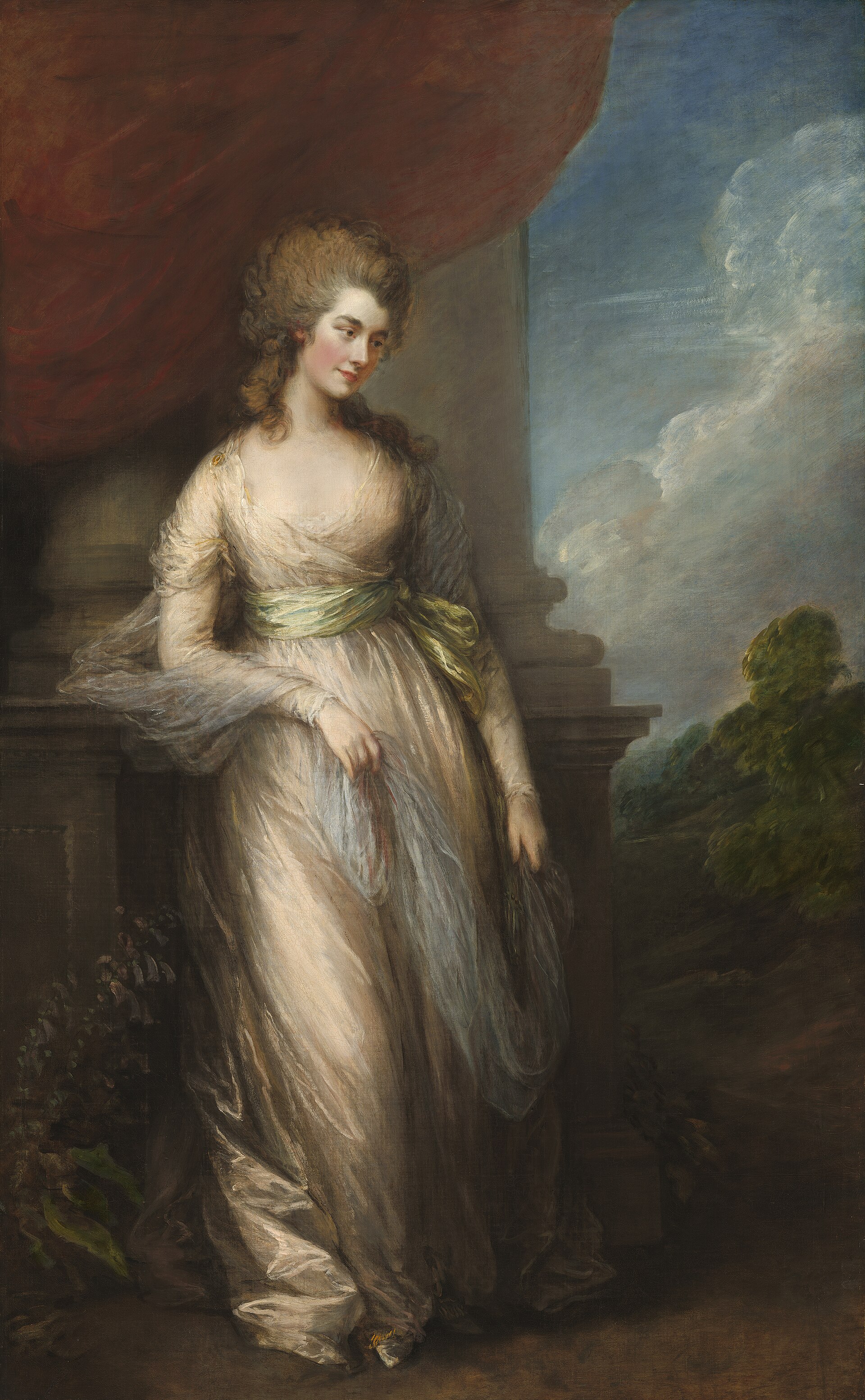
Beyond her beauty and style — her hairstyles and gowns set trends — Georgiana was a political operator. A Whig by family and conviction, she campaigned for her cousin Charles James Fox in the 1784 election and became the target of satirical prints, including one accusing her of trading kisses for votes. She also wrote: she published the epistolary novel The Sylph in 1778 and poems that circulated among intellectuals of the day. She died in debt from a gambling addiction, one of the points the film largely ignores.
Did the love triangle really happen?
Yes, and this is one of the rare cases where Hollywood’s version is more restrained than reality. Bess Foster lived with the Devonshires for about 25 years. The arrangement was a tolerated ménage à trois, painful for Georgiana, who was emotionally dependent on her friend. The Duke had children with Bess while married to Georgiana, and London society knew it.
The affair with Charles Grey is also documented. Georgiana became pregnant by him in 1791 and was sent to France to give birth in secret. Eliza Courtney, born on 20 February 1792, was handed to the Grey family and raised as Charles’s niece. Georgiana managed to keep in touch with her daughter throughout her life, and Eliza named one of her own daughters Georgiana, after her mother. Grey would become Earl Grey and British prime minister between 1830 and 1834 — the same family that gives its name to Earl Grey tea.
One of the screenplay’s best-known liberties concerns the age of the romantic lead. Charles Grey was born in 1764, seven years after Georgiana. In the scene set in 1774 he would have been ten, not the young man played by Dominic Cooper. The film also softens the political context: Georgiana was a real organiser of Whig campaigns, and that work appears only briefly on screen.
The Diana connection and the poster controversy
The comparison with Princess Diana is not a fan invention: it was in the marketing. Georgiana was the elder sister of George Spencer, 2nd Earl Spencer, Diana’s great-great-great-grandfather — which makes her Diana’s great-great-great-great-aunt, not a direct ancestor, as is sometimes written. Paramount nonetheless describes Georgiana as an ancestor of Diana, and the film’s poster carried the line “There were three people in her marriage”, a direct reference to Diana’s 1995 BBC interview.
“Beloved by a nation but betrayed by her husband, Georgiana Spencer — the Duchess of Devonshire and ‘Empress of Fashion’ — faced an agonizing choice between responsibility and love.”
The strategy caused friction. Keira Knightley publicly denied that the film was about Diana, and Amanda Foreman criticised the use of the Princess’s image in the campaign. The British press also recorded a revealing episode about the production’s mood: executives reportedly asked for the actress’s bust to be digitally enlarged in promotional materials, a request she refused. None of that changed the commercial result, but it helps explain the tension between the period film and the marketing machine that pushed it toward audiences.
What “The Duchess” gets right and what it leaves out
The film gets the essentials right: the marriage of convenience, the Duke’s obsession with an heir, the friendship that turned into betrayal, the affair with Grey, the secret birth and Eliza’s surrender. It also captures the atmosphere — the court as a stage of permanent surveillance, where a woman’s reputation mattered more than her intelligence.
The omissions are significant. The screenplay sets aside the gambling debts that consumed much of Georgiana’s personal fortune, her literary output and most of her political work. The film ends on a note of domestic reconciliation that the record does not support so clearly. And it compresses a decade into a few months of screen time, making events separated by years feel simultaneous.
| What history records | How the film handles it |
|---|---|
| Georgiana was born in 1757 and married in June 1774, days before turning 17 | Arranged marriage at 17, treated as the story’s starting point |
| Bess Foster moved in with the couple in 1782 and became the Duke’s mistress | Central love triangle, with Bess played by Hayley Atwell |
| Charles Grey was born in 1764, seven years after Georgiana | Grey appears as an adult from his youth, played by Dominic Cooper |
| Eliza Courtney was born in 1792 and raised by the Grey family | The secret birth and the surrender of the child are shown, with a bittersweet ending |
| Georgiana was the sister of Diana’s great-great-great-grandfather, not a direct ancestor | Marketing leans on the Diana parallel, including on the poster |
| Gambling debts, writing and Whig political activism | Mentioned in passing or absent from the final cut |
Reception, awards and why the film is back in circulation
“The Duchess” opened in the United Kingdom on 5 September 2008 and reached US theatres that October. It cost about £13.5 million and grossed $43.3 million worldwide. Reviews were mostly favourable: 62% on Rotten Tomatoes across 170 reviews and a score of 62 out of 100 on Metacritic from 34 critics.
On the awards circuit, the film won the Academy Award for Best Costume Design, for Michael O’Connor, and was nominated for Best Art Direction. The same costumes won a BAFTA. Ralph Fiennes was nominated for a Golden Globe for Best Supporting Actor, and Hayley Atwell gained prominence as Bess — years before becoming a familiar name in the Marvel franchise.
The title’s return to the news cycle has to do with the current appetite for period drama. Bridgerton popularised a colourful, choreographed aristocracy, and Queen Charlotte turned a real historical figure into a romance protagonist. “The Duchess” predates that phenomenon by twelve years and offers the opposite: instead of fantasy, a bitter portrait of how marriage, reputation and inheritance shaped the life of a brilliant woman.
Viewers arriving from the Bridgerton comparison should expect less ballroom and more domestic tension. The series’ Queen Charlotte, incidentally, was a contemporary of Georgiana — both lived at the same court, under the same King George III — which makes the comparison historically coherent, even if the tones are very different.
Where to watch and what to expect
The film is listed on Prime Video, according to the coverage that renewed interest in the title. Because catalogue availability changes by country and by period, it is worth checking the service page before planning a screening. DVD and Blu-ray editions also circulate, and the film occasionally appears in repertory cinema programmes.
For those who want to go deeper into the historical figure, Amanda Foreman’s biography remains the most accessible reference, and the Chatsworth archives keep part of Georgiana’s correspondence available for public consultation. The Gainsborough portrait that illustrates this article is now in the collection of the National Gallery of Art in Washington and shows the Duchess a few years after the events depicted in the film.
So the answer to the question in the headline is yes: “The Duchess” is based on a true story, with a screenplay derived from a biography rather than from fiction. What the film offers is an interpretation — accomplished, award-winning in its costumes and dramatically effective — of a documented life. Watching it while knowing where the drama begins is what separates the pleasure of cinema from a misreading of history.
For more, the movies page rounds up this season’s releases and titles that have returned to streaming, and the pop culture section follows adaptations of real stories. It is also worth comparing it with the case of HERSHEY, another recent film that had to separate historical record from creative licence, and with our guide to House of the Dragon, which shows how fantasy also leans on medieval fact.
This article was produced from Amanda Foreman’s biography, official Paramount Pictures and BBC Films material, 2008 coverage by Terra and The Guardian, and the technical listings of Paramount and BBC Film. Quotes from interviews were translated from the original sources.
Suggested and related articles
The Duchess and Other Period Dramas on Prime Video
Ebenezer Opens at No. 1 With $19 Million Domestically
Is HERSHEY Based on a True Story? What's Real and What's Not
Hunger Games: where to watch all 5 movies in 2026
Hunger Games: Sunrise on the Reaping date and cast