Is HERSHEY Based on a True Story? What's Real and What's Not
Published on · Updated on
A Hershey guide compares the documented lives of Milton and Kitty with the movie, separating real milestones from invented characters and the dates.
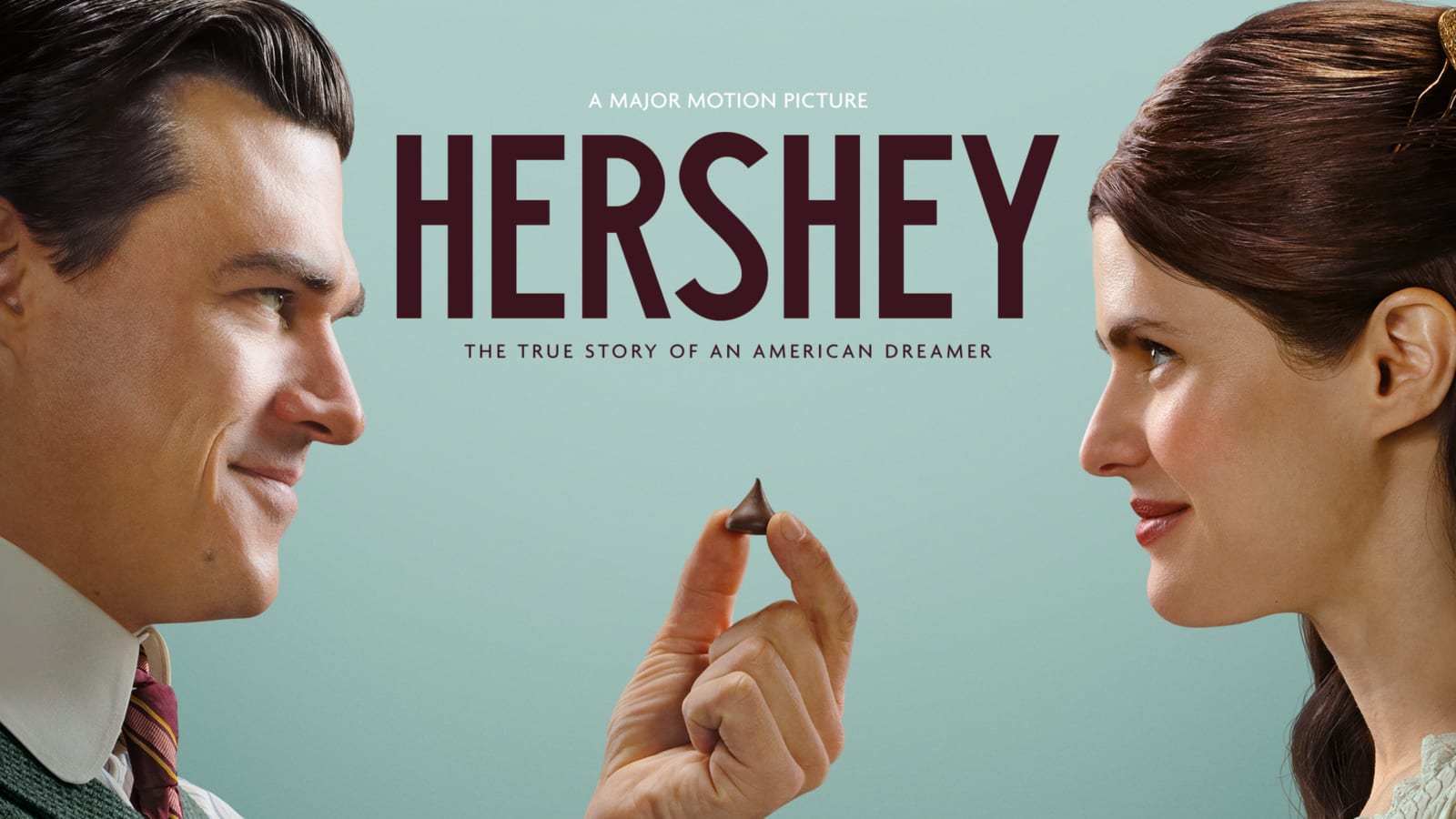
HERSHEY is based on a true story, but it is not a documentary. Directed by Mark Waters and released in U.S. theaters on November 25, 2026, by Angel Studios, the film follows the lives of Milton S. Hershey and his wife, Catherine “Kitty” Hershey, from his apprenticeship as a confectioner to his bankruptcies, from the five-cent chocolate bar to the school that bears the family name. To separate fact from invention, The Hershey Company itself published a guide by Amy Zeigler, director of The Hershey Story Museum and the Hershey Community Archives, comparing the historical record with the version on screen point by point.
The short answer: the major milestones of the biography are there. The long answer involves a fictional antagonist, an invented marriage proposal, condensed timelines and at least one passage the company openly labels creative license. Understanding that boundary helps viewers watch the film without mistaking drama for a court record.
What the film gets right, according to the Hershey archives
Milton Snavely Hershey was born on September 13, 1857, in Derry Township, rural Pennsylvania, into a German-speaking Mennonite community. His family moved often: he attended at least seven schools and never progressed beyond what would today be fourth grade. At 13, he began a printing apprenticeship in Lancaster; the following year he became an apprentice to master confectioner Joseph Royer, spending four years learning the candy trade.
The film shows both apprenticeships and Royer’s influence. It also includes a stint at a brick manufacturer that the company guide calls “a fictionalized addition used to further develop his childhood story.” In other words: the hard childhood is real; the brickyard is not.
The business trajectory also follows the record. In 1876, Milton left Lancaster to open his own candy business in Philadelphia. He sold penny candies, ice cream, caramels, dried fruit and nuts. Six years later, the business collapsed. He traveled to Denver, where he learned to make caramels with fresh milk, a technique that would later sustain the Lancaster Caramel Company, founded in 1886. Before that, he tried his luck in Chicago, New Orleans and New York.
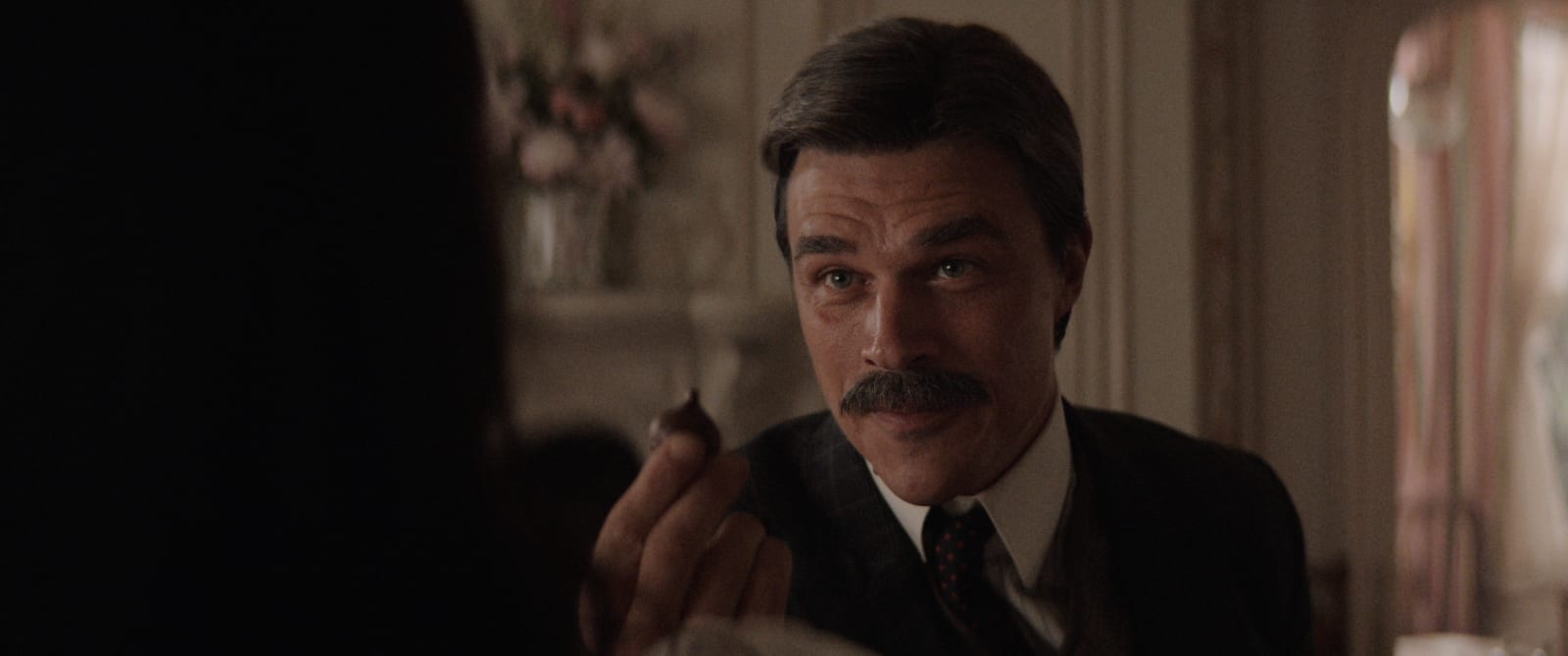
The turning point the movie treats as an epiphany is also historical. At Chicago’s 1893 World’s Columbian Exposition, Milton saw German chocolate-making machinery and became convinced the product was worth more than caramel. In 1894, he created The Hershey Chocolate Company as a subsidiary of the Lancaster Caramel Company. In 1900, he sold the caramel division to the American Caramel Company and kept the chocolate operation. The buyer, the price and the outcome of the sale appear faithfully in the film, according to the guide. By the end of that year, the first Hershey’s Milk Chocolate bars were on sale for five cents.
| What history records | How the film shows it |
|---|---|
| Birth in 1857, rural childhood and at least seven schools | Country childhood and family influence, with moves and schooling compressed |
| Printing apprenticeship and training under Joseph Royer | Both apprenticeships appear; the brick-factory period is invented |
| Philadelphia business fails after six years | Failures treated as an essential part of the character’s formation |
| Caramel made with fresh milk learned in Denver | Cross-country travels and the Denver lesson as a key moment |
| 1893 Chicago fair and the chocolate division in 1894 | The fair is where Milton sees chocolate’s potential |
| 1900 sale of Lancaster Caramel, with buyer and price documented | The deal is real; the conflict around it gained a fictional villain |
| Marriage to Kitty Sweeney on May 25, 1898 | Courtship by letter is portrayed; the proposal was created for the film |
| Titanic bookings canceled before the maiden voyage | The reaction to the disaster aboard the Amerika is fictionalized |
The creative license the studio itself acknowledges
The Hershey guide does not hide the inventions. The most visible is Tobias Thornhill, played by David Costabile. The character did not exist: he was created to give a face to the conflict surrounding the Lancaster Caramel sale. The decision to sell, the buyer and the price are real; the antagonist pressing Milton is not.
Other liberties are acknowledged. The brickyard period was invented. The engagement scene has no documentary basis: historians know when and where Milton and Kitty married, but not when or where the engagement happened, whether there was a ring or how the proposal unfolded. The production created the scene to support the love story.
The script also compresses more than 50 years into 107 minutes. Moves, schools and jobs are condensed. Milton’s 1916 trip to Cuba and the building of a community around a sugar mill are real, but the film moves that episode forward to before Kitty’s death in 1915. And the couple’s reaction to the Titanic disaster aboard the Amerika is dramatized: the canceled Titanic bookings are part of the record; the scene is not.
“The movie uses standard historical-drama techniques, including condensed timelines, dramatized private conversations and fictional or composite characters, to adapt more than 50 years of history into a feature-length film.”
It is worth noting that the film was produced by Dandelion Media in partnership with the Hershey entities, partially financed by the company and distributed by Angel Studios. Executives approved everything from intellectual property and brand considerations to creative choices, according to U.S. press reports. That does not make the film false, but it explains why it treats the founder’s story with evident institutional affection.
Kitty Hershey: the partner the film brings out of the shadows
Catherine “Kitty” Sweeney met Milton on a business trip. They married on May 25, 1898. The record confirms the courtship, the marriage and the couple’s travels, but many details of their private relationship were never documented. The film leans into a long courtship carried out largely through correspondence and presents Kitty as independent, optimistic and affectionate with children.
Her influence, however, is not an invention. In 1909, Milton and Kitty signed the deed of trust that established the Hershey Industrial School, now Milton Hershey School. The couple had no children and founded the institution to provide education, housing and opportunity for children in need. Kitty’s signature on a founding document was unusual for the era and reflected her active role in the school’s mission.
“It was Kitty’s idea.”
Kitty died in 1915. Milton never remarried and carried a photo of her until the end of his life. In 1918, three years after her death, he placed his ownership interest in The Hershey Chocolate Company into the school trust. The decision permanently tied the company’s future to the institution’s future — and the film treats it as the culmination of the project the couple conceived together.
More than chocolate: the town and the school
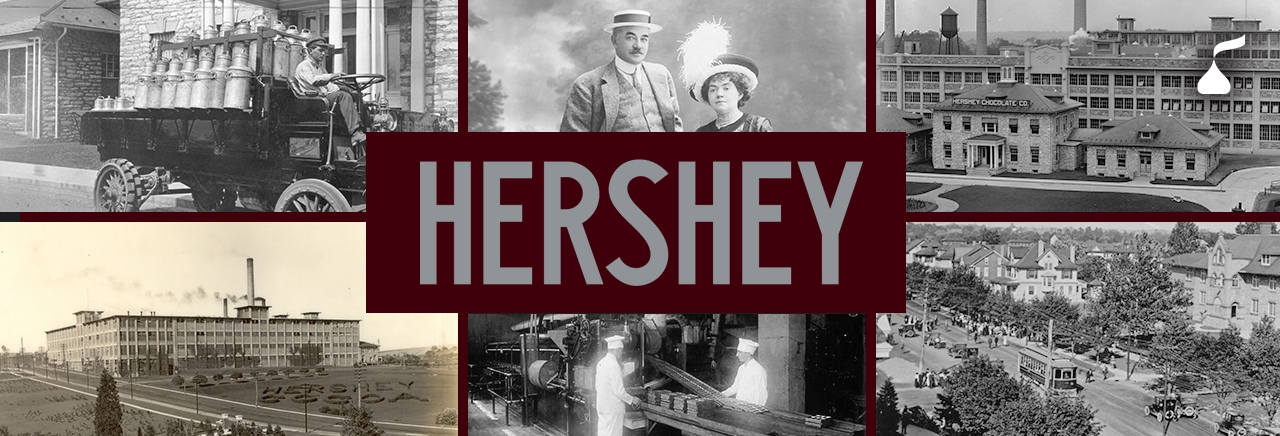
Milton Hershey believed business success should improve the lives of the people connected to it. As he expanded the factory, he invested in housing, public transportation, recreation, education and cultural institutions. What had been farmland became the town of Hershey, Pennsylvania, designed to offer a good quality of life to workers and their families.
The film presents that vision as a natural extension of the founder’s philosophy, including his resistance to pressure to cut worker benefits. It also portrays the school as the couple’s most important decision. The institution still operates as a private boarding school and remains a beneficiary of the trust Milton created.
Is the Hershey guide trustworthy?
The document was reviewed by historians and archivists from The Hershey Story Museum, the Hershey Community Archives and Milton Hershey School. The production also consulted school-history experts, examined photographs, correspondence, speeches, newspapers and business records, visited historic sites, made 3D scans and reproduced objects from the collection. The museum even mounted an exhibit featuring original costumes and props from the film.
That gives the guide a solid documentary foundation. At the same time, it should be read for what it is: material published by the company whose history the film tells, about a movie the company helped produce and finance. The fact-versus-fiction breakdown it offers is useful and specific, but it does not replace critical reading. The text itself makes clear that the film preserves the factual outcome of some episodes while dramatizing the conflict around them.
For those who want to check beyond the guide, the Hershey Legacy website maintains a page dedicated to the film, and WITF covered the world premiere at the Hershey Theatre on November 17, 2026.
Cast, release and why the question matters
Besides Finn Wittrock and Alexandra Daddario, the cast includes Alan Ruck as Henry Hershey, Richard Kind as Joseph Royer, David Costabile as the fictional Tobias Thornhill, Heléne Yorke as Margaret and Francesca Faridany as Veronica “Fanny” Hershey. The screenplay is by Sharon Paul and Timothy Michael Hayes; the cinematography is by Ed Wu; the score is by Rolfe Kent. The film runs 107 minutes and opens in U.S. theaters on November 25, 2026.
Watch the official HERSHEY trailer on YouTube.
Biographical films are not required to be minutes of a meeting. The problem starts when audiences treat dramatization as documentary proof — and, in the case of a brand, when the company itself controls part of the narrative about its founder. Separating record from creative license does not diminish the film; it makes what the filmmakers chose to tell more interesting.
If the question is whether HERSHEY is based on a true story, the answer is yes: the bones of the story are documented. If the question is whether everything on screen happened exactly that way, the answer is no — and the company’s own promotional material acknowledges it.
For more, the movies page rounds up the season’s releases, and the pop culture section covers adaptations of real stories.
This article was based on the historical guide published by The Hershey Company, WITF’s coverage of the world premiere and official information from Angel Studios. Interview excerpts were translated from English.
Suggested and related articles
Ebenezer Opens at No. 1 With $19 Million Domestically

Godzilla Minus Zero Opens to $63 Million Worldwide
Is Godzilla Minus Zero a Sequel to Minus One? Yes
Cliff Booth: Netflix date, IMAX window, what is confirmed

Who Is Jasmine Hottle, Kaylee Hottle's Older Sister?