Why John Malkovich Has Never Won an Oscar
Published on · Updated on
Nominated twice and never awarded, John Malkovich is back in the Oscar race with Wild Horse Nine. A look at his career, his two defeats and the new film.
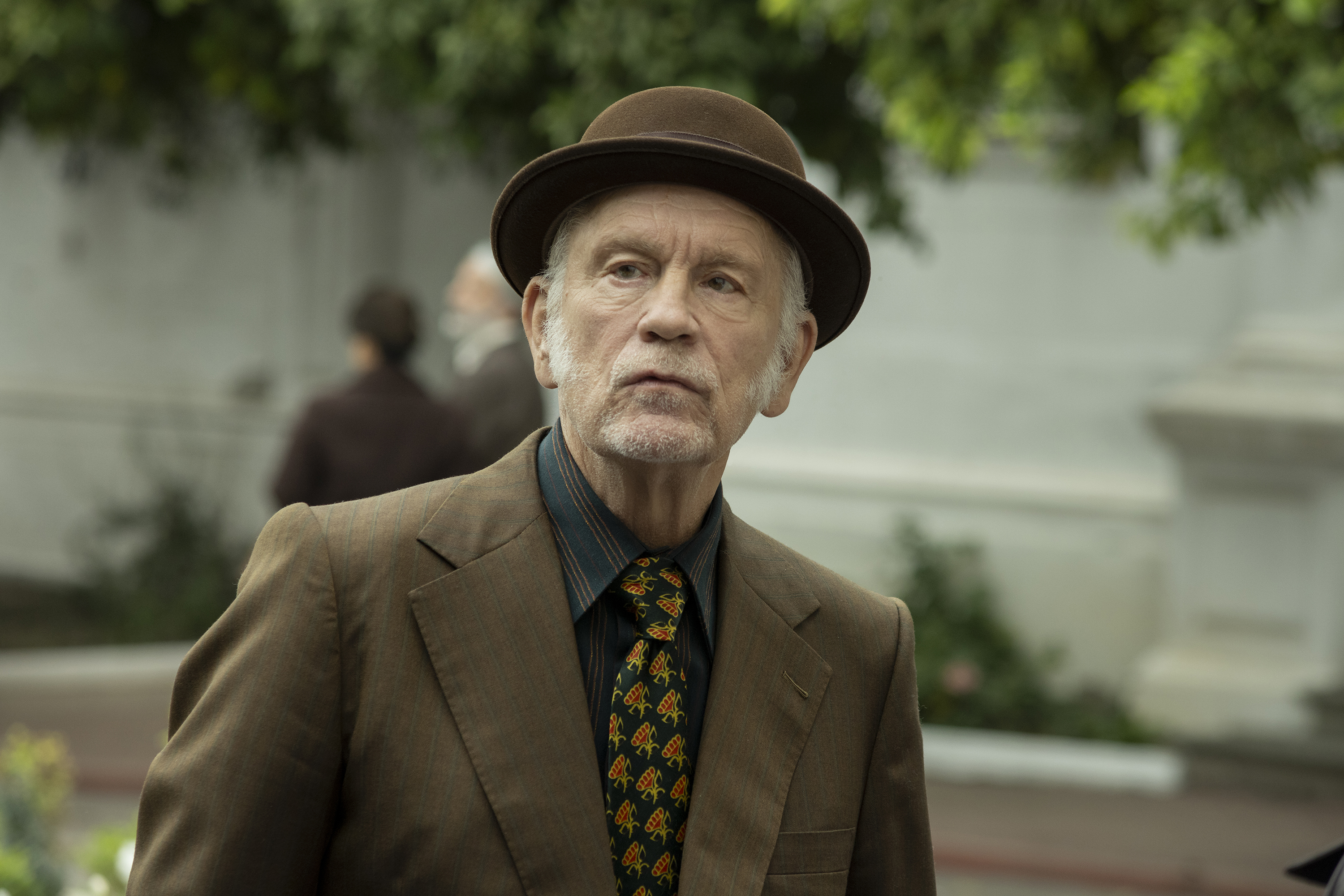
John Malkovich is 72, has more than 70 films to his name and an Emmy on the shelf, but he has never received an Oscar. The American actor was nominated twice by the Academy — for Best Supporting Actor for Places in the Heart (1984) and for In the Line of Fire (1993) — and lost both times. This season, the conversation has returned with force thanks to Wild Horse Nine, Martin McDonagh's new film, which earned him the Best Actor prize at the Venice Film Festival and put him back, at 72, at the centre of an Oscar race he had not contested in three decades.
The question circulating in Hollywood, in fan groups and in Google searches is straightforward: why has one of the most singular performers in American cinema never been rewarded by the Academy? The answer is not a single explanation but a sum of factors — the kind of roles he chose, the rivals he met along the way, the distant relationship he has always kept with awards season and the logic of an industry that rarely knows what to do with actors who do not fit the movie-star mould.
Two nominations, two defeats
The first nomination came in 1985, for Places in the Heart, Robert Benton's rural drama set in 1930s Texas. Malkovich played Mr. Will, a blind man who boards with the character played by Sally Field and shares the house with her children and a Black farmhand in a community scarred by racism. The bathtub scene, still remembered by anyone who has seen the film, was the first time many viewers noticed that actor with the slanted gaze and the honeyed voice, trained at Chicago's Steppenwolf Theatre.
That night, however, the Academy chose another story. The Best Supporting Actor prize went to Haing S. Ngor, a survivor of the Khmer Rouge killing fields who was acting for the first time in The Killing Fields — a rare case in which the performer's biography weighed as much as the performance.
| Ceremony | Film | Category | Winner |
|---|---|---|---|
| 1985 | Places in the Heart | Supporting Actor | Haing S. Ngor (The Killing Fields) |
| 1994 | In the Line of Fire | Supporting Actor | Tommy Lee Jones (The Fugitive) |
The second nomination arrived nine years later, for Wolfgang Petersen's In the Line of Fire. Malkovich played Mitch Leary, a former CIA-trained agent turned lone assassin obsessed with killing the President of the United States, opposite Clint Eastwood. It was a villain of restless, almost theatrical intelligence, and the Academy recognised him with a nod that also brought BAFTA and Golden Globe nominations. The prize, however, went to Tommy Lee Jones, in the middle of a comeback season with The Fugitive, in a year that also included Leonardo DiCaprio (What's Eating Gilbert Grape), Ralph Fiennes (Schindler's List) and Pete Postlethwaite (In the Name of the Father).
In other words: Malkovich's two defeats were not against weak opponents. They came in exceptional years, against campaigns carrying narratives far easier to sell to an electorate of nearly ten thousand people spread around the world.
A prize-winning actor — just not in film
Saying Malkovich has never been recognised would be untrue. He has three Emmys: the main one in 1986 for Death of a Salesman, and two more in documentary and sports categories, for Which Way Home (2010) and Teasing John Malkovich (2018). He has been nominated five times for an Emmy, three times for a Golden Globe, once for a BAFTA and once for an Olivier, British theatre's highest honour, for Burn This in 1999. In 2026, he added the Volpi Cup for Best Actor in Venice.
| Award | Nominations | Wins |
|---|---|---|
| Oscar | 2 | 0 |
| Emmy | 5 | 3 |
| Golden Globe | 3 | 0 |
| BAFTA | 1 | 0 |
| Olivier | 1 | 0 |
| Volpi Cup (Venice) | 1 | 1 |
The pattern is striking. Television and theatre embraced him; film, less so. It is no coincidence that his television roles — Arthur Miller's Biff Loman, the Herman Mankiewicz of RKO 281, the Talleyrand of Napoleon — brought him trophies and nominations in series, while on the big screen he accumulated memorable characters and empty hands.
Why the Academy never rewarded him
The first explanation is a matter of profile. Malkovich is an actor of eccentric characters, often villains or morally ambiguous figures, and the Academy has historically preferred to reward physical transformations, real-life biographies or roles of redemption — categories in which he rarely fitted. His great films are period pieces, genre pieces or auteur works, not the prestige dramas with a campaign mounted from the first day of shooting.
The second is circumstance. In 1984, he was up against the humanitarian emotion surrounding Haing S. Ngor. In 1993, against Tommy Lee Jones's comeback in one of the most competitive years the category has seen. In both cases, the Academy had a better story to tell than that of an eccentric actor making arthouse cinema between a play in Chicago and a European film.
The third is campaigning. Malkovich has never been an enthusiast of awards season. He attended the Oscar ceremony only once, in 1985, and said in 2026 that the experience left him overwhelmed. There is no publicity machine in his career of the kind that usually carries actors to the statuette: dinners, screenings for Academy members, coordinated interviews, months of public conversation.
"When I was nominated for an Academy Award, someone said, 'You're nominated for an Academy Award.'"
The line sums up the distance between the actor and the awards industry. In the same conversation, he recalled his first and only trip to the ceremony, alongside manager Phyllis Carlyle: when he suggested entering through a side door, he was told it was the Oscars and there was no side door. "So, I mean, that's kind of my native personality in the face of that kind of onslaught," he joked.
"Being John Malkovich": the irony of 1999
There is a specific irony in the actor's trajectory. In 1999, Spike Jonze directed Being John Malkovich, an existential comedy in which a puppeteer finds a secret passage into Malkovich's own mind. The film was acclaimed, made year-end best-of lists and received three Oscar nominations: directing, supporting actress for Catherine Keener and original screenplay for Charlie Kaufman. None for Malkovich, who played himself as an object of desire and other people's projection.
It is an involuntary metaphor for what happened to his career: American cinema loves the idea of John Malkovich — the persona, the accent, the mystery — but has never quite known what to do with the actor when it comes to handing out a prize. He became the subject of a film before he became a name in an envelope.
Wild Horse Nine reopens the conversation
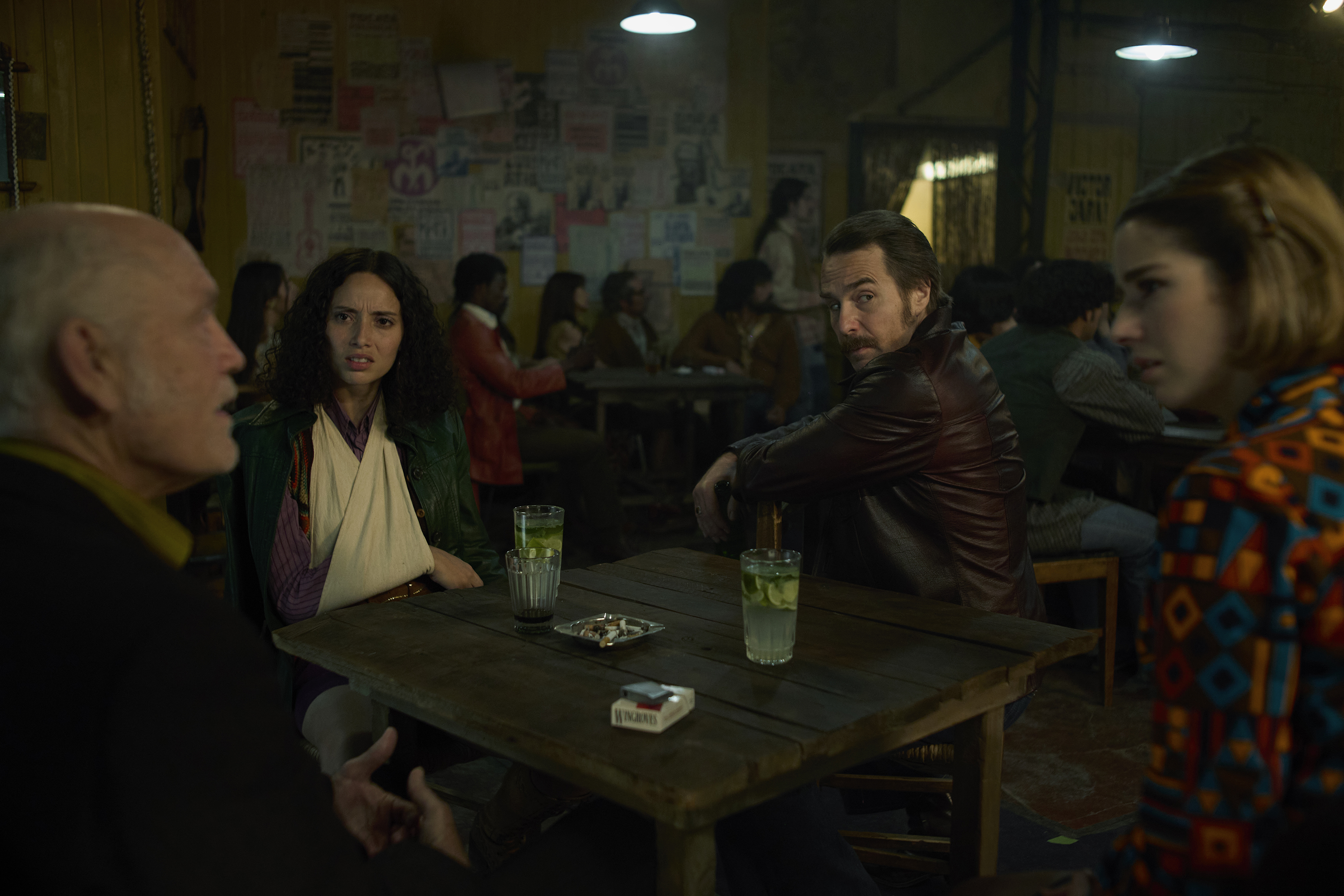
The film that changed the tone of the conversation is a political black comedy written and directed by Martin McDonagh, the man behind Three Billboards Outside Ebbing, Missouri and The Banshees of Inisherin. Set shortly before the 1973 coup in Chile, the story follows two CIA officers who travel from Santiago to Easter Island for an assignment that forces them to confront their own past. Malkovich plays Chris Carlisle, a sick, morphine-addicted veteran who dictates his memoirs into a recorder; Sam Rockwell is Lee Chesterfield, his protégé. Steve Buscemi, Mariana di Girolamo, Ailín Salas, Tom Waits and Parker Posey complete the cast.
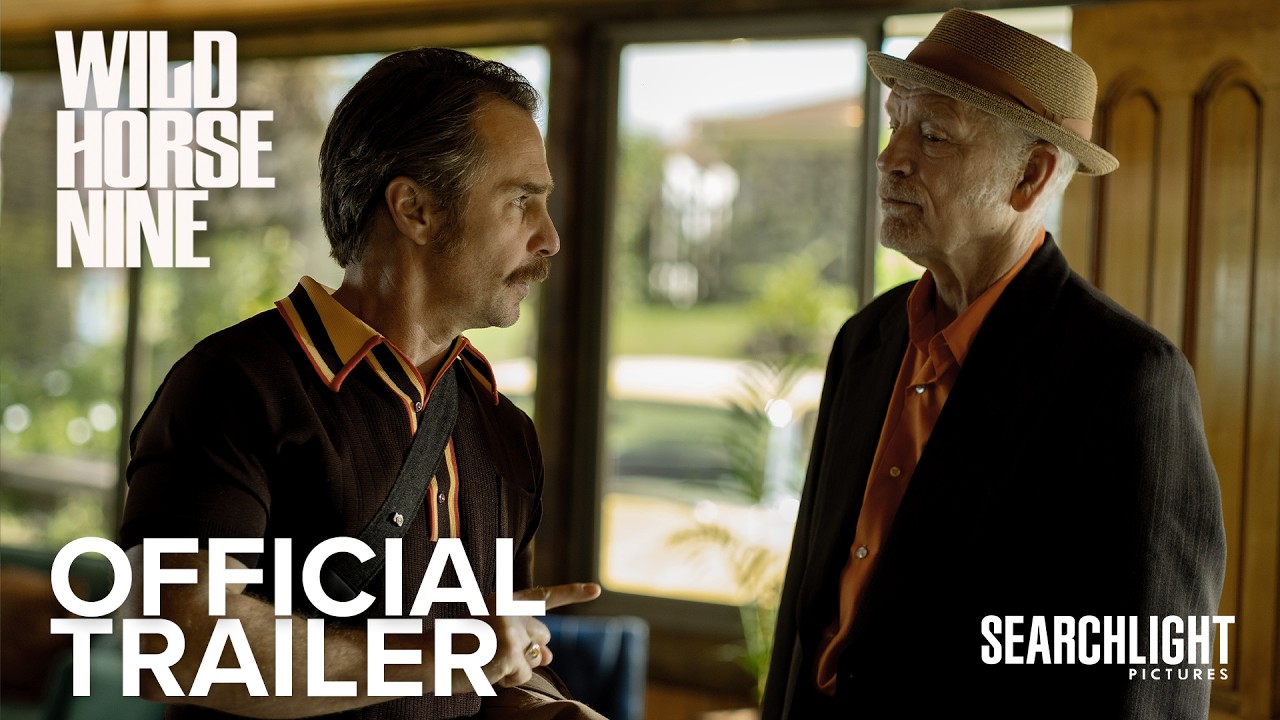
Wild Horse Nine had its world premiere in the main competition of the 83rd Venice Film Festival on 3 September 2026 and left with the Volpi Cup for Best Actor for Malkovich — the first major film prize of his career. The critical reception was among the best of the year: 94% positive reviews on Rotten Tomatoes, with an 8.2/10 average, and a score of 77 on Metacritic. The Hollywood Reporter called his performance "the real revelation" and "his best in years"; RogerEbert.com spoke of "some of the best acting ever done by Malkovich, Rockwell and Buscemi".

The film opened in US and UK cinemas on 6 November and premiered in Brazil on 5 November, with subtitled prints in the main circuit. By mid-November it had taken around $28 million worldwide — modest by studio standards, but consistent for a production budgeted at $13–15 million. In Portugal, the release also put the actor's name at the centre of the cultural debate, with a review on the front of Público's culture section and an episode of the podcast "No Escuro" devoted to the "Malkovich case".
What he himself says about the race
Malkovich does not pretend to be indifferent, but nor does he behave like someone on a campaign. In a conversation at the BFI London Film Festival in October, he compared the current season with the one he lived through in the 1980s and 1990s. For him, the difference is not prestige but the economics of cinema: today, he says, campaigning has become the only way to get audiences into theatres.
"I probably view it differently than I did then, because the movie business existed. [The films] had already been out, they'd already made their money, they were already successful. It was really a different world. Now, that kind of seems to be the only way to get people to actually go to a theatre."
On his own age and what has changed, he was even more direct: "I'm 72 years old, things change. I don't really like thinking things aren't what they used to be. They just change, and you either change with them or die. And I prefer to change with them. I'll die, anyway."
The road to the statuette
The 2026-2027 season is still young, but the script is already drafted. Wild Horse Nine is nominated at the Gotham Independent Film Awards in two categories — Outstanding Lead Performance for Malkovich and Best Original Screenplay for McDonagh — with the ceremony set for 30 November. Then come the critics' prizes in December and the Golden Globes in January, the traditional thermometer for the Oscars.
If the nomination comes, it will be Malkovich's first in more than three decades and the third of his career. The path, however, is not trivial: the supporting actor category tends to tighten around names from big campaign films, and the Academy has shown a preference for performances in titles with strong emotional appeal. His advantage is the kind of recognition no publicist can buy — the specialist press has already placed him at the top of the year's lists.
- 3 September 2026: world premiere in Venice and the Volpi Cup for Best Actor.
- 9 October 2026: gala at the BFI London Film Festival, with remarks on awards season.
- 5 November 2026: release in Brazilian cinemas.
- 6 November 2026: release in the United States and the United Kingdom.
- 30 November 2026: Gotham Awards, with two nominations.
- January 2027: Golden Globes, the decisive step before the Oscar nominations.
Where to watch and what to follow
In Brazil, Wild Horse Nine has been in cinemas since 5 November, with subtitled screenings in São Paulo, Rio de Janeiro and other state capitals. In the United States and the United Kingdom it opened a day later. As of publication, there was no confirmed date for streaming or digital rental in Brazil — the home-entertainment window is expected to be announced by Searchlight Pictures in the coming weeks.
For those following the race, it is worth watching the critics' prizes in New York, Los Angeles and Boston, which usually anticipate the favourites, and the Golden Globe nominations list. The question that matters, though, is another one: if the Academy finally recognises Malkovich, it will be for a comic, melancholy villain — exactly the kind of character it ignored for four decades.
The actor's trajectory also helps explain recent American cinema. Nominated twice in the 1980s and 1990s, he built a career that passed through Chicago theatre, European cinema and blockbusters without ever becoming a box-office star. This is the same actor who made Dangerous Liaisons, Con Air, Burn After Reading and Into the Wild, and who now, at 72, is enjoying the best reviews of his life. More film releases and reviews are in Revista Pixel's film section; the paths of actors chasing a first Oscar also feature in reports such as Mahershala Ali and Bassam Tariq's new film.
Sources and official material: the report that originated this piece was published by Público, with a follow-up interview in Variety. Credits, synopsis and official images can be found in the Searchlight Pictures press room. Awards data were checked against the Television Academy and the actor's official nominations record.
Suggested and related articles
Friday the 13th: Where to Watch All 12 Movies Now
New Friday the 13th: 2027 Release Window Explained

Possible Love on Netflix: Release Date, Where to Watch, Cast
The Creator on Globo: Brazil TV Time, Plot and Cast
Felipe Camargo Turned Down 'Tropa de Elite' Colonel Role