Project Power: the pill that grants five minutes of power
Published on · Updated on
With Jamie Foxx and Joseph Gordon-Levitt, Netflix's 2020 thriller bets everything on a brilliant premise and stumbles in its rush to fit into two hours.
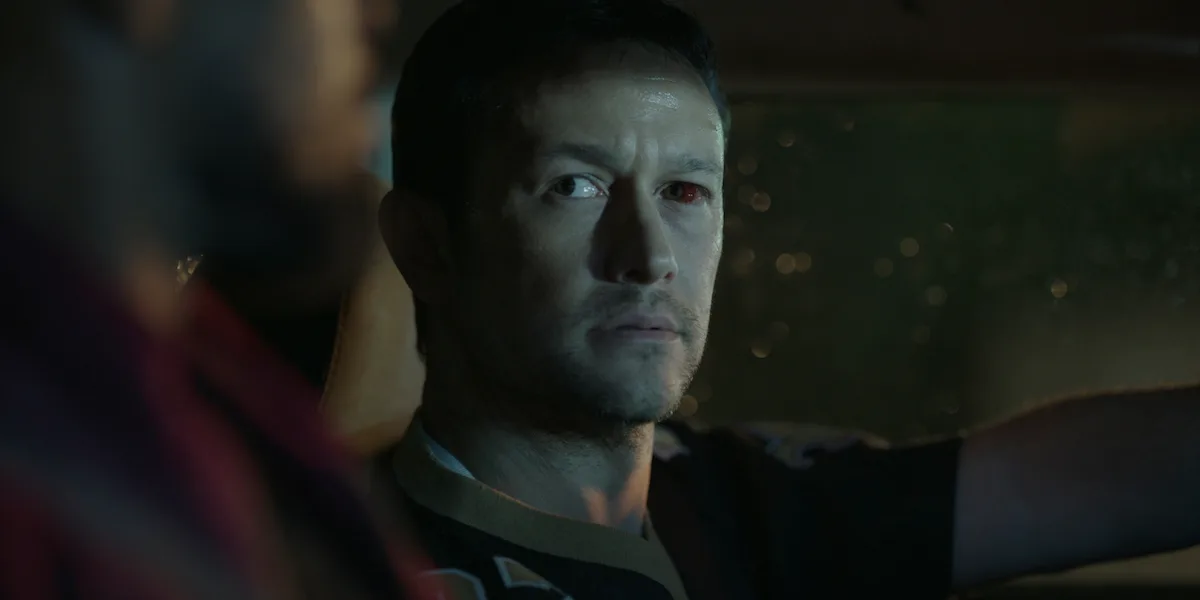
Project Power is a Netflix science fiction thriller released on August 14, 2020. Directed by Henry Joost and Ariel Schulman and written by Mattson Tomlin, the film takes place in a New Orleans where an illegal pill called Power grants superpowers for five minutes — with no way for the user to know which power they will get or whether they will survive the dose. Jamie Foxx, Joseph Gordon-Levitt and Dominique Fishback play three characters who cross paths in the hunt for the same drug. Six years after its release, a review published by Giant Freakin Robot revives the question that has followed the film since its debut: how did such a good premise end up inside such a rushed movie?
The rule is simple — and cruel
The mechanics of Power are the script's greatest achievement. The pill comes with no manual, does not handpick the power and does not forgive an unprepared body. It can deliver superhuman strength, speed, hardened skin — the usual catalogue of comic book stories — or simply kill whoever swallows it. The effect lasts five minutes, on the clock. In a fight, that forces the user to decide when to gamble everything: the power runs out in the middle of the confusion, not at the end of it.
The film establishes the rule in its first big confrontation. Art, Jamie Foxx's character, breaks into a run-down New Orleans building after a young dealer. The kid swallows the pill and turns into a human fireball. It is the film's calling card — and proof that the production knew exactly which image to sell.
“The first time you take it amounts to true Russian Roulette,” wrote Doug Norrie, a critic at Giant Freakin Robot, describing the characters' experience with the drug.
The line sums up the film's greatest strength: the violence is not gratuitous, it is a bet. Every dose is a physical and economic decision at the same time. Whoever takes it is buying five minutes of advantage with the risk of immediate death — and the script explores very little of that ambiguity.
Three characters, three bets
The film distributes the narrative among three points of view. Art is a former soldier turned hunter: after his daughter is taken by the company behind the drug, he starts chasing the origin of Power with the stubbornness of an avenger. The GFR review compares the character to John Creasy in Man on Fire and to Bryan Mills in Taken — heroes who turned the recovery of a family member into the engine of everything.
Robin, played by Dominique Fishback, is the bridge to the real world. A teenager, aspiring rapper and Power dealer to pay for her mother's surgery, she is the one who gives a face to the drug's social cost. Frank, played by Joseph Gordon-Levitt, is the New Orleans police officer who believes he has a sense of justice of his own and sees no problem in taking the pill to stop others from “abusing” it.
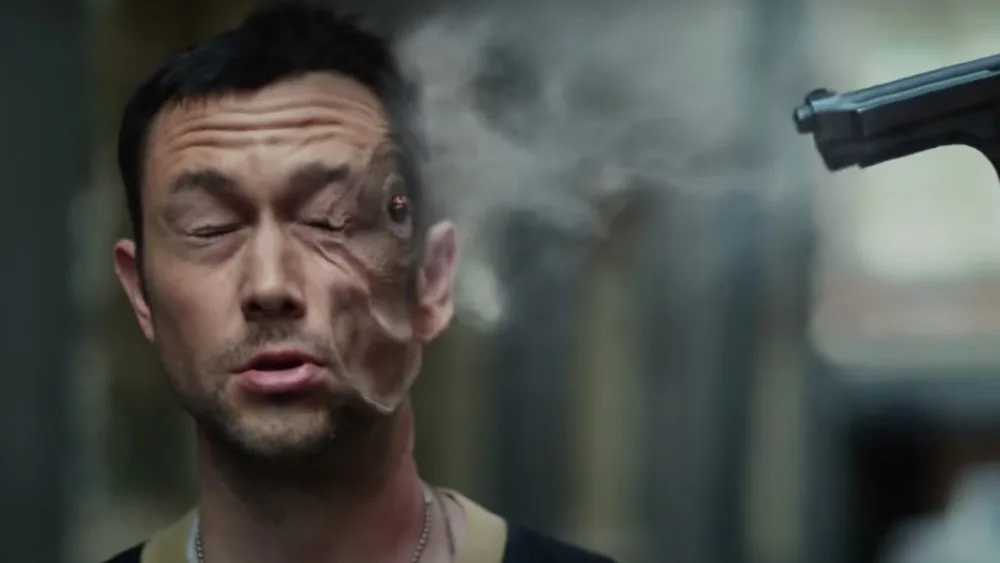
The cast is the film's best asset. Fishback builds Robin with a mix of toughness and vulnerability that no other character reaches, and the chemistry with Foxx sustains the stretches where the script merely pushes the plot toward the next chase. Gordon-Levitt, in turn, is entertaining precisely when the character should be more unsettling: a police officer who arms himself with the drug he seizes is a morally explosive idea, and the film treats it as a character detail.
The man on fire that cost a week of shooting
The apartment sequence is the film's most talked-about moment, and not by chance. To shoot it, Colson Baker, better known as Machine Gun Kelly, played Newt wearing a burn-effect suit fitted with LED lights. A stunt performer repeated the actor's movements while actually on fire, which gave the effects team real flames to work with. According to the account Ariel Schulman gave to Den of Geek in 2020 and that the GFR review revisits, the short sequence consumed about a week of shooting.

The effort shows on screen. It is one of the few passages where the violence has weight, texture and consequence; the rest of the film chases the same intensity without the same care. “That's an awful lot of effort for one encounter, and it helps explain why the action makes a stronger impression than the plotting,” Norrie wrote.

New Orleans is not just a backdrop
New Orleans enters the story with references to the pain left by Hurricane Katrina, to corruption in the system and to music as the backbone of local life. The result is a valid effort, even if heavy-handed at times — that is the verdict of the GFR critic himself.
The music was not chosen just to fill the gaps between fights. In a 2020 interview with SciFiNow, Schulman cited 8 Mile and Collateral as references and explained that Robin's raps were meant to express the character's point of view. Rapper Chika worked with Fishback on the lyrics — and also appears in the film as Akeela, Robin's classmate — after Jamie Foxx suggested her name for the project.
It is the film's most interesting decision outside the action scenes: giving the character a voice that is not merely a reaction to violence. The problem is that the film is in a hurry. While Robin gains specificity, the rest of the world around her remains generic.
What the film does not answer
The Giant Freakin Robot review describes a feeling that is easy to recognize: that of having missed something, as if Project Power were the sequel to a film no one saw. There are threads on every side, but each one stops unravelling before becoming a knot.
Who is Art before the tragedy? How did Frank enter the pill war, and how long has he been using? What is the company with almost limitless reach operating below the corruption radar? And, above all, how widespread is Power in the world? These are questions the script raises and abandons.
“I think that Project Power would work much better as a television show, spread out over a number of different episodes rather than confined to a tight two hours,” wrote Norrie. “As a result, it's impossible to give Project Power anything but a negative review.”
The conclusion is harsh, but fair to what the film sets out to be. The premise called for an entire season — the drug market, the biology of the powers, the corruption network, the cost to those who use it — something closer to what the series format allows. In 114 minutes, all of that becomes background for competent chases and an ending that resolves the essentials without answering what matters.
Huge audience, lukewarm reception
The audience numbers, however, did not prove the critics right. According to Netflix itself, 75 million households watched the film in the first four weeks, and it was the platform's most-watched film in the first two weekends after its release. The public showed up; the critics were divided. On Rotten Tomatoes, approval stood at 61%, with an average of 5.7/10 across 178 reviews; on Metacritic, the score was 51/100, from 35 reviews.
The consensus of the reviews praised the cast, the action sequences and the visual effects, and pointed to the script as the weak link — the same reading this 2026 review makes six years later. To this day, Netflix has not announced a sequel, despite the open ending.
Is it worth watching in 2026?
It depends on what you expect. For anyone looking for a light action thriller, with a premise that grabs you in the first twenty minutes and a charismatic cast, Project Power does the job. For anyone hoping to explore the consequences of a drug that turns ordinary people into weapons for five minutes, the film frustrates: the questions all stay on the table.
The impression that remains is that of an expensive pilot for a series that never existed. It is a film to watch once, discuss the man-on-fire scene and move on — which, for a project with this cast and this premise, is not much. If the idea of superpowers as merchandise interests you, the production data is on the Project Power entry in the catalogue; it is also worth comparing with other productions of the genre in the film archive of Revista Pixel and with recent pop culture releases.
Fact sheet
- Directed by
- Henry Joost and Ariel Schulman
- Written by
- Mattson Tomlin
- Main cast
- Jamie Foxx, Joseph Gordon-Levitt, Dominique Fishback, Colson Baker, Rodrigo Santoro, Courtney B. Vance
- Produced by
- Eric Newman and Bryan Unkeless
- Cinematography
- Michael Simmonds
- Editing
- Jeff McEvoy
- Music
- Joseph Trapanese
- Release
- August 14, 2020, on Netflix
- Runtime
- 114 minutes
Frequently asked questions
Which streaming service is Project Power on?
The film is available on Netflix, which produced and distributed it. It is an original title from the platform, with a global release on August 14, 2020.
How long does the Power pill's effect last?
Five minutes. That limitation defines the rhythm of the action scenes: the user has to calculate when to take the dose and what to do when the effect ends in the middle of a fight.
Is Project Power based on a comic book?
No. The script is original, written by Mattson Tomlin. The story does not adapt any comic book, although it draws on the classic repertoire of superheroes.
Will there be a Project Power 2?
As of the publication of this article, Netflix had not announced a sequel. The ending leaves the universe open, but the film works as a closed story.
Who directs Project Power?
Henry Joost and Ariel Schulman, a duo known for Catfish, Paranormal Activity 3 and 4 and Nerve. The script is by Mattson Tomlin, and production was handled by Eric Newman and Bryan Unkeless.
Suggested and related articles
‘The Child’ (El Niño): New Netflix Drama Starring Belén Cuesta and Karra Elejalde Gets Theater and Streaming Release Dates
PS3 classic PayDay is becoming a movie: Sonic producer takes on theatrical adaptation
Haunted Hotel Season 2 Confirmed by Netflix: Release Window, Cast and Animated Series Details

Yu-Gi-Oh!: The Dark Side of Dimensions gets new official trailer and confirms theatrical return

Paramount Completes Warner Acquisition and Reshapes Hollywood