The Black Ball: Los Javis' epic opens in Portugal
Published on · Updated on
Cannes Best Director winner from Javier Calvo and Javier Ambrossi opens in Portuguese theaters this Thursday, November 5, distributed by Nitrato Filmes.
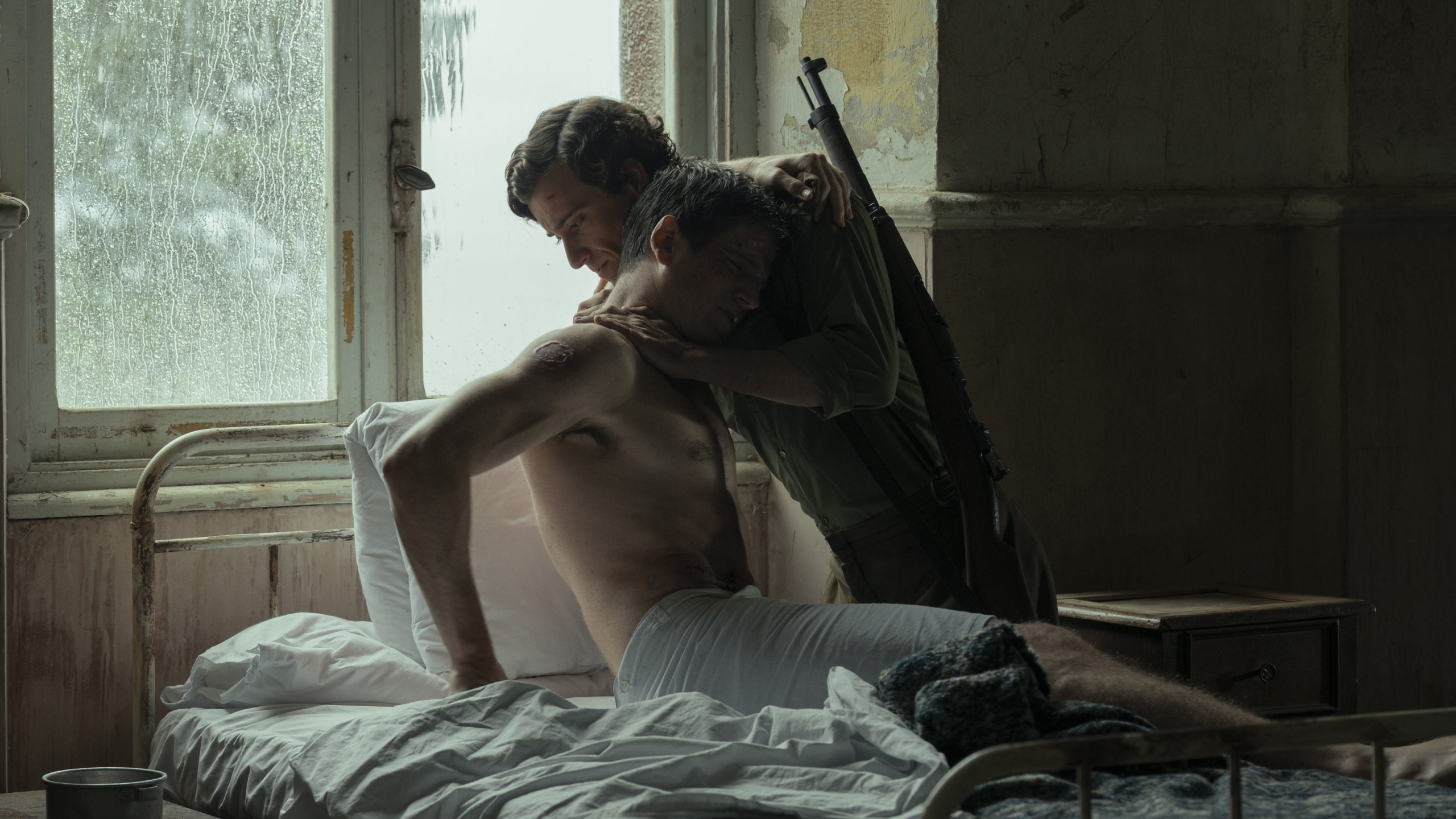
“The Black Ball” opens in Portuguese theaters this Thursday (Nov. 5) through Nitrato Filmes, after winning the Best Director award at the 2026 Cannes Film Festival and becoming the year’s highest-grossing Spanish production. Directed by Javier Calvo and Javier Ambrossi, known as “Los Javis,” the film interweaves the lives of three men in 1932, 1937 and 2017, drawing on an unfinished work by Federico García Lorca and on Alberto Conejero’s play “La Piedra Oscura.”
Running about 2h35 and rated M/14, the film arrives in Portugal in its original Spanish version with Portuguese subtitles, distributed by Nitrato Filmes. The release comes a little over a month after the movie won the People’s Choice Award at the Toronto International Film Festival — one of the most reliable bellwethers of the awards season — and after Spain selected it as its submission for the Academy Award for Best International Feature Film.
In Brazil, Paris Filmes has scheduled the release for Jan. 21, 2027. Before that, Portuguese audiences can see the film at venues such as Cinema Medeia Nimas in Lisbon and Cinema Trindade in Porto, as well as at NOS and UCI multiplexes, which have already opened ticket sales for the first screenings.
A prize trail built between Cannes and audiences
“The Black Ball” had its world premiere on May 21, 2026, in the main competition of the 79th Cannes Film Festival. At the closing ceremony, Calvo and Ambrossi shared the Best Director prize with Polish filmmaker Paweł Pawlikowski, who was honored for “Fatherland.” It was the first time the duo, known for series such as “Paquita Salas,” “Veneno” and “La Mesías,” competed for the Palme d’Or with a fiction feature.
What followed showed that the jury was not alone. The film went on to collect audience awards at festivals with very different profiles — a rare feat for a period piece with three narrative strands and a running time of nearly two and a half hours. The list includes Toronto, San Sebastián, Sydney, Busan and the BFI London Film Festival, whose Audience Award was announced on Nov. 4, the eve of the Portuguese release.
| Festival / institution | Recognition | Result |
|---|---|---|
| Cannes 2026 | Best Director (ex aequo) | Won |
| Toronto 2026 | People’s Choice Award | Won |
| San Sebastián 2026 | City of Donostia Audience Award | Won |
| Sydney 2026 | GIO Audience Award | Won |
| BFI London 2026 | Audience Award for Best Feature | Won |
| Spanish Academy | Oscar race for Best International Feature Film | Spanish submission |
The film also made the European Film Academy’s 35-title fiction shortlist for the 2026 European Film Awards. For a production that blends melodrama, musical numbers, a war epic and an essay on queer memory, that haul helps explain why “The Black Ball” became one of the year’s most talked-about titles before even reaching several markets.
Three men, three Spains
The film’s structure is openly ambitious. Instead of following a single family or a single period, the screenplay by Calvo, Ambrossi and Conejero offers three panels that illuminate one another. The connection between them is not chronological but emotional and political: desire, pain and inheritance cross different decades and keep returning to the same point — the difficulty of saying who you are.
1932: the black ball that excludes
In 1932 Granada, Carlos, a young man from a wealthy family, is denied admission to an exclusive social club. The rejection comes through the “blackball” system, the secret vote used to block candidates deemed undesirable. In his case, the reason is gossip about his homosexuality. Pressured by his father to deny everything and try again, Carlos faces a country that demands he hide his nature in order to belong.
The panel connects directly to Lorca’s unfinished play and to real episodes of Republican Spain, such as the Sanjurjada uprising and the fire at the Granada casino in August 1932. The club sequence, with Milo Quifes’s character facing an assembly of uniformed men, is one of the film’s most theatrical images — and one of the best summaries of its method: staging the past as a ritual that never ends.
1937: the keeper of the manuscript
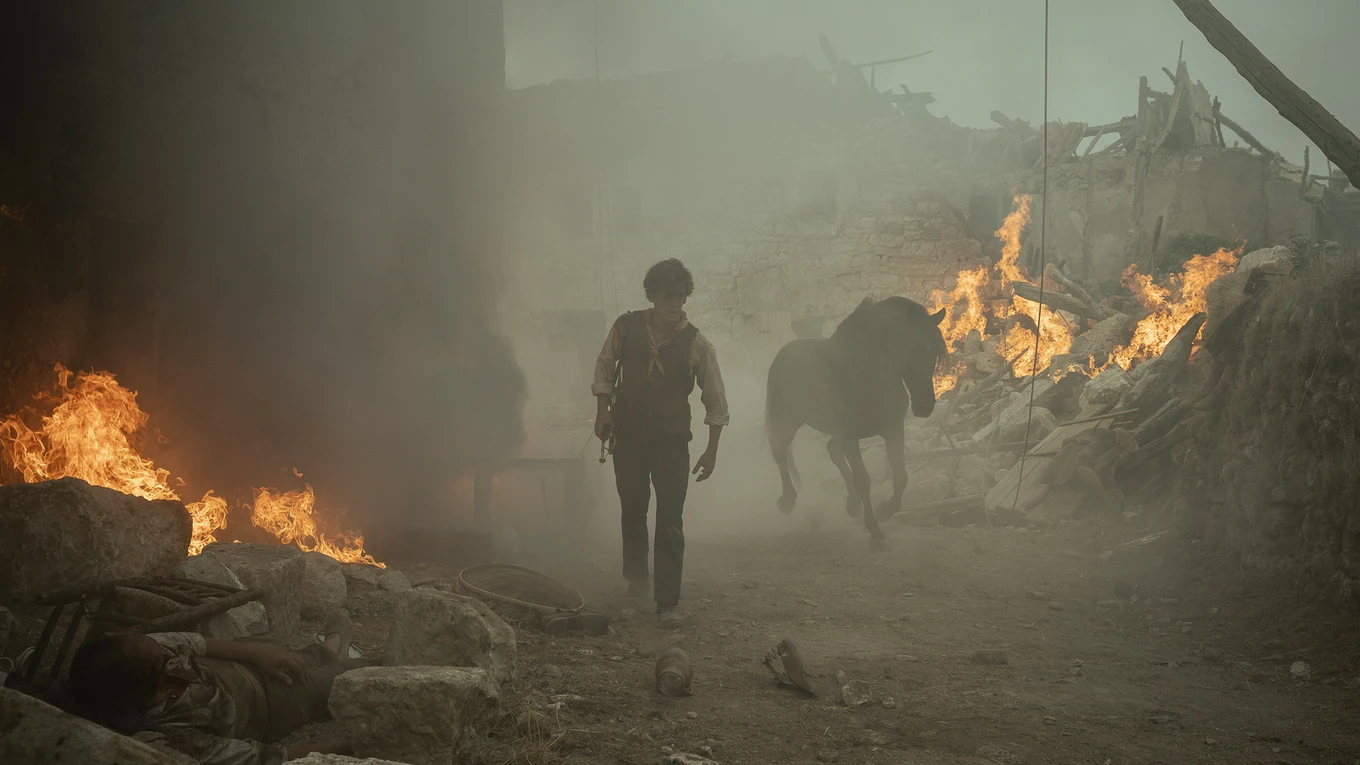
During the Spanish Civil War, Sebastián, a young village trumpeter, survives a bombing and is eventually forced to side with the Nationalist forces. He is assigned to guard Rafael Rodríguez Rapún, a wounded Republican prisoner who was Lorca’s lover and a member of the theater company La Barraca. Between initial suspicion and enforced proximity, Sebastián discovers in Rafael a gateway to Lorca’s poetry — and to his own desire.
This is the panel that comes closest to “La Piedra Oscura,” Conejero’s play about Rapún’s final days. Penélope Cruz’s character, the cupletista Nené Romero, also appears in this section, singing for the troops and offering Sebastián models of queer existence that the war tries to erase. Rafael’s final request — that the young man retrieve a manuscript of “The Black Ball” from an apartment at Calle de Alcalá, 96 — stitches the past to the present.
2017: the heir
In contemporary Madrid, Alberto, a historian and former playwright, is researching queer dissidence in the music of Rosa Eskenazi while trying to rebuild his relationship with his mother, Teresa, played by Lola Dueñas. The death of a maternal grandfather from whom the family had drifted apart leaves him an unlikely inheritance: the remaining manuscript of “The Black Ball,” long believed lost. From then on, the film becomes an investigation into origin, authenticity and what families choose not to tell.
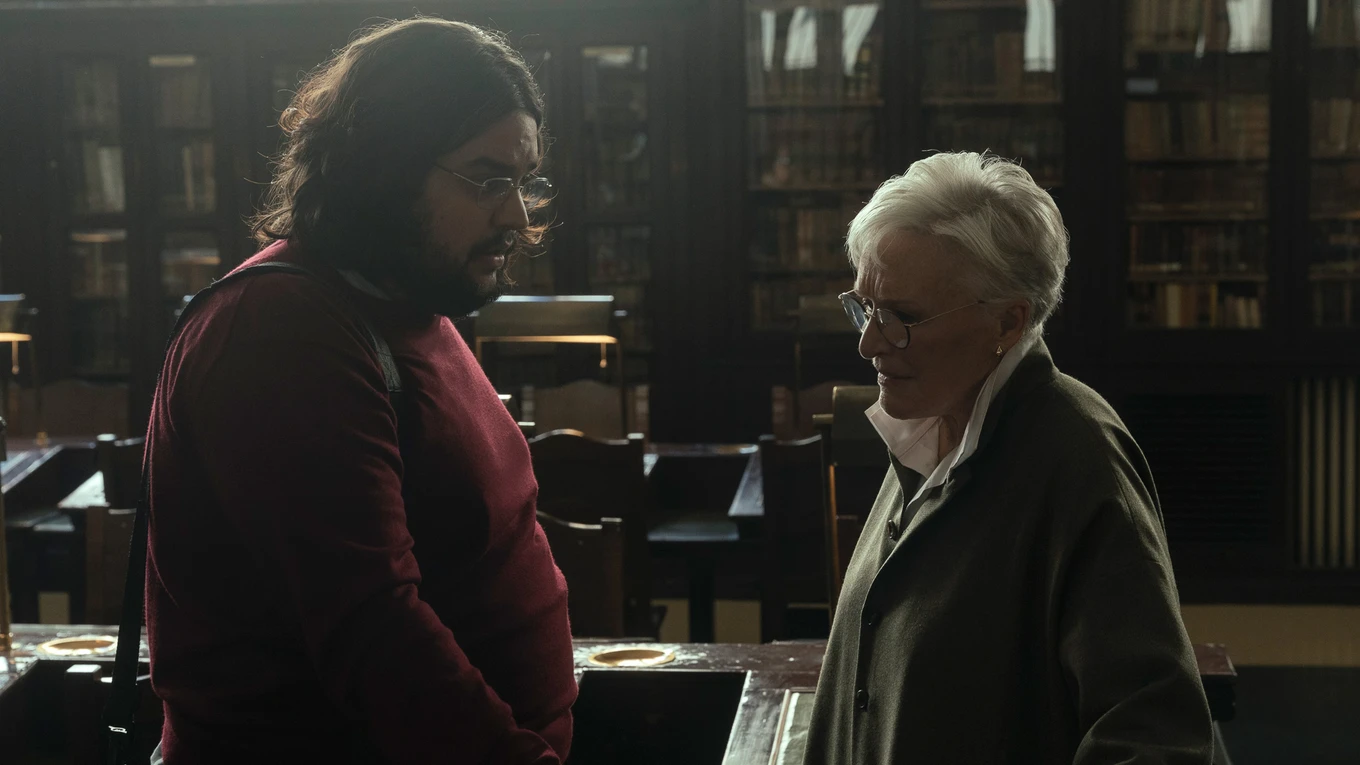
Alberto is played by Carlos González, and his journey includes a trip to Cantabria, a reunion with his grandfather’s surviving partner and a conversation with the scholar Isabelle Durand, played by Glenn Close. Isabelle allows the screenplay to discuss the work of academic memory without turning the film into an essay: she is a flesh-and-blood character with her own losses, not merely an explanatory voice.
Lorca, Conejero and the lost manuscript
“The Black Ball” begins with four surviving pages of an unfinished play by Federico García Lorca. The title refers to the exclusion vote — the “black ball” — used against a young gay man trying to join a Granada social club. Lorca never completed the text, and that gap became the film’s engine: what happens to a story that could not be told to the end?
To fill the void, the directors turned to Conejero’s “La Piedra Oscura,” which reconstructs the final days of Rafael Rodríguez Rapún, and to the playwright’s own biography. Conejero shares screenwriting credit with Calvo and Ambrossi, and the character Alberto was conceived as an echo of his own path. The film also pays tribute to the Hispanist and Lorca biographer Ian Gibson by mirroring the scholar’s family background in Glenn Close’s character.
The production is a Movistar Plus+ and Suma Content Films project, co-produced by El Deseo and Le Pacte, with Atresmedia’s participation. The budget was around €15 million, high for Spanish cinema, and Gris Jordana shot the film on 35 mm, using two Arricam LT cameras and Panavision Primo lenses. Locations included the abandoned village of Castil de Carrias, Comillas, Lafuente, Granada, Sierra Nevada, Sigüenza, Athens and Madrid.

Costume designer Ana López-Cobos drew on images of Raquel Meller, La Fornarina and Tórtola Valencia for Nené’s look. Penélope Cruz, in turn, studied Olga Ramos and rehearsed with the singer’s daughter, Olga María. The attention to Spanish popular culture is not decorative: the songs, costumes and gestures of the cupletistas work as an emotional counter-history of repression.
Box-office phenomenon and awards season
In Spain, “The Black Ball” opened on Sept. 25, 2026, through Elastica and quickly became a phenomenon. The film has surpassed 5.5 million admissions and €36.7 million at the domestic box office, according to figures compiled by trade outlets. It is the most-watched film of 2026 in the country, Elastica’s biggest release ever and one of the highest-attendance Spanish titles of all time.
The performance surprised those who expected the three-story structure and long runtime to limit its commercial reach. Strong reviews, word of mouth and a sense of FOMO — fear of missing out on the event — turned the launch into a cultural moment. In the United States, Netflix won a bidding war against A24, Mubi and Neon and set a 47-day window between its theatrical release on Oct. 16 and streaming on Dec. 2. It is the longest theatrical window Netflix has ever given one of its films.
In Brazil, Paris Filmes has set the release for Jan. 21, 2027. In Portugal, Nitrato Filmes is opting for a gradual rollout, with screenings concentrated in major cities and later circulation through independent cinemas. The hope is that word of mouth will repeat among Portuguese audiences, especially those following the awards race.
Cast: from Penélope Cruz to Guitarricadelafuente
The cast combines international stars, young actors and names from Spanish music. Guitarricadelafuente, one of the most popular artists of Spain’s new generation, makes his acting debut as Sebastián. Miguel Bernardeau plays Rafael Rodríguez Rapún; Carlos González is Alberto; Milo Quifes is Carlos; Lola Dueñas is Teresa; Penélope Cruz plays Nené Romero; and Glenn Close is Isabelle Durand.
- Guitarricadelafuente — Sebastián, a trumpeter assigned to guard prisoner Rafael
- Miguel Bernardeau — Rafael Rodríguez Rapún, Lorca’s former lover and a member of La Barraca
- Carlos González — Alberto, the historian who inherits the manuscript
- Milo Quifes — Carlos, the young man rejected by the social club in 1932
- Lola Dueñas — Teresa, Alberto’s mother
- Penélope Cruz — Nené Romero, the cupletista who performs for the troops
- Glenn Close — Isabelle Durand, a Lorca scholar
- Antonio de la Torre — Vicente, Carlos’s father
- Natalia de Molina — Valentina, Carlos’s sister
- Alberto Cortés — Federico García Lorca
The film also features appearances by Albert Pla, Mona Martínez, Julio Torres, Lorenzo Zurzolo, Yenesi and Judeline, who performs a version of “Soldadito español.” The score, by Raül Refree, has 24 tracks and was released by Lakeshore Records on Oct. 16. Guitarricadelafuente sings “La nieve,” a song he co-wrote with Refree that appears in one of the final scenes.
What the critics say
The critical reception was mostly positive, with praise for the visual ambition, the cast and the emotional pull, but also reservations about excess and length. On Rotten Tomatoes, the film holds an 86% approval rating from 136 reviews, with an average score of 8.4/10. On Metacritic, it scores 77/100 based on 33 reviews, indicating “generally favorable” notices.
Peter Bradshaw of The Guardian gave it 4 out of 5 stars and called it “rich and rewarding,” with “handsomely produced, lovingly detailed and confidently constructed” filmmaking. Richard Lawson of The Hollywood Reporter described “a dazzling mix of contemporary pop sensibility and classical filmmaking.” Guy Lodge of Variety, meanwhile, criticized what he saw as “turgidly overblown melodrama,” a reminder that enthusiasm was not unanimous.
“Violence is not always found in what we do, but in what is left unsaid.”
The line sums up the film’s core: rather than showing aggression, “The Black Ball” is interested in silences, in video calls that fail to connect and in hands that hesitate before ringing a doorbell. It is a choice that pleases those who prefer melodrama and emotion to rigid historical reconstruction, and frustrates those who wish the three eras were more tightly interwoven.
“Almost everything in this film rings true. But above all, it has atmosphere and emotion.”
For international audiences used to seeing Spain through Almodóvar’s lens, the film offers a different register: more theatrical, more musical, more interested in collective rituals than in closed family units. The presence of El Deseo, Almodóvar’s production company, among the co-producers is no accident — there is a clear dialogue with that tradition, but also a desire to stretch it into other territory.
Where to watch and what to expect
“The Black Ball” opens in Portugal this Thursday, Nov. 5, with screenings in Lisbon, Porto, Coimbra, Braga, Setúbal and Figueira da Foz, among other cities. The version being shown is the original Spanish-language cut with Portuguese subtitles. The rating is M/14, and the running time confirmed by Portuguese exhibitors is 2h35.
For awards watchers, the film is a central player: it represents Spain in the Best International Feature Film category and arrives on the circuit after a U.S. campaign led by Netflix, with a theatrical release before streaming. The Spanish Academy’s selection, combined with audience awards in Toronto, San Sebastián, Sydney and London, places “The Black Ball” among the season’s strongest contenders.
For viewers simply wondering whether it is worth the trip, the answer depends on appetite. It is a long, unabashedly melodramatic film full of music, one that asks for surrender to its ritual. Those expecting a conventional Lorca biography may be thrown; those who accept the invitation to cross three eras through bodies, songs and manuscripts will find one of the year’s most singular films. More information and showtimes are available at theater box offices and on the film’s official Cannes Film Festival page. The Portuguese release is supported by RTP Antena 1, which highlighted the premiere in its programming.
The Portuguese launch also serves as a warm-up for the Brazilian rollout: with a release set for Jan. 21, 2027, through Paris Filmes, “The Black Ball” should reach Brazil carrying its awards and the curiosity surrounding its Lorca adaptation. In the meantime, readers can follow other film releases in the Revista Pixel Films section and check the streaming calendar in our Netflix November preview.
Suggested and related articles

12 Nostalgic Movies Streaming on Netflix Right Now

Netflix Buys Joel Coen's 'Jack of Spades' for Fall 2027

Hugh Jackman The Death of Robin Hood Hits No. 1 on HBO Max
50th SP Film Fest awards Colombian drama on armed conflict

Harry Potter: Why Gryffindor is the only chosen house