Stargate SG-1: 'The Other Side' is still its darkest hour
Published on · Updated on
A retrospective on why 'The Other Side', from Stargate SG-1 season 4, still carries one of the darkest endings ever aired in television science fiction.
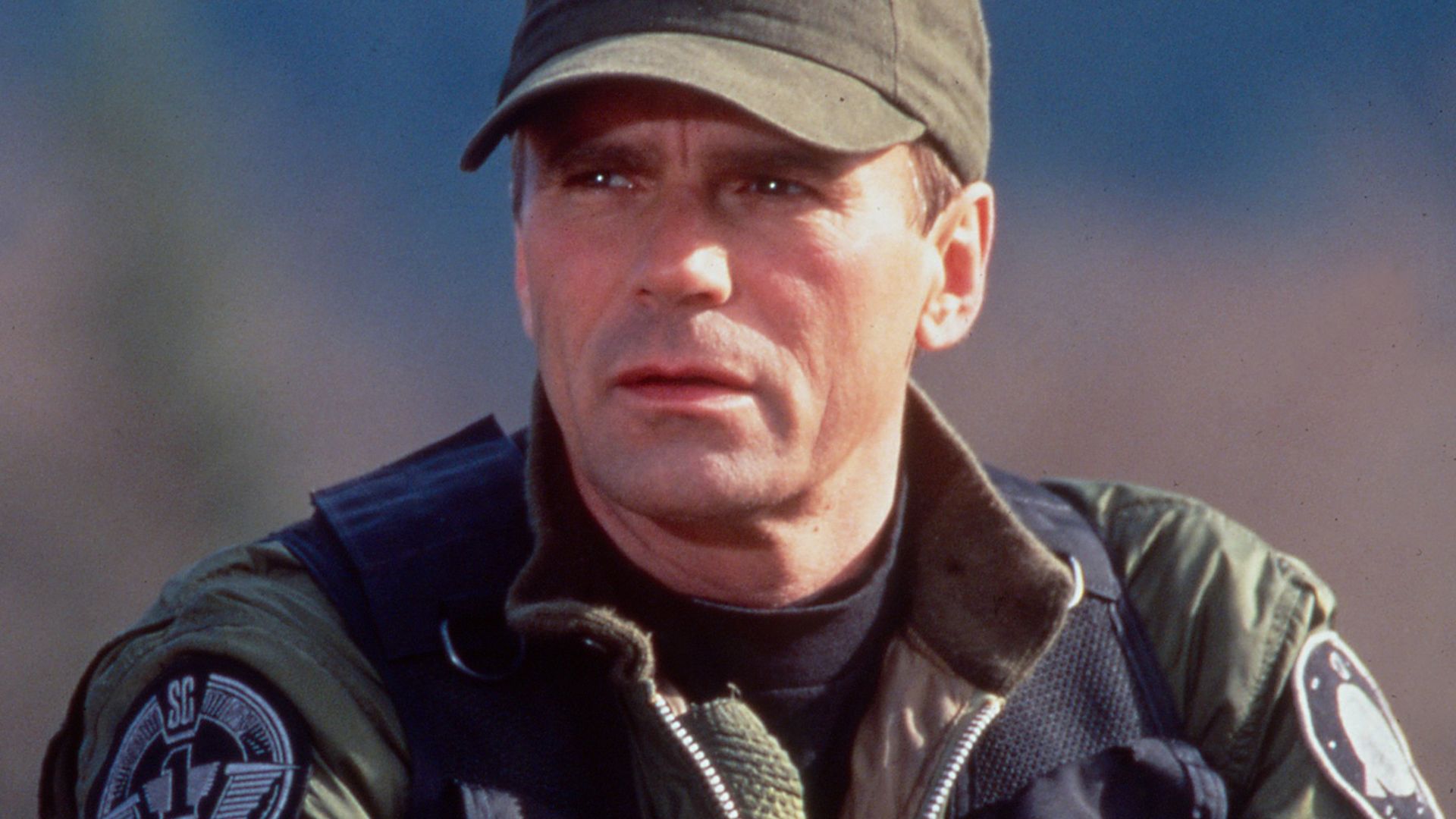
In "The Other Side" (season 4, episode 2, first aired in the US on July 7, 2000), Stargate Command's premier team meets the first civilization ever willing to share advanced technology with Earth — and, before the hour ends, discovers that the distress call came from a racist people waging a war of genetic cleansing. Who decides how it ends is Col. Jack O'Neill (Richard Dean Anderson). What he does, once the truths he chose to ignore are confirmed, is sabotage his allies' shield, hand their base to their enemy, and let their leader Alar die against the Stargate iris. Where it happens is the planet Euronda and Stargate Command; when, early in SG-1's fourth season; how, through a trade deal that turns out to be complicity; why the episode is still remembered as the franchise's darkest — because it proves the show's usual lightness could, in fifty minutes, give way to the densest moral gray the franchise ever aired. The CBR recently returned with a full retrospective of the episode and reignited the fan debate.
Why "The Other Side" is still Stargate SG-1's lowest point
Stargate SG-1 has always balanced war and loss with humor and resilience. The show follows the SG-1 team — commanded by O'Neill, with Maj. Sam Carter (Amanda Tapping), the Jaffa Teal'c (Christopher Judge) and the archaeologist Daniel Jackson (Michael Shanks) — hopping from world to world hunting allies and technology against the Goa'uld. That usual lightness is exactly what makes "The Other Side" season 4's watershed: it opens as a promise of prosperity and ends with the team worse off than when it arrived, complicit in a near-genocide.
It was never a throwaway hour. Written by Brad Wright and directed by Peter DeLuise, the script used a market premise — yes, commerce — to pose the question the show had been avoiding: what is a neighbor's technology worth when the seller is a monster?
The Stargate program was created to procure technology
The 1994 movie sent Daniel Jackson and O'Neill to the planet Abydos, where the commando destroys Ra's threat by nuking his ship. In the series' two-part pilot, "Children of the Gods", the Goa'uld return to Earth, abduct an officer and kill the men stationed at the gate — and the US Air Force builds the Stargate program around a double goal: find allies and procure technology to defend the planet.
For three seasons, though, Earth mostly hit the same closed door in front of the galaxy's most advanced civilizations:
- The Nox refused to hand any advanced technology to societies at war.
- The Tollan were diplomatic allies but strict about giving weaponry to less developed peoples; they accepted humanitarian deals, such as search and rescue.
- The Asgard offered protection — Earth was folded into their treaty with the Goa'uld — but never handed over weaponry.
- The Tok'ra, symbiotes of willing hosts, traded information, not offensive technology.
- In practice, nearly everything Earth captured came from stealing from the Goa'uld.
Then, early in season 4, the SGC received five calls in barely an hour from an unknown world: for the first time, someone dialing Earth, asking for help.

What the Eurondans were selling
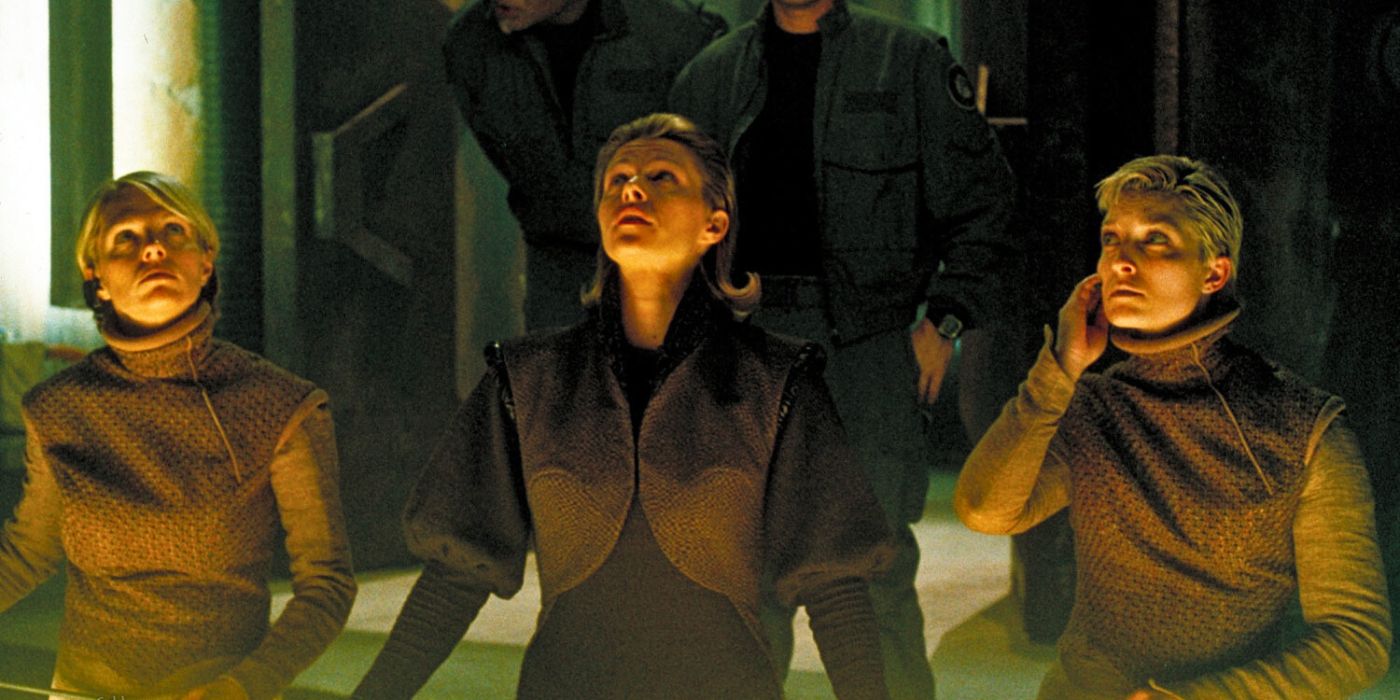
At Euronda, SG-1 finds a world with a poisoned surface and an underground base locked for decades in war. The civilization is, by Carter's estimate, a century ahead of Earth, and its leader Alar (René Auberjonois, DS9's Odo) offers a tempting package: medical and weapons technology in exchange for heavy water — the deuterium feeding his fusion reactors and the shield protecting thousands of people sleeping in stasis chambers. Without heavy water, the bombardment wins, and everyone dies.
What was on the table:
- The remote piloting neural interface for drone fighters, tested on the spot by O'Neill and Teal'c, who shoot down an enemy drone.
- Beta-cantin, a serum reversing in seconds a head trauma that would take weeks to heal for a human.
- The compact fusion generator Carter will examine — the machine that reveals the truth about the shield.
O'Neill is eager to close the deal. Daniel is not.
Daniel Jackson, SG-1's moral compass
As the team's only civilian, Daniel routinely plays SG-1's conscience. In this hour he tries to ask the Eurondans who the enemy is and what the war is about — and O'Neill, drunk on the deal, shuts him down. Back on Earth with Carter to fetch the first load of heavy water, Daniel puts the dilemma to Gen. Hammond:
"You said yourself that we could not and would not devote the resources necessary to win a war. If we can provide all that and more in the form of water, then the moral issue just evaporates?" — Daniel Jackson
Hammond argues his objection is about military assets and personnel. Daniel dismantles the distinction: bankrolling a war with raw materials is bankrolling a war, and whoever can turn the tide needs to know for whom. He trusts Hammond and O'Neill — but feels obligated to hold them to the standard they demand of everyone else.
The episode also sustains its willful-ignorance thesis with one cruel detail: O'Neill knows that investigating could cost the alliance Earth so badly wants — and he chooses not to look. It is the mistake he will bill himself for at the end.

"Breeders": the reveal that pushes the episode over the edge
The pivot comes when Alar suggests Teal'c not come back to the planet, because the Jaffa is "not like us". O'Neill, who had silenced Daniel's questions all day, instantly understands the problem is not that Teal'c is Jaffa — it is that he is Black. From then on, the colonel gives Daniel the same clearance he had refused on arrival: "ask questions. Lots of questions."
Questioned by Daniel, Alar's second-in-command Farrell (Anne Marie Loder) has only one name for the enemy: "Breeders". And she hands over the war's reason with surgical coldness:
"They reproduce indiscriminately, with no regard for genetic purity." — Farrell
The details stack up: in the stasis chambers, every face O'Neill leafs past is young and light-skinned, and Alar openly praises his frozen generation as "genetically pure". Carter finds pipes running from the storage tanks up to the surface: the Eurondans built the buried base before the war, in preparation for it — and then poisoned their own skies to exterminate the "genetically impure" of their own world. Technically the enemy struck first; they did it to stop the poison — the Eurondans' own — from being released again.
The war Earth nearly bankrolled with heavy water was, at its core, an ethnic cleansing project.
The ending: "Close the iris" and Alar's death
O'Neill's answer is not just to withdraw the team — it is to repair the damage he nearly helped produce. Using the interface under the pretense of "helping", he and Teal'c fly the Eurondan fighters not against the enemy bombers but escorting them: they destroy the base's defenders along the way and, in the end, O'Neill crashes his own aircraft onto the complex, collapsing the shield. Daniel and Carter physically stop Alar and Farrell from crossing the room to stop the plan. The deal dies there: no heavy water, no technology, no alliance.
Escaping through the Stargate, O'Neill knows Alar will try to follow. From SGC ops he radios Hammond: "close the iris". Seconds later the dialing computer registers a body slamming into the titanium barrier: Alar tried to follow SG-1 home and died. Carter stares, unsure what to say, at the closed face of the colonel who ordered the gate shut. And the episode ends there — no reflection, no post-credits scene, no comfort.
That final move is what makes the hour a dark landmark: O'Neill goes from willful ignorance to destructive resolve. He does not kill in self-defense, nor in the heat of battle; he coldly orders the death of a man who, hours earlier, was shaking his hand as a partner. Brad Wright pushed the franchise's charming leader to a point of no return.
Episode facts
| "The Other Side" — Stargate SG-1 | |
|---|---|
| Season / episode | Season 4, episode 2 (S04E02) |
| US premiere | July 7, 2000 |
| Written by | Brad Wright |
| Directed by | Peter DeLuise |
| Guest cast | René Auberjonois (Alar), Anne Marie Loder (Farrell) |
| Fan rating | 7.84 in GateWorld's historical average |
| Original networks | Showtime / Syfy (1997–2007) |
Why the retrospective matters now
Two bits of context make the rewatch timely. First, Stargate is back in the news: Amazon is developing a new Stargate project from a WandaVision creator, and Michael Shanks, the series' Daniel, has just launched the official podcast "A Full Circle" backstage pass. Second, the central dilemma has aged better than any special effect. "The Other Side" is about striking deals without knowing whom you are bankrolling: supplying fuel to a war you refuse to understand. Daniel's question — "does the moral issue just evaporate?" — still applies to any negotiating table, in politics, economics or diplomacy.
More than 25 years later, "The Other Side" remains one of TV science fiction's most discussed hours, and the muffled thud of the iris is still the episode's signature lesson: a good hero can be pushed into moral ruin not by malice, but by haste.
For more sci-fi series coverage, browse our TV series section; pop culture essays and news also rotate in our site search.
Suggested and related articles
Blade Runner 2099 Gets Prime Video Release Date and Teaser; Check Out the Details
Far Cry Live-Action Series Casts Star-Studded Lineup With Eight Confirmed Stars in Anthology Format
Netflix posts $12.9bn in Q3 and touts GTA VI deal
Neagley puts Maria Sten in the lead of Prime Video spin-off
Domingo Corral hails HBO Max TV deal: ‘I’ve found a home’