Netflix posts $12.9bn in Q3 and touts GTA VI deal
Published on · Updated on
Revenue rose 12% in Q3 2026 and profit beat forecasts, but shares fell on weak guidance; the shareholder letter highlights the GTA VI partnership.
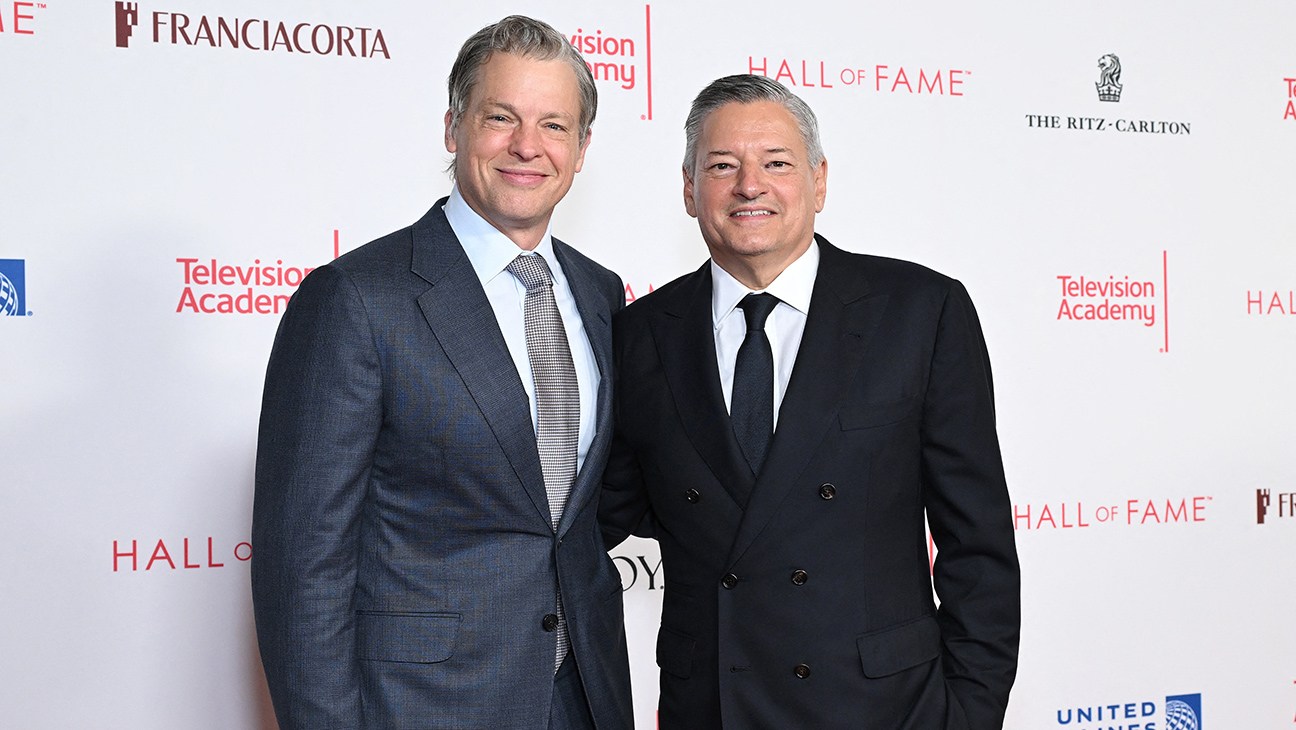
Netflix closed the third quarter of 2026 with $12.9 billion in revenue, up 12% year over year, and $4.46 billion in operating income, according to the shareholder letter published on October 20, after the U.S. market closed. The numbers matched the company's own forecast and beat earnings-per-share estimates, but they came with weaker fourth-quarter guidance and a cut to advertising revenue expectations. In the same document, Netflix chose its partnership with Take-Two to premiere a sneak peek of Grand Theft Auto VI as an example of its licensing and cultural-event strategy.
The gap between operating performance and the market reaction sums up where the world's largest streaming service stands: profitable, mature and under pressure to grow faster again. Shares fell 5.3% the next day to $65.04, the lowest level in two years, after a decline of nearly 30% so far in 2026.
Revenue in line, profit above forecast
Revenue of $12.874 billion was essentially in line with Netflix's own guidance of $12.860 billion and with analysts' consensus of about $12.87 billion. Growth of 11.8% over the same period in 2025, however, was the slowest in nearly three years — a sign that the streaming boom has reached a new phase.
Operating income rose 37% to $4.459 billion, and the operating margin jumped from 28.2% to 34.6%. The company credited the beat mainly to the timing of expenses rather than a structural change in profitability. Net income reached $3.664 billion, up 43.9%, and diluted earnings per share came in at $0.87, against $0.59 a year earlier and guidance of $0.82.
| Q3 2026 metric | Result | Comparison |
|---|---|---|
| Revenue | $12.874bn | +11.8% year over year |
| Operating income | $4.459bn | +37% |
| Operating margin | 34.6% | was 28.2% |
| Net income | $3.664bn | +43.9% |
| Diluted EPS | $0.87 | was $0.59 |
| Share buybacks | $4.8bn | 63.9 million shares |
Netflix also said it repurchased 63.9 million shares for $4.8 billion in the quarter, its largest buyback ever, with $22.3 billion of authorization remaining. The company cited 325 million subscribers and said it serves "an audience approaching one billion people" — a reach metric that includes account sharing and viewing outside the core subscriber base.
GTA VI at the center of the licensing strategy
The most discussed passage in the letter is not financial. Explaining how it plans to expand its slate with third-party content, Netflix pointed to its deal with Take-Two, owner of Rockstar Games, to stream Grand Theft Auto VI: An Extended Look. The 26-minute special, captured entirely from PlayStation 5 gameplay, premiered on the service on August 27, six hours before it went live on YouTube and Rockstar's official site.
"We partnered with Take-Two to unveil a sneak peek of the highly anticipated Grand Theft Auto VI in August."
The move was unusual: a video game trailer, normally distributed for free to the widest possible audience, got an exclusive window on a paid streaming service. Rockstar announced the screening on August 6 and kept the footage available on Netflix after the premiere. Some viewers criticized what they called a paywall around a trailer; for Netflix, the episode worked as proof of concept for attracting major franchises and launch events.
Watch: Grand Theft Auto VI: An Extended Look — official announcement (Rockstar Games)
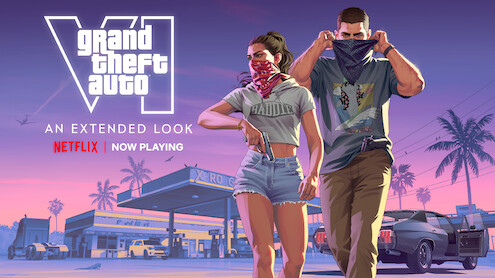
It is important to separate what the letter says from what the market began to speculate. Netflix did not announce that GTA VI will be playable on the service, nor did it detail a broader agreement with Take-Two. The document mentions the partnership only in the content-licensing section and does not discuss its games plans — an area the company has presented as an extension of the business but left out of the quarterly report. The safest reading is that Netflix wants to be a stage for cultural launches, not necessarily a game distribution platform.
The same approach appears in other deals cited in the letter. Netflix struck a licensing agreement with Disney to bring all five Ice Age films to the service ahead of Ice Age: Boiling Point, set for February 2027, and signed a partnership with French broadcaster TF1. These are bets on library content and release windows that lower the cost of building originals from scratch.
Why Wall Street reacted badly
The weak spot is the outlook. For the fourth quarter, Netflix expects revenue of $13.442 billion, up 11.5%, below the $13.51 billion projected by analysts. The company forecasts net income of $2.787 billion and earnings per share of $0.67, about 8% below consensus. The operating margin is expected to fall to 26%, including a hit of about 120 basis points from recent layoffs.
Netflix cut about 1,000 jobs, or 6% of its workforce, its largest reduction in years. Among the most prominent departures were chief content officer Bela Bajaria, replaced by Peter Rice, and film chief Dan Lin. On the earnings call, co-CEO Ted Sarandos praised Bajaria but acknowledged the company can execute better. In September, he had already said Netflix was "not growing as fast as I want us to."
Advertising revenue became the main target for criticism. Netflix cut its 2026 forecast from about $3 billion to roughly $2.7 billion, citing a slower-than-expected rollout of some ad products. It still plans to expand its ad tier to 15 new countries in 2027, starting with nine markets in Europe, the Middle East and Africa in March, plus Colombia, Peru and New Zealand.
Viewing trends are also on investors' radar. The letter acknowledges concern about growth in view hours and argues that member response to 2026 price increases has been in line with expectations.
"We know there's some investor concern about our view hours growth. Member response to our 2026 price increases is consistent with prior price changes and our expectations, an indicator that our engagement — which encompasses quantity, quality and variety of viewing — remains healthy."
Analysts see two scenarios. New Street Research's Dan Salmon urged skepticism toward a strategy that doubles down on the traditional core — premium TV, films and live events — while Netflix remains largely absent from the fastest-growing areas of video, such as short-form and mobile. MoffettNathanson kept a buy rating and a $90 price target, betting on the company's ability to monetize scale, while Wedbush reiterated "outperform" and cut its target from $90 to $80.
From the NFL to Ice Age: what sustains the slate
Netflix argues that its third-quarter slate delivered meaningful audiences, a theme that has produced previous records on the platform. In the U.S. and Canada, highlights included The Last House with 91 million views, Death of the Pastor's Wife (45 million), The Idaho Murders: College Nightmare (38 million), Why Did I Get Married Again? (36 million), season three of My Life With The Walter Boys (29 million) and Little House on the Prairie (29 million). In Europe, the Middle East and Africa, A Toxic Love Story led with 43 million views, followed by season two of The Gentlemen with 33 million.
The company also highlights its international reach: viewing of non-English titles has grown from less than 10% of the total to more than a third. Examples include Plastic Beauty, The Secret Woman and The Perfect Lie, on track to become the most-watched titles ever in Japan, Denmark and the Netherlands, respectively.
For the rest of the year, the bet is on live events. The fourth-quarter slate includes the NFL's first Thanksgiving Eve game, a Christmas Day doubleheader and the Tyson Fury vs. Anthony Joshua fight. These broadcasts combine advertising, sponsorship and subscriptions in a single product — and explain why Netflix insists that the heart of the service remains TV, film and live events, which generate "nearly all of our revenue."
What to watch through December
For the full year, Netflix projects $51.1 billion in revenue, up 13%, and an operating margin of 31.5%. That is slightly below its previous expectation but still double-digit growth in a mature market. The challenge is to balance three fronts: restoring revenue growth, expanding advertising without further execution missteps and keeping audiences engaged against YouTube, TikTok and Instagram.
The Take-Two partnership shows that Netflix wants to sit at the center of the cultural conversation, even when the product is not its own. Whether that model can generate recurring revenue or only buzz is what the coming quarters will answer. For readers following the streaming market, the ad plan's execution and the performance of live events are more decisive indicators right now than any trailer.
Meanwhile, the catalog remains the company's main asset. Familiar franchises and licensing deals with traditional studios will share space with the originals that built the platform's identity. The open question is whether Netflix can turn reach into sustainable growth — or whether the market will keep demanding another leap in scale.
Suggested and related articles
Haunted Hotel Season 2 Confirmed by Netflix: Release Window, Cast and Animated Series Details
Project Power: the pill that grants five minutes of power

Domingo Corral hails HBO Max TV deal: ‘I’ve found a home’
The Terminal List Season 2 is now on Prime Video
Ransom Canyon: Josh Duhamel reacts to Netflix cancellation