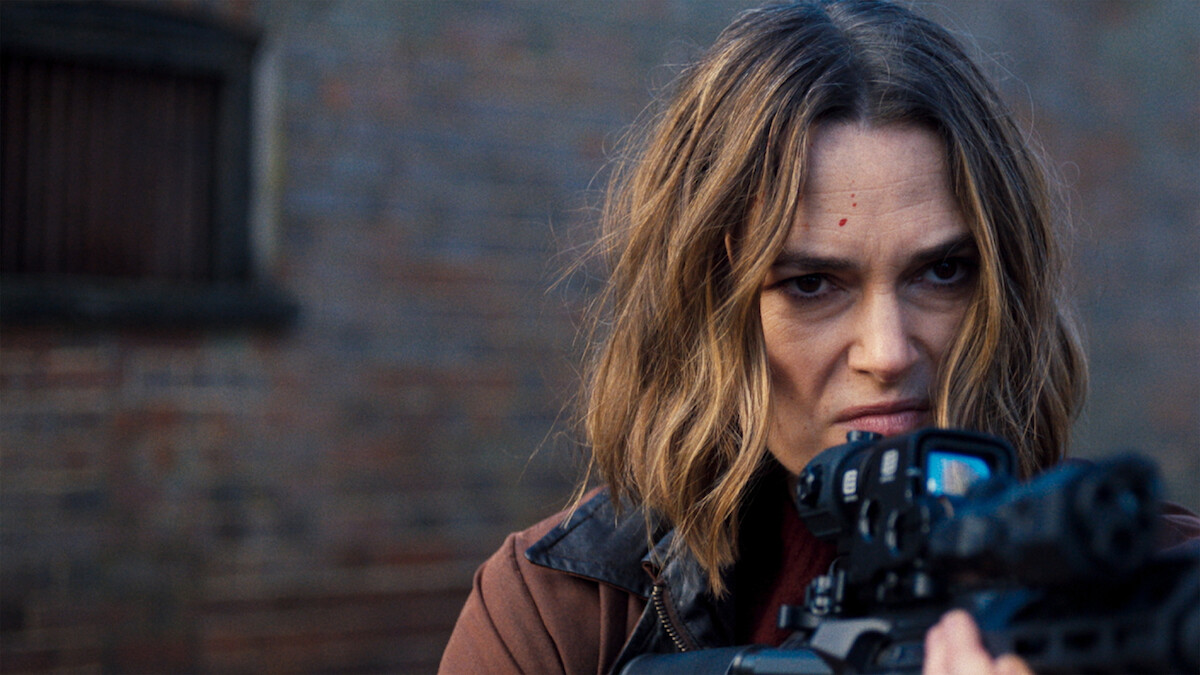
Is Netflix's The Body Based on a True Story?
Published on · Updated on
Netflix's The Body is not based on a true story, but it draws on its creators' memories of religious school, sexuality and Catholic guilt in adolescence.
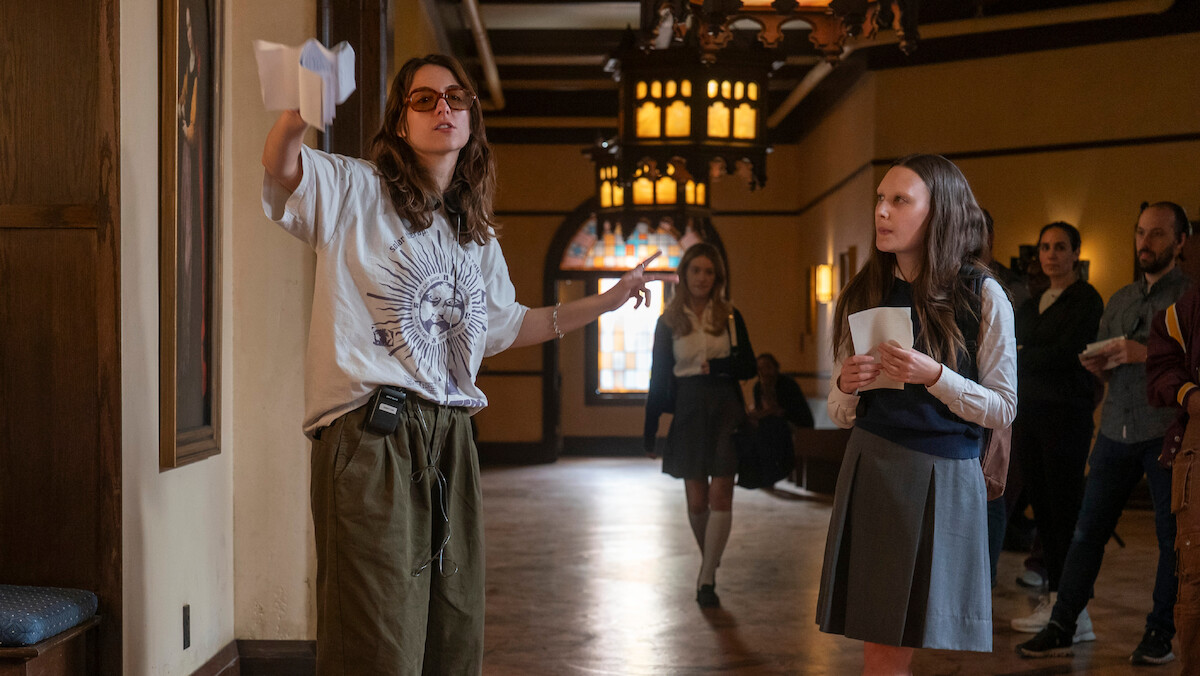
The Body, the eight-episode series Netflix released on November 11, 2026, is not based on a true story. The demonic possession, the prophetic visions and the mass hysteria that take over the show's fictional town came from the mind of creator, writer and showrunner Quinn Shephard. What is real in the series belongs to another order: the memories of religious school shared by Shephard and co-showrunner Gina Gammell, the panic surrounding adolescent sexuality and the social machinery of witch trials — material the two used to give texture to an entirely invented story.
The question follows the release because The Body leans on codes audiences have learned to associate with real accounts: a Catholic school, a collective outbreak, a girl in a coma, a community that would rather believe in a miracle than look for a medical explanation. The series, however, does not adapt a book, does not reconstruct a crime and does not present itself as a docudrama. It is original fiction, written by Shephard from her own memories and from declared references — from Carrie to The Crucible and the historical Salem witch trials.
What the show invents
The story begins on Halloween night at a Catholic school in the early 2000s. Grace (Sofia Wylie), the newest member of the Lions dance team, goes through the squad's initiation and takes Ecstasy supplied by Anya (Kristina Bogic), the team captain. The girl gets sick, has a seizure and falls unconscious. Afraid of being punished for drug use, Anya and Lisbeth (Geena Meszaros) decide to take her home instead of to a hospital — and hide what happened.
From then on, classmates begin reporting visions of Grace, who is in a coma. The school splits between those who believe in a miracle, those who speak of possession and those trying to understand what actually happened that night. Hysteria spreads through the town, and Anya's guilt grows as she tries to hide her role in the episode. None of these people existed. There is no police station, medical report or court file behind the plot — what exists is a dramatic structure built to sustain eight episodes of suspense.
| Element in The Body | Status | Origin |
|---|---|---|
| Demonic possession and prophetic visions | Fiction | Quinn Shephard's script |
| The Lions dance team and the show's Catholic school | Fiction | Setting created for the series and shot in Dundas, Canada |
| Halloween initiation with Ecstasy | Fiction | Starting point of the script |
| Mass hysteria around Grace | Fiction | Inspired by the Salem witch trials |
| An all-girls Christian school | Real | Gina Gammell's personal experience |
| Fear and confusion about one's sexuality | Real | Quinn Shephard's personal experience |
| The Jeff Buckley routine at regionals | Real (behind the scenes) | Choice made by actors Sara Boustany and Kristina Bogic |
| A police case or real investigation | Does not exist | — |
Watch the official trailer: The Body | Official Trailer | Netflix.
The religious school Gina Gammell attended
The most concrete part of The Body is not the supernatural; it is the school routine. Gina Gammell, co-showrunner and executive producer, attended an all-girls Christian high school as a non-Christian. The experience of trying to fit into an environment where faith organizes the social hierarchy became raw material for the hallway, chapel and locker-room scenes — the ones where viewers recognize how any adolescent group works.
"When you're trying to find your own identity, whether it's artistic identity, your sexuality, etc., I think that it is really a distinct feeling to be like, 'Who am I in a group, and who am I as an individual?' That is so personal to myself and to Quinn, but also to most people who grew up in any kind of group environment of girls."
That fidelity to the environment explains why the series feels familiar even when the plot swerves into exorcism. The school in The Body is invented, but the discomfort of those who do not belong there is observed, not imagined. It is the difference between "based on a true story" and "based on real experiences": the second, more modest phrase is the one that describes the project accurately.
Quinn Shephard's queer adolescence
Shephard also brought her own emotional confusion as a teenager into the script. The creator said she felt like an "outsider" at school and, like Anya, took a long time to understand what she felt for other girls. The central fear was not desire itself, but the possibility of losing a skill she had worked hard to acquire: the ability to spend time and communicate with other girls without awkwardness.
"I think I had quite a lot of fears around the idea of losing something that honestly had taken me a really long time to learn, which was the ability to feel comfortable and be able to communicate with other girls in a normal way… so I just shoved that really far down. I literally remember when I was first trying to come out, I was like, 'Am I going to have to be butch? Am I going to have to cut my hair short and wear rainbow knee socks?'"
Specific scenes grew out of that memory, such as Anya's failed attempt to kiss Elise (Sara Boustany) and the tortuous way the character turns desire into a performance for her boyfriend, Steven (Orlando Norman). None of it is reconstruction: it is transposition. The series does not claim that it happened; it claims that it was felt.
Salem, Carrie and the grammar of Catholic horror
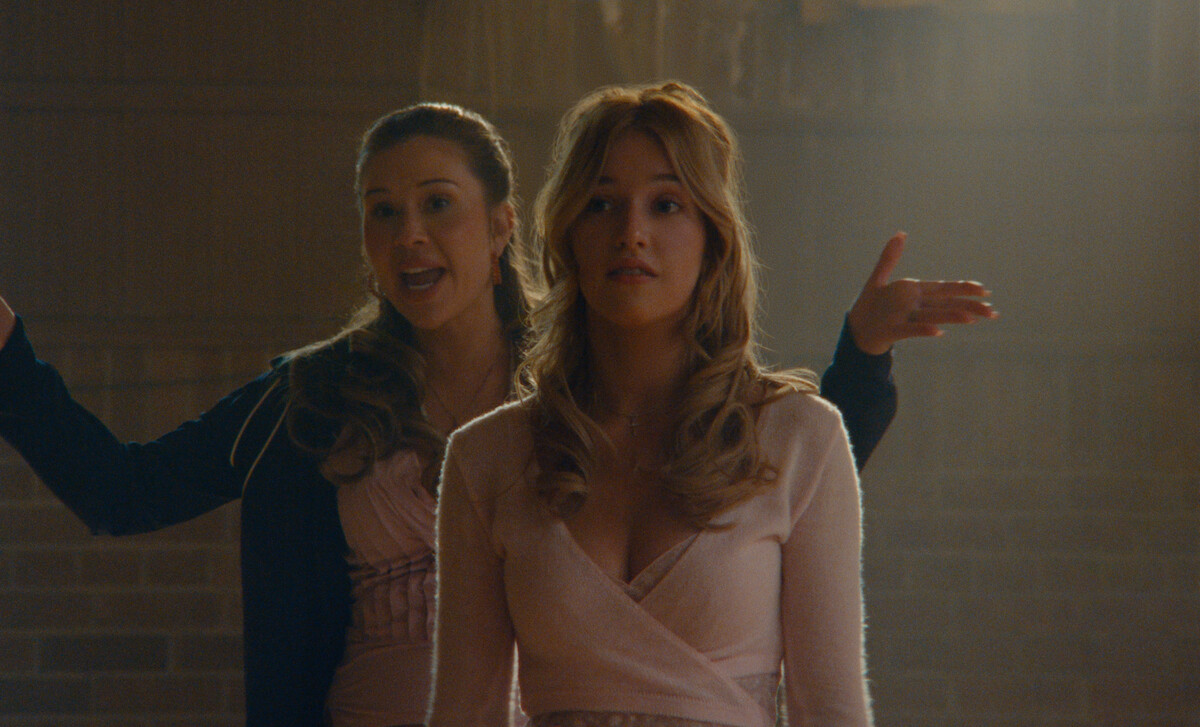
The references the showrunners have named help separate influence from fact. Shephard and Gammell cited Carrie, Jennifer's Body, Heavenly Creatures and Mean Girls as tonal inspirations. The oldest foundation is Arthur Miller's The Crucible and the historical Salem witch trials, which Shephard studied as a teenager.
That repertoire supplies the idea of a community that reads physical symptoms as a divine or demonic sign — a mechanism documented in episodes of mass hysteria, but applied here to invented characters. The series also adopts the aesthetic vocabulary of the 2000s: glittery makeup, pop soundtrack, gym clothes. Shephard described the result as "gritty camp," a teen psychodrama with a touch of Catholic horror.
The rule of two explanations
The most revealing narrative choice in The Body is its refusal to close the door on the supernatural. According to Shephard, everything that has a supernatural theory in the series must also have a plausible medical or scientific counterpart. Viewers are therefore left with two readings at once — and that ambiguity is deliberate, not a scripting mistake.
"Everything that happens that has a supernatural theory in the show should always have a counterpart with a totally grounded medical or scientific explanation."
The device is common in possession fiction at least since The Exorcist, but here it serves a practical purpose: it allows the series to talk about guilt, repression and moral panic without having to claim the devil exists. It is also why the ending — with Grace waking up and saying "I am God" — was written to accept more than one interpretation. Anyone looking for a real case behind that scene will not find one: the finale was planned by the showrunners before the project was even sold to Netflix.
Scenes born on set, not from a real case
Much of what feels documentary in The Body came from behind-the-scenes decisions. The hot tub scene, in which Anya kisses Elise in front of Steven, was developed in the writers' room and then rewritten with the cast. The actors also proposed blocking changes: Anya and Elise's first intimate scene was originally set against a wall and ended up on the floor, at Bogic's and Boustany's suggestion.
"By the end, Kristina and I were a bit of a mess. We cried for an hour after filming. We just couldn't shake it off. I mean, you convince your body, you're screaming and shaking and crying, and your body really doesn't tell the difference."
The music for the regionals performance was also the cast's choice: Boustany picked Jeff Buckley's "Lover, You Should've Come Over," cut a two-minute edit and sent it to the showrunners. Choreographer Ryan Heffington turned the track into a full routine. These are production details that help explain the sense of authenticity — and that have nothing to do with any real supernatural event.
Why the "true story" question keeps coming back
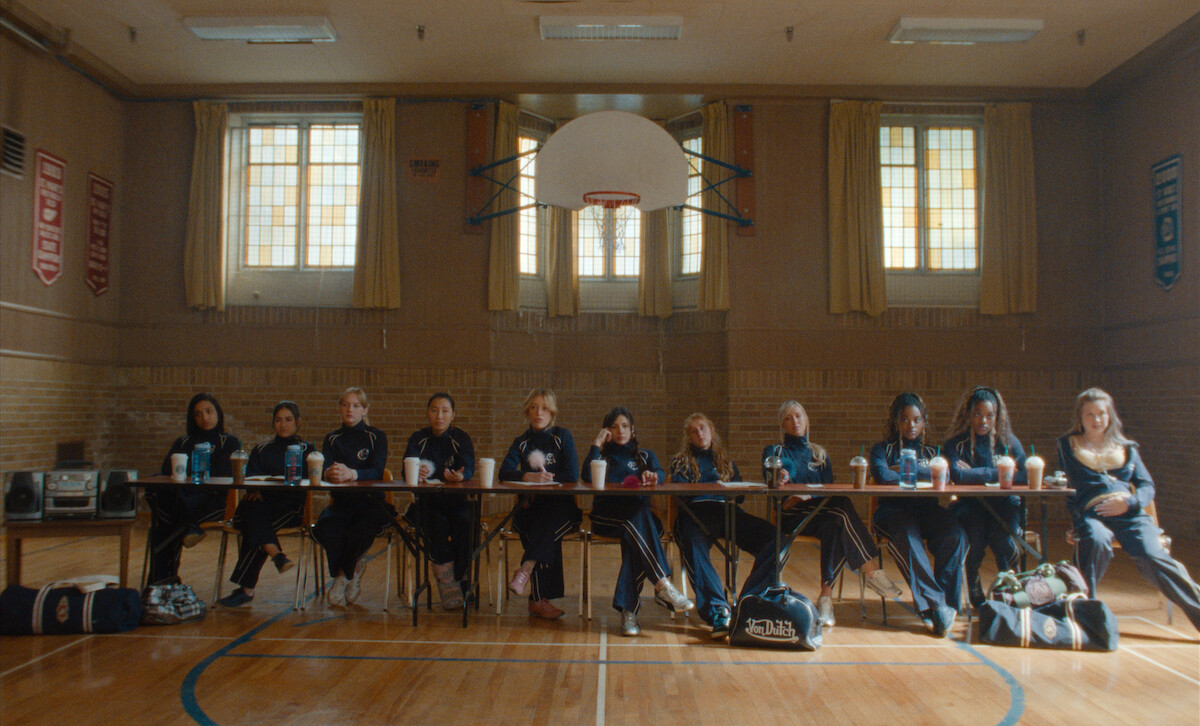
Three factors feed the doubt. The first is commercial: the "based on a true story" label became a selling point, and audiences grew suspicious of fiction that imitates the language of a document. The second is thematic: religious horror works with archives, reports and testimony, which gives staged scenes the appearance of evidence. The third is behavioral — the series arrived at a moment of true-crime saturation, when any mystery involving a missing girl, a small community and collective visions seems to point to a known case.
Verification, in this case, is simple. There is no source book, no lawsuit, no real victim cited in news coverage. The primary sources are the showrunners' and cast's interviews with Tudum, Netflix's press material and the series' production notes, which describe an original story created by Shephard. The rest is interpretation.
For readers following the series on this site, our profile of Anya Butler details how the character was built, and the series section gathers more reviews and explainers.
Fact box
- Title: The Body
- Platform: Netflix
- Premiere: November 11, 2026, with all eight episodes available
- Created and showrun by: Quinn Shephard
- Co-showrunner and executive producer: Gina Gammell
- Main cast: Kristina Bogic, Sara Boustany, Sofia Wylie, Geena Meszaros, Shirley Chen, Nnamdi Asomugha, Jackson Kelly and Gabby Windey
- Genre: teen drama, psychological horror and Catholic horror
- Based on a true story? No. The plot is fictional; the creators' experiences served as emotional inspiration
Critical consensus helped sustain interest after the premiere: according to Estadão, the series was approved by 77% of critics and 98% of registered users on Rotten Tomatoes. The number does not turn fiction into fact, but it suggests that the showrunners' bet — using personal memory to support a possession story — resonated with viewers.
The Body is streaming on Netflix. The series is fiction, and that freedom is exactly what allows it to address guilt, desire and belonging without resorting to a real case.
Sources: Netflix Tudum, Tudum (ending explained), the official The Body page, Estadão and Wikipedia.
Suggested and related articles
Minimum Wage on Netflix: Release Date and How to Watch

Planeswalker: When Does the Magic Series Hit Netflix?
Virgin River Renewed: When Does Season 9 Premiere?

HBO Max Reaches 3.1M UK Homes in Barb Debut
Anaesthesia: Netflix Debuts Its First Polish Medical Drama