
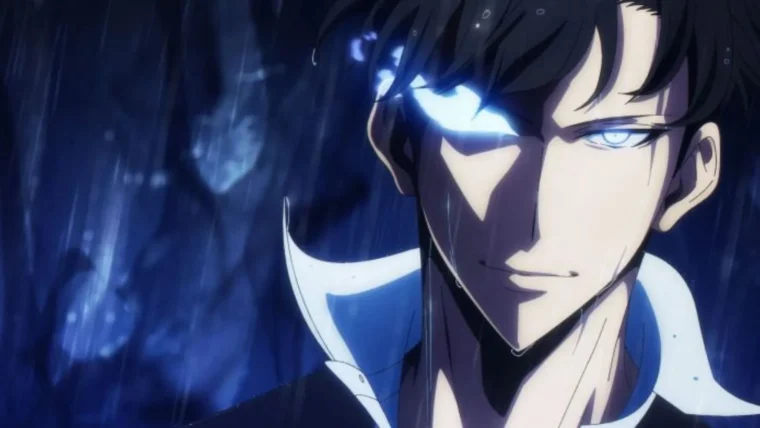
The anime universe, always buzzing, found in Solo Leveling a true watershed moment — or is it a thorn in the side? In 2025, the debate over the impact of this South Korean work that conquered the world remains heated, especially when we weigh its protagonist, Sung Jinwoo, and how the narrative challenges established giants, particularly the saturated isekai genre. Some love it, some criticize it, but one thing is undeniable: Solo Leveling arrived to shake things up.
Even if the hype seems a bit exaggerated to some fans, the truth is that poking at the wounds of the isekai genre, with its often predictable formulas, is not the hardest task. And Solo Leveling, even without fitting 100% into the “other world” box, does it masterfully, exposing what really works and what has already run its course. For years, isekai reigned supreme and comfortable. Now, the game has changed.

Sung Jinwoo’s Rise: A New Breath for Power Fantasies
Let’s be honest: the journey of the underdog who becomes absurdly powerful is nothing new in the shonen world. Sung Jinwoo walks this path, but he does so in a way that feels refreshing in today’s anime landscape, especially in 2025. Solo Leveling stands out as one of the most explosive recent examples of a power fantasy that does not depend on teleportation to another universe.
The big question is: to watch a protagonist go from zero to an invincible hero, does he really need to travel to another dimension? The isekai genre seems to believe so, selling the ultimate escapism where absurd powers can be used without the constraints of the real world. It’s a successful formula, of course, but like any dish repeated to exhaustion, it can lose its flavor. That’s where Solo Leveling comes in as a new seasoning, proving that power fantasy can flourish — and flourish well — without the need for a one-way ticket to a magical world. It goes head-to-head with isekai, showing that the essence of the power journey can be delivered more directly and, for many, more satisfyingly.
Solo Leveling: The “Isekai That Isn’t an Isekai” and the Challenge to the Industry
The genius of Solo Leveling lies in its hybrid structure. It borrows elements that made many isekai famous, such as RPG-system-based power progression (think The Rising of the Shield Hero or That Time I Got Reincarnated as a Slime), but applies them in a setting that, while fantastical, still has roots in our world. This combination puts it in a unique position, challenging not only isekai but also more traditional action shonen anime.
While anime like My Hero Academia or Jujutsu Kaisen build their narratives in the real world, avoiding the isekai “baggage,” they sometimes lack the clarity of progression that RPG systems offer. Powers often emerge or evolve at the script’s convenience, which can feel arbitrary to part of the audience. Solo Leveling, on the other hand, implements JRPG mechanics — experience points, skill trees, inventories — explicitly, making Sung Jinwoo’s evolution tangible and strategic, without needing a new world to justify it.
This approach can be a true wake-up call for both isekai and traditional shonen to rethink their formulas and seek innovation.

Goodbye to Clichés? Sung Jinwoo Doesn’t Need a Harem of Elves
One of Solo Leveling‘s greatest strengths in its “threat” to the isekai genre is its ability to sidestep the most worn-out clichés. Even with parallels to isekai, it gets rid of elements like the instant harem for the protagonist, reincarnation as a gifted baby, or the inevitable confrontation with a generic Demon King.
Solo Leveling focuses on the core of the oppressed-underdog-rises power fantasy, proving that all the extra paraphernalia accompanying many isekai is, most of the time, dispensable. Sung Jinwoo can evoke the sense of power of a Rimuru Tempest or an Ainz Ooal Gown, but without the need to collect waifus or become the lord of a monster nation overnight.
That doesn’t mean clichés are inherently bad, but their formulaic, constant application by the industry has grown tiresome. Solo Leveling, by dispensing with them, shows it is possible to return to the roots of power fantasy in a leaner, more impactful way, even without technically being an isekai.
In 2025, Solo Leveling‘s legacy seems clear: it didn’t come to destroy, but to provoke a necessary evolution. A reminder that, in the dynamic world of anime, those who don’t reinvent themselves risk being left behind. And you, what do you think of this “threat” from Sung Jinwoo to the status quo?
💬 Comentários (0)
Deixe sua teoria ou opinião sobre esta matéria.
Nenhum comentário por enquanto. Seja o primeiro a comentar!