Return of the King: Aragorn's Quote That Defined Cinema
Published on · Updated on
In the climax of Return of the King, Aragorn shatters Middle-earth hierarchy to honor the hobbits, defining genuine heroism in the epic work of J.R.R. Tolkien.
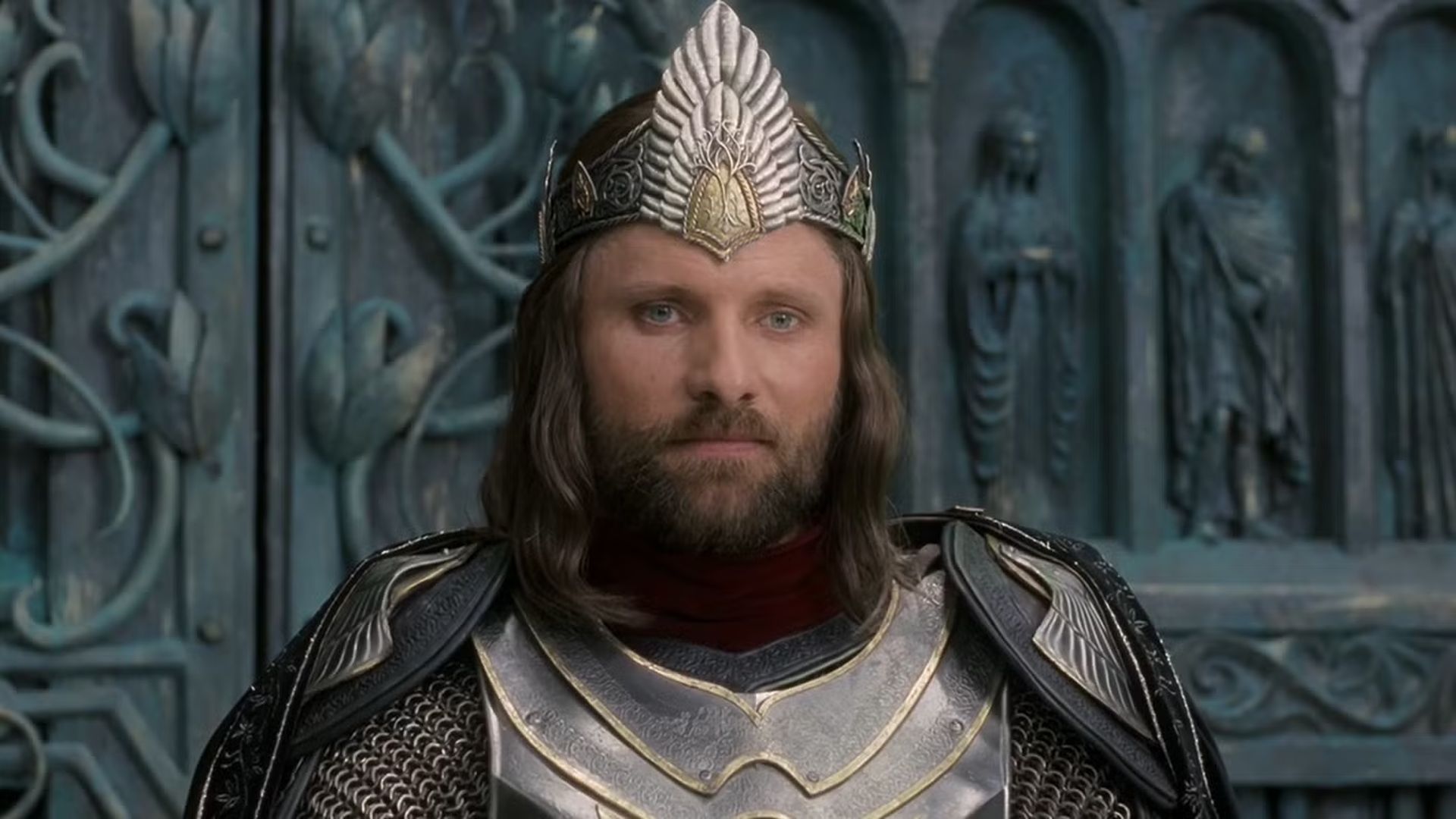
In the triumphant climax of The Lord of the Rings: The Return of the King (2003), directed by Peter Jackson, the newly crowned King Elessar (portrayed with magnetic solemnity by Viggo Mortensen) delivers one of the most deeply affecting scenes in cinematic history. As assembled multitudes gather across the sun-drenched courtyards of Minas Tirith following the final annihilation of the One Ring within the fires of Mount Doom, Aragorn steps forward toward four unassuming hobbits — Frodo Baggins, Samwise Gamgee, Meriadoc Brandybuck, and Peregrin Took. When the four companions instinctively begin to bow in formal homage to their new sovereign, the king gently halts them and utters seven words that have echoed across two decades: "My friends, you bow to no one." In a breathtaking subversion of royal protocol, it is the monarch himself who drops to his knees before the Shire's unlikely saviors, prompting every king, elf, dwarf, wizard, and warrior in attendance to follow in unanimous reverence.
This legendary sequence represents far more than a dazzling dramatic punctuation mark in a beloved fantasy film; it embodies the philosophical and moral core of J.R.R. Tolkien’s 20th-century masterpiece. As recently highlighted in an insightful retrospective by CBR's cultural analysis, no single sentence across the entire franchise articulates the nature of servant leadership and unheralded sacrifice quite like Aragorn’s candid declaration. Within an epic saga brimming with ancient ancestral lineages, legendary blades forged in the First Age, and continent-spanning clashes of armies, Peter Jackson and co-screenwriters Fran Walsh and Philippa Boyens chose to anchor the cumulative emotional weight of a twelve-hour cinematic odyssey upon the modest shoulders of four rural creatures who sought neither fame nor dominion, a theme also frequently celebrated by our sister entertainment portal O Santuário Geek.
Dismantling feudal authority and embracing royal humility
Aragorn’s coronation symbolizes the long-awaited restoration of the throne of Gondor and Arnor after nearly a millennium of rule by the Stewards of Minas Tirith. Strictly in terms of political supremacy and ancient feudal rights, Aragorn possesses every legitimate reason to demand unquestioning subjugation from his people. He is the direct descendant of Elendil and Isildur, bearer of the reforged flame of the West (Andúril), and victor of decisive military campaigns at Helm's Deep and the Pelennor Fields. Yet, unlike rulers corrupted by worldly ambition or earthly vanity — such as the tragic Denethor or the ancient mortal kings who succumbed to Sauron's rings to become Ringwraiths — King Elessar derives his true legitimacy from boundless empathy and profound moral clarity.
By dropping to his knees before Frodo, Sam, Merry, and Pippin, Aragorn purposefully upturns the established feudal pyramid. He is not merely offering an affectionate gesture to old comrades; he is publicly inaugurating a transformative ethical code. Those who shouldered the heaviest spiritual burdens, who looked into the abyss of total despair and preserved their inner humanity, stand spiritually and morally above crowns of gold and scepters of silver. There is no trace of condescension or performative benevolence in his posture; rather, it is an act of pure, heartfelt veneration. Aragorn's sovereignty is complete and everlasting precisely because he possesses the wisdom to bow before the nobility of ordinary souls.
"My friends, you bow to no one."
This moment radically challenges traditional chivalric tropes, where armored paladins effortlessly rescue distressed peasants and receive everlasting servitude in return. In the world meticulously crafted by Tolkien, it was the small, fragile hobbits who delivered the mighty kingdoms of men from utter annihilation. Without Frodo’s excruciating willpower and Samwise’s unyielding companionship, the white walls of Minas Tirith would have fallen into dust before Sauron's legions, and the crown of Gondor would have vanished from historical memory.
Biographical roots: Tolkien and the unsung soldiers of the Great War
To truly grasp the resonance of this mythic scene, one must examine the personal crucible that shaped J.R.R. Tolkien himself. As a young second lieutenant in the Lancashire Fusiliers during World War I (1914–1918), Tolkien survived the harrowing mud and deafening artillery barrages of the Battle of the Somme in 1916. Amid poison gas clouds and devastation, the future Oxford scholar witnessed firsthand the incredible resilience of rural British soldiers — ordinary enlisted men of humble backgrounds who faced terror without fanfare or expectation of glory.
In subsequent personal letters and essays, Tolkien openly acknowledged that the touching relationship between aristocratic heroes and the Shire's hobbits was inspired by the profound camaraderie between British officers and their dedicated orderlies, traditionally known as batmen. These young working-class soldiers maintained officers' equipment and tended to daily routines, but repeatedly displayed supernatural bravery and loyalty on the deadliest battlefields.
"My Samwise Gamgee is indeed a reflection of the English soldier, of the privates and batmen I knew in the 1914 war, and recognized as so far superior to myself."
When King Elessar kneels before the hobbits in Gondor, it is the voice of Lieutenant Tolkien honoring the millions of nameless privates who carried the agony of the Western Front. The four hobbits are the timeless avatars of everyday people whose quiet sacrifices shape human history, yet who rarely find mention in the celebratory hymns sung in marble halls. The scene transcends fantasy fiction to become a universal testament against military arrogance and the empty glorification of conquering generals.
The emotional odyssey of the four hobbits and the price of salvation
Across the span of the epic trilogy, audiences observe the visceral evolution of four gentle rural companions into battle-tested survivors scarred by catastrophic hardship. The enduring potency of Aragorn's tribute stems from our collective memory of the agony they endured throughout their trek:
- Frodo Baggins: Bore the unbearable psychic torment of the Ring, enduring the spectral blade at Weathertop, continuous spiritual temptation, and final bodily mutilation by Gollum inside Mount Doom.
- Samwise Gamgee: Preserved unwavering hope when physical strength disintegrated, literally carrying his exhausted friend across the ash wastes of Gorgoroth and demonstrating that selfless love is stronger than existential despair.
- Meriadoc Brandybuck: Conquered paralyzing fear to ride into the fray alongside the Riders of Rohan, striking the critical blow with his Westernesse blade that rendered the Witch-king of Angmar mortal.
- Peregrin Took: Matured from a thoughtless youth into a steadfast Guard of the Citadel, intervening to rescue Faramir from the madness of Denethor's pyre and leading the final charge before the Black Gate.
By lowering himself before them, Aragorn sanctifies their collective trauma. The hobbits are offered neither gold nor vast fiefdoms; they receive something infinitely more enduring: the unconditional validation that Middle-earth’s renewal was born entirely from their quiet courage and steadfast endurance.
Aragorn's transformative path: from exile to the White Throne
Peter Jackson’s cinematic storytelling masterfully chronicles Aragorn’s internal arc, ensuring that his coronation serves as the triumphant culmination of his character evolution:
| Narrative Phase | Persona & Mindset | Relationship with Hobbits | Thematic Core |
|---|---|---|---|
| The Prancing Pony Ranger | Strider, shadowy and weathered solitary tracker | Vigilant protector across marshes and wilderness | Fear of repeating Isildur's historic moral failing |
| Captain of the Fellowship | Reluctant military leader after Gandalf's fall | Devoted guardian and frontline defender along the Anduin | Gradual acceptance of duty in support of Frodo's burden |
| Claimant to the Crown | Wielder of Andúril and commander of the Dead | Distracts Sauron at the Black Gate: "For Frodo!" | Willingness to die as a distraction to grant Frodo a chance |
| Restored King Elessar | Rightful monarch crowned with Gondor's silver wing | Kneels before the four: "You bow to no one" | Enthronement of humility as the ultimate virtue of power |
Directorial mastery: Peter Jackson's lens and Howard Shore's score
The sublime emotional impact of the coronation does not rest solely on dialogue; it represents the harmonious convergence of pure cinematic craft. Peter Jackson begins the sequence with soaring wide shots that celebrate the gleaming white stone of Minas Tirith bathed in crystalline morning light, offering a stark visual contrast to the choking volcanic darkness of Mordor that dominated earlier reels.
As Aragorn walks toward the four hobbits, Jackson tightens his framing into intimate medium shots and close-ups, utilizing a shallow depth of field that isolates the wide-eyed, stunned expressions of Elijah Wood and Sean Astin. There is a suspended second of total silence before Mortensen speaks — an intentional pause that prepares the viewer for a seismic emotional shift. Mortensen’s vocal delivery is measured, gentle, and devoid of theatrical pomp, imbuing the seven words with supreme intimacy and understated dignity.
At that exact turning point, Howard Shore’s Oscar-winning score performs orchestral magic. The triumphant brass fanfare celebrating Gondor gently fades, yielding to the delicate penny whistle and warm lyrical strings carrying the iconic Shire melody (Concerning Hobbits). The theme gradually swells, uniting with a full symphonic choir to elevate the moment into transcendental beauty. The music tells the audience that the true spirit of victory belongs not to iron-clad citadels, but to the green hills and modest gardens where friendship bloomed.
An enduring cinematic legacy two decades later
More than twenty years after The Return of the King swept all 11 Academy Awards for which it was nominated — equaling the historic records established by Ben-Hur and Titanic —, the lesson embodied by Aragorn’s gesture shines with renewed relevance. In an era marked by cynical political posturing and fleeting social trends, the sight of an all-powerful king kneeling before ordinary people reaffirms the most radiant tenet of timeless storytelling: power is only noble when it dedicates itself to serving others.
Across film studies, fan communities, and cultural retrospectives, this coronation scene is routinely celebrated as the absolute emotional summit of modern cinema. For cinephiles and readers passionate about pop culture retrospectives and epic storytelling, Jackson’s handling of the Minas Tirith coronation stands as an unassailable benchmark of emotional payoff, fulfilling every thematic premise established at the beginning of the journey.
World cinema has introduced audiences to countless conquerors, armored warlords, and decorated emperors. Yet none have achieved the timeless immortality of Aragorn, who chose to crown his own coronation by dissolving every hierarchy: reminding humanity that the true heroes of the world are the quiet souls with dust upon their boots who walk through shadows so that freedom may endure.
Suggested and related articles
Return of the King: Aragorn's Best Quote in Movie History
Wicker Review: Olivia Colman in an Eccentric Fairy Tale

Chance the Rapper names his favorite film of 2026

Allen trailer sets Netflix premiere for November 12

Peter Berg says Call of Duty film will explore war's cost