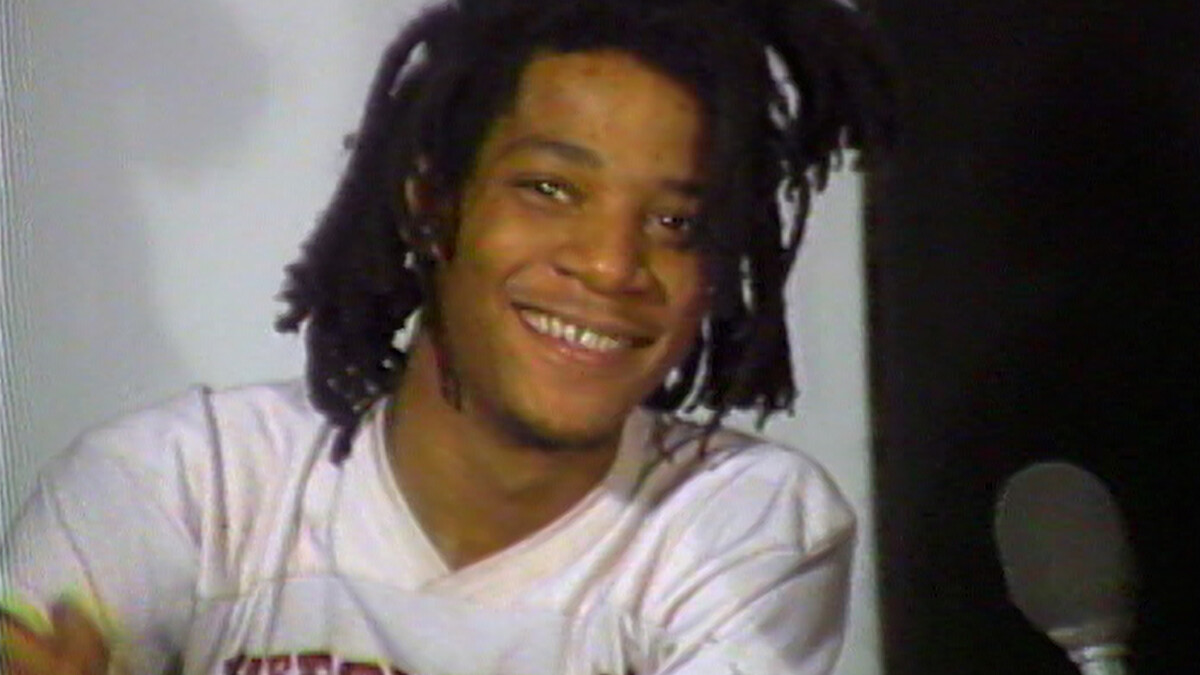
Avedon: is Ron Howard's documentary worth watching?
Published on · Updated on
Ron Howard turns Richard Avedon's archive into 104 minutes of cinema. Here is what the documentary delivers, how it sounds and who should watch it.
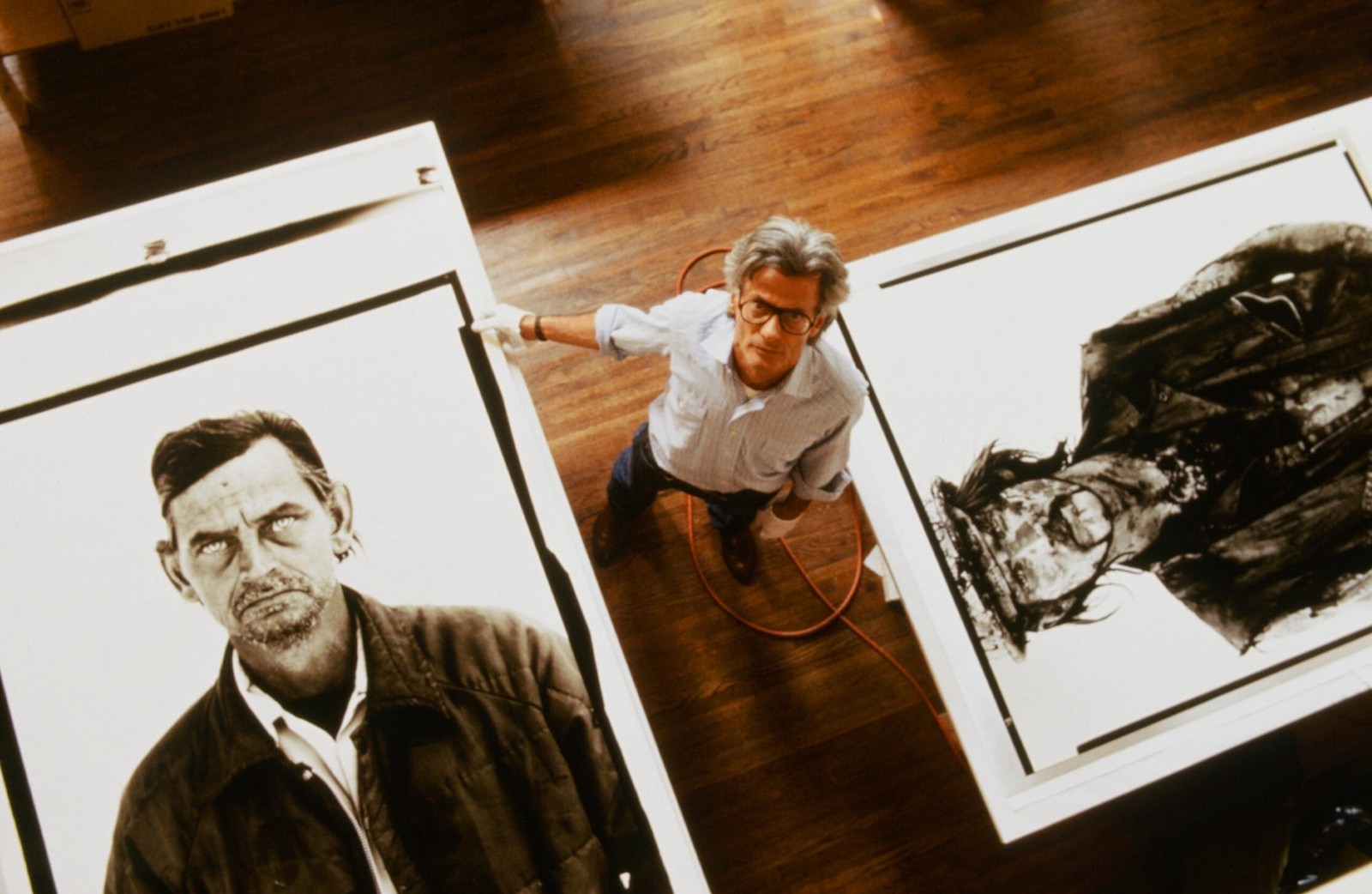
“Avedon”, Ron Howard’s documentary about photographer Richard Avedon, arrived on Netflix on November 11, 2026, after premiering at the Cannes Film Festival in May. It runs 104 minutes and moves through six decades of fashion, portraiture and war photography, built from the artist’s personal archive, with never-before-seen images and interviews with the people who knew him. It is rated R in the United States (16 in Brazil), and Netflix warns viewers about archival footage of political violence, graphic war casualties, animal carnage and nudity. The question that matters to a subscriber is simpler: does the film deliver what it promises?
The short answer is yes, with caveats. Howard built an affectionate and technically impeccable portrait, praised by major critics, but it is openly an official story: the production was made in association with the Richard Avedon Foundation, which owns the archive, and it steers clear of the biographical controversies surrounding the photographer. Understanding that difference is what separates a good screening from a frustrated expectation.
What the film is, in numbers
Before any critical judgment, the credits explain a lot about what viewers find on screen: a large-scale production with privileged access to the archive and a cast of interviewees that would be hard to assemble for an independent project.
| Title | Avedon (2026) |
| Director | Ron Howard |
| Production | Imagine Documentaries and Fifth Season, in association with the Richard Avedon Foundation |
| Running time | 104 minutes |
| Rating | R (16 in Brazil) |
| Premiere | May 17, 2026, at Cannes (Special Screenings) |
| Streaming | Netflix, since November 11, 2026 |
| Interviews | Lauren Hutton, Isabella Rossellini, Twyla Tharp, Tina Brown, John Lahr, John Avedon, Larry Gagosian, Twiggy, Calvin Klein, Adam Gopnik, Hilton Als and others |
The most revealing detail may be the least discussed: the film draws heavily on interviews Avedon gave Helen Whitney for the documentary Richard Avedon: Darkness and Light, broadcast on PBS’s American Masters during the last years of his life. In other words, much of the voice guiding the narrative is not new — it is archive. What Howard adds is the images and the tension between what Avedon said about himself and what others say about him.
From Cannes to Netflix: how the project reached audiences
The trajectory helps explain the film’s tone. Avedon premiered on May 17, 2026, at the Cannes Film Festival in the Special Screenings section, and competed for the L’Œil d’or, the festival’s documentary award. It then played the Telluride Film Festival in the United States and was acquired by Netflix, which announced an awards campaign for the title — a rare sign of commercial confidence for a documentary about photography.
The project follows a logic Howard has applied to Luciano Pavarotti, the Beatles and Jim Henson: take an artist whose work everyone recognizes and investigate the process behind it. The difference here is that the subject is not a musician with a reproducible catalogue, but a man who built his own image as a character and spent his life controlling what people saw of him.
In a piece published by Netflix itself, Howard explained why he took the job:
“Richard Avedon was an artist whose work continues to resonate not only because of the extraordinary images he created, but because of the humanity and curiosity behind them.”
It is a promotional line, and the film takes it seriously: its central thesis is that Avedon’s curiosity, more than his technique, explains why his portraits still work. Anyone hoping for an investigation of the darker sides of his biography, however, will not get it — and we will come back to that.
The Avedon method, explained without mystery
The documentary’s great strength is making visible a method that always seemed invisible. Avedon was not a technician obsessed with light or gear; he said he followed “no rules, no laws and no advice.” His talent lay in running the session: building rapport, provoking a reaction, waiting for the moment when the ego drops its guard, and choosing, among dozens of frames, the one that reveals something.
The film offers the number that gives scale to this output: roughly 16,000 sittings between 1944 and 2004, the equivalent of one sitting per working day for 60 years. Isabella Rossellini describes the difference in rhythm — photographers usually fire away; Avedon shot little, talked, asked the model to think of something and shot again. The result was ten images, sometimes fewer.
The white background, the photographer’s trademark, has a prosaic origin. At 19, in the U.S. Merchant Marines, Avedon was assigned to the photographic department and began producing ID portraits against a pale wall. Facing “thousands of baffled faces,” he realized the neutral background did not erase personalities — on the contrary, it made each face more evident. The accident became a system.
From there come the images the documentary shows in abundance: Marilyn Monroe and Arthur Miller, Charlie Chaplin with his fingers shaped like horns, the Duke and Duchess of Windsor looking uncomfortable, Audrey Hepburn, Ronald Reagan, the model Dovima among elephants. In the film, dealer Larry Gagosian says a print of Dovima with Elephants sold for $2 million — a figure that helps measure how fully the art market absorbed what began as a magazine page.
The archive that unsettles
The documentary is not only glamour. Howard gives generous room to the work Avedon made outside the fashion circuit: the American West panoramas, portraits of civil rights activists, patients in psychiatric institutions, napalm victims in Vietnam. That is where the film gets harshest — and where Netflix’s content warning makes sense.
In the American West, commissioned by the Amon Carter Museum, placed 752 ordinary people in front of a white backdrop between 1979 and 1984: drifters, miners, ranch hands. When it opened in 1985, it divided opinion and earned Avedon accusations of a condescending gaze on poverty. Nothing Personal, made with James Baldwin in 1964, was also attacked — and Avedon was deeply shaken by the reviews, something the film reconstructs with archival material.
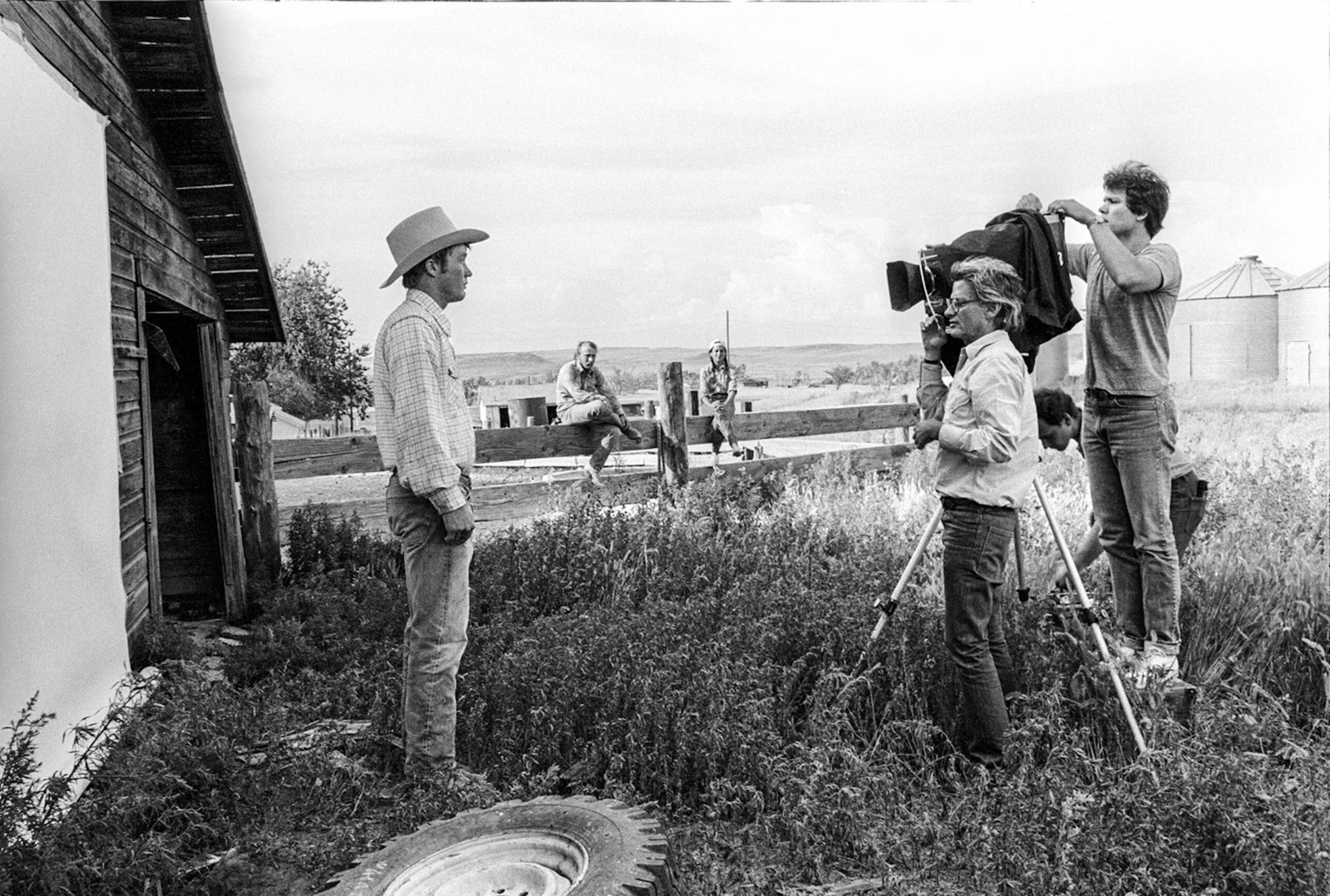
This section justifies the screen time more than anything else. Watching Avedon direct a sitter, mark up contact sheets and adjust the pose of someone who has never posed in his life says more about the photographer than any admiring interview.
Reception: nearly unanimous, with one important caveat
Critics received the film well. Variety published an enthusiastic review by Owen Gleiberman, who called Avedon the best documentary of Howard’s career and praised Andrew Morreale’s editing:
“It’s the best documentary Ron Howard has made, and it’s been edited in a way that’s so supple and artful that its technique should be studied in filmmaking classes.”
The Hollywood Reporter followed the same direction, with Sheri Linden’s review summing up the film as “a solid mix of glitz and angst.” The Cannes reception was described by the Hollywood Reporter itself as enthusiastic, and Netflix bought the project shortly afterwards.
The caveat came from outlets closer to the art world. The Art Newspaper called the documentary enjoyable but well-trodden, and described it as more admiring than probing. Mark Asch’s review notes that the film revisits familiar anecdotes and avoids thorny subjects, such as the disputes around the unauthorized 2017 biography by Norma Stevens. Because the Richard Avedon Foundation co-produced the film, the result is, in practice, the official version of the story.
That is not a fatal flaw — it is a choice. Howard does not hide Avedon’s contradictions, but he does not investigate them either; he lets them surface in the images and the testimony. For a first contact with the work, it works. For readers who already know the photographer, the film adds little in the way of new information.
Is it worth watching?
It depends on what you are looking for. A quick guide:
- Yes, for photography lovers. This is the best part: the film shows the process, not just the result. Seeing contact sheets and sessions in progress is rare.
- Yes, for anyone interested in fashion and 20th-century culture. The path from Harper’s Bazaar to Vogue and then to The New Yorker works as a lesson in editorial history.
- Yes, for fans of archival documentaries. The editing is the most praised element, and rightly so.
- No, if you want a critical biography. The film is official, affectionate and avoids controversy. Anyone looking for harder contradictions will leave feeling half the story is missing.
- Mind the sensitive content. There is explicit war footage, political violence, dead animals and nudity. It is not a documentary to watch with children around.
In terms of pace, the film behaves well: 104 minutes go by without dragging, thanks to editing that alternates interviews, archival footage and image sequences. It is a festival documentary with streaming ambitions — accessible without being shallow, but also without the risk that would make it a landmark.
Those who liked Howard’s work on other documentaries about artists will recognize the method: admiration for the subject, access to the archive, interviews with close collaborators and a narrative that avoids direct conflict. The difference is that Avedon, as a character, offers more layers than the format is willing to explore.
How to watch
Avedon is available on Netflix since November 11, 2026, at 104 minutes and rated R in the U.S. (16 in Brazil). The film has English subtitles and dubbing. To prepare beforehand, the official Tudum page gathers the trailer and full credits, and the Cannes Film Festival catalogue records the film’s 2026 selection.
Anyone who wants to compare it with another recent production about a polarizing figure can read our analysis of the Elon Musk documentary on HBO Max and check our pop culture coverage. And if the question is whether to watch now or leave it on the list: start with the film. It is the most beautiful doorway into the work of a photographer who spent his life trying to make the world look again.
Suggested and related articles
Where 'My Best Friend' Was Filmed in Portugal
Guarding Stars ending explained: Who is the stalker?
Cliff Booth in Brazil: the two theaters and how to buy
Infinite: Where to Watch Mark Wahlberg's Sci-Fi Movie
Cliff Booth: Netflix date, IMAX window, what is confirmed