Where 'My Best Friend' Was Filmed in Portugal
Published on · Updated on
From Praça do Comércio to a Tivoli rooftop, Susana Garcia's comedy turned Lisbon, Almada and Sesimbra into real backdrops for a friends' getaway.
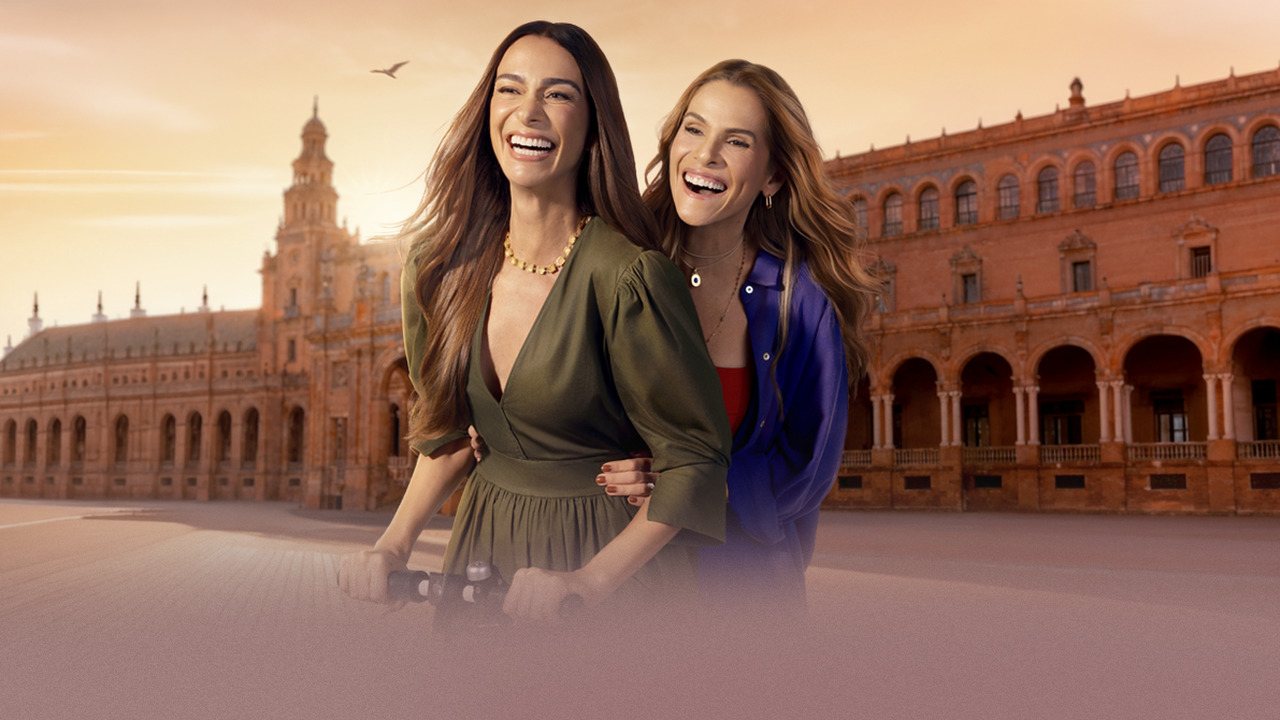
Lisbon is a character here. The Brazilian film My Best Friend (Minha Melhor Amiga), directed by Susana Garcia and starring Ingrid Guimarães and Mônica Martelli, follows two friends in their fifties who decide to cross the Atlantic after their teenage daughters leave for a study-abroad year in Portugal. On screen, the trip delivers misunderstandings, romance and reunions — and a location itinerary that runs from downtown Lisbon to an almost wild beach inside Arrábida Natural Park.
The comedy opened in Brazilian theatres on September 3, 2026, sold 5.9 million tickets and grossed around 105.1 million Brazilian reais before arriving on Netflix on November 2. Part of the shoot took place in Rio de Janeiro and in Seville, Spain, but Lisbon and its surroundings concentrate the most recognisable settings: Praça do Comércio, Jerónimos Monastery, two rooftops facing the Tagus, a hotel on Praça da Alegria and a riverside restaurant in Almada.
This guide sorts the confirmed addresses by type of setting — historic landmarks, rooftops, coastline and food — and explains what you can visit, what requires a booking and what remains a mystery for fans.
The location map: three layers of setting
The production did not settle for postcards alone. By combining 16th-century monuments, five-star terraces and a hard-to-reach beach, My Best Friend builds a Lisbon in three layers: the heritage city, the city of shopping and nightlife, and the Atlantic coast less than an hour from the centre. For anyone trying to follow the route, that division helps plan a realistic itinerary — you cannot squeeze Belém, Cacilhas and Sesimbra into a single afternoon.
| Location | City / district | Type | Address |
|---|---|---|---|
| Hotel Alegria | Lisbon (Praça da Alegria) | Historic hotel | Praça da Alegria, 12 |
| Praça do Comércio | Lisbon (Baixa) | Square and monument | Terreiro do Paço |
| Jerónimos Monastery | Lisbon (Belém) | World Heritage Site | Praça do Império |
| Mini Bar | Lisbon (Chiado) | Bar and dining | Rua Nova da Trindade, 18 |
| Avenida da Liberdade | Lisbon (Santo António) | Shopping | Avenida da Liberdade |
| ICON Bar & Rooftop | Lisbon (Junqueira) | Rooftop | Rua da Junqueira, 65 |
| SEEN Sky Bar | Lisbon (Avenida da Liberdade) | Rooftop | Avenida da Liberdade, 185 |
| Ponto Final | Almada (Cacilhas) | Riverside restaurant | Rua do Ginjal, 72 |
| Ribeiro do Cavalo beach | Sesimbra | Beach and hiking trail | Arrábida Natural Park |
| Casa do Alentejo | Lisbon (Baixa) | Stand-in for Seville | Rua Portas de Santo Antão, 58 |
Historic settings: Terreiro do Paço and Belém
Two architectural ensembles carry the film's reunion scenes. Both are real monuments open to visitors, and both appear in wide shots that help viewers place the action — a classic device in travel comedies, which turn postcards into a narrative map.
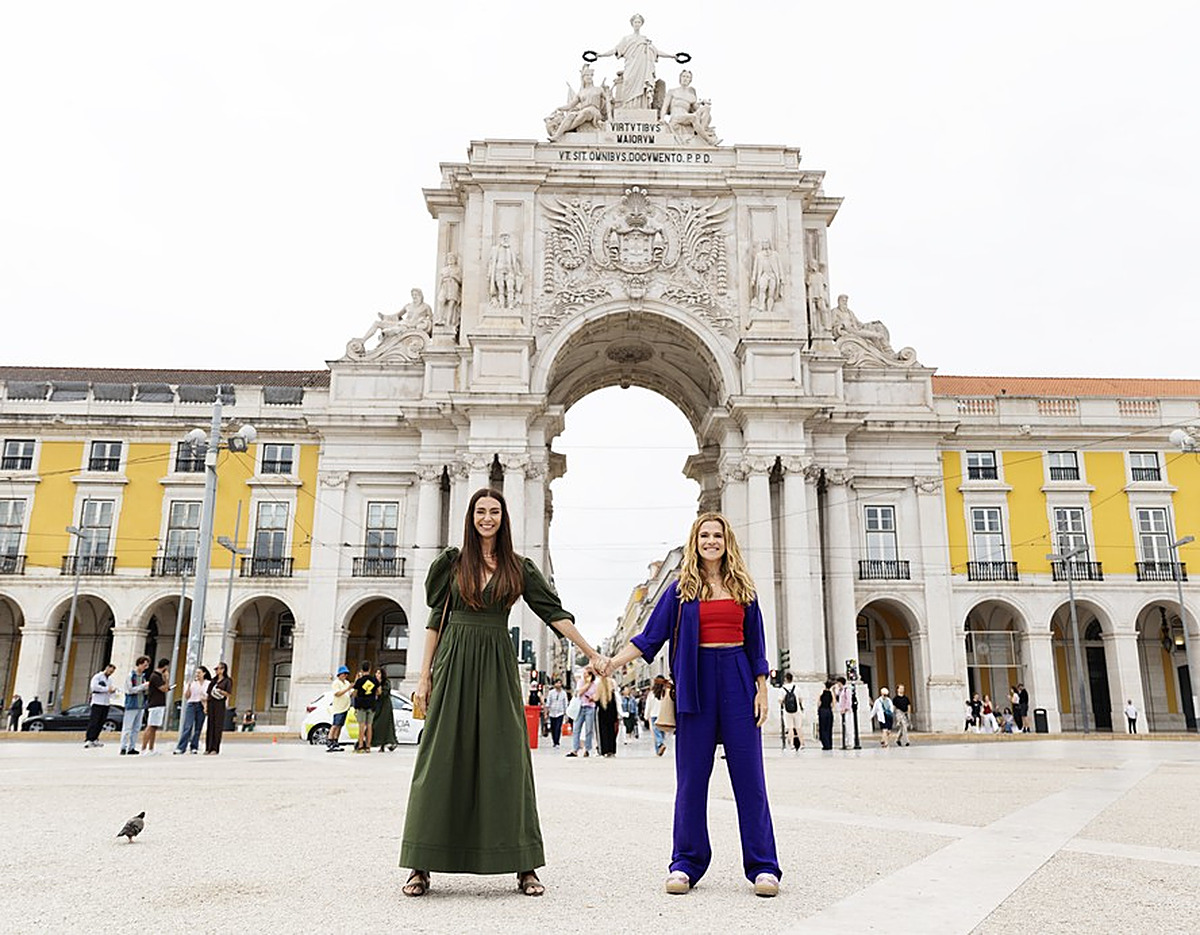
Praça do Comércio, also known as Terreiro do Paço
It is on this riverside square that Clara and Júlia arrive on scooters and bump into Nuno, the Portuguese tour guide who joins their adventure. The Arco da Rua Augusta frames the background, surrounded by the yellow facades of the Pombaline downtown. Before the 1755 earthquake, the area housed the Ribeira Palace, the royal residence destroyed by the quake — hence the popular name locals still use.
At roughly 36,000 square metres, Praça do Comércio is one of the largest squares in Europe and a natural starting point for walking to Rossio, climbing to the top of the arch or taking a boat along the Tagus. Entry is free and no booking is required; early morning is the best time for crowd-free photographs.
Jerónimos Monastery, in Belém
It is in front of the monastery that the protagonists reunite with their daughters, Manu and Isadora, who are taking part in the exchange programme. In the story the monument is closed to visitors and the friends simply walk around it — but the choice is no accident: this is the main symbol of Manueline architecture in Portugal.
Completed in the 16th century, the complex was listed as a National Monument in 1907 and recognised as a UNESCO World Heritage Site in 1983, together with Belém Tower. It sits on Praça do Império, about 20 minutes by train or 25 by tram from the centre. A combined ticket covers the monastery and the tower, and queues tend to be shorter late in the afternoon.
Hotels and bars: where the friends sleep and toast
The production picked venues that exist and welcome both guests and visitors — with an important caveat: not every interior seen on screen matches the establishment whose facade appears in the film. That is the case with the opening hotel, whose facade is real but whose rooms, by all accounts, were shot somewhere else.
Hotel Alegria, on Praça da Alegria
The first Lisbon scene shows Clara and Júlia climbing the staircase with their suitcases; then the camera reveals the yellow facade of the Hotel Alegria, facing a leafy square of the same name. The building is a restored 19th-century townhouse with 36 rooms and suites, a few minutes on foot from Avenida da Liberdade and Príncipe Real.
The square itself is one of those corners most tourists walk past: it has a kiosk, outdoor tables and a playground, and offers a pause between the bustle of the avenue and the slopes of Bairro Alto. According to behind-the-scenes accounts, the actresses stayed at the Tivoli Avenida Liberdade during the roughly 40 days of shooting in the capital.
Mini Bar, José Avillez's speakeasy
In the Lisbon night scenes, the protagonists appear at Mini Bar, run by chef José Avillez at Rua Nova da Trindade, 18, in Chiado. The venue adopts the speakeasy concept: the discreet entrance sits behind a bookcase-like structure, after guests walk through the busy Bairro do Avillez.
The menu is organised in “acts”, with creative dishes and signature cocktails, plus music and live performances. Booking is recommended, especially at weekends, and the experience is closer to a tasting night out than a quick meal.
Vino Vero, in Graça
Less obvious in tourist guides, Vino Vero, at Travessa do Monte 30 in the Graça neighbourhood, is also said to have served as a backdrop for the friends' nights out. It is a wine bar with an informal counter, sharing plates and a neighbourhood that keeps its local feel — a good counterpoint to the busier rooftops.
Rooftops: two viewpoints that became sets
Lisbon has a collection of terraces with views, and the film uses two of them for different moments: a conversation between friends and a romantic dinner. Both operate as bars open to the public, so you can recreate the scenes without staying at the hotels.
ICON Bar & Rooftop, at the Hyatt Regency Lisbon
On the terrace of ICON Bar & Rooftop, at Rua da Junqueira, 65, Ingrid Guimarães's character waits for her friend to hear how the meeting with Nuno went. The view takes in the Tagus and the 25 de Abril Bridge, and the venue welcomes visitors who are not hotel guests.
SEEN Sky Bar, at the Tivoli Avenida Liberdade
The SEEN Sky Bar, on the ninth floor of the Tivoli Avenida Liberdade (Avenida da Liberdade, 185), appears in the sequence where Nuno takes Mônica Martelli's character on a romantic date. The 360-degree view includes São Jorge Castle and the Tagus, and the interiors designed by Sidney Quintela carry an Art Deco inspiration.
Coastline: Sesimbra and Cacilhas
Two sequences take the story outside the capital and show that the itinerary of My Best Friend is not limited to Lisbon. One is sunny and daytime; the other happens at dusk, with the Tagus in the background. Both require travel time and planning.
Ribeiro do Cavalo beach, in Sesimbra
It is on the sand of Ribeiro do Cavalo beach, also called Ribeira do Cavalo, that one of the funniest scenes takes place: the protagonists and their daughters head into the sea on an inflatable unicorn pedalo. The beach lies inside Arrábida Natural Park, about 40 kilometres south of Lisbon, and is known for its turquoise water and rock formations.
Access is the catch. The trail to the beach includes steep sections and demands reasonable fitness; the alternative is a boat from Sesimbra harbour, always dependent on sea conditions. There is no urban infrastructure on the sand, so bring water, sun protection and proper footwear. Official information is available on the Visit Portugal portal.
Ponto Final restaurant, in Cacilhas
The film's closing scene is set at Ponto Final, at Rua do Ginjal, 72, in Cacilhas, municipality of Almada. The restaurant sits on the opposite bank of the Tagus and serves traditional Portuguese cooking with views of Lisbon and the 25 de Abril Bridge — sunset is the address's main attraction.
You get there by ferry from Cais do Sodré, a short and inexpensive crossing, and the walk along Rua do Ginjal is worth the trip on its own. As the dining room is small and popular, booking ahead is almost mandatory, especially at dusk.
Shopping, fado and a Seville that sits in Lisbon
Avenida da Liberdade
The avenue appears in a passage where Clara and Júlia take the trip as an excuse to try on new outfits. Inspired by the great European boulevards, it connects Praça dos Restauradores to Praça do Marquês de Pombal and concentrates designer stores, luxury hotels and cafés. Even without buying anything, walking under the century-old plane trees is one of the city's free pleasures.
Casa do Alentejo: Seville filmed in Lisbon
A behind-the-scenes curiosity: when the characters arrive in Seville, the hotel they stay in is not a hotel. The scenes were shot in the central courtyard of Casa do Alentejo, at Rua Portas de Santo Antão, 58, in downtown Lisbon. The building's Neo-Mudéjar and Neo-Arab architecture allowed the production to simulate Andalusia without leaving Portugal. Entry is free and the venue houses a restaurant.

How to plan a two-day itinerary
The full list is too long for a single day. One workable split, tested in travel guides, looks like this:
- Day 1 — historic Lisbon: Praça do Comércio in the morning, a climb up the Arco da Rua Augusta, lunch in Chiado and Jerónimos Monastery in the late afternoon. At night, Mini Bar or Vino Vero.
- Day 2 — panoramic Lisbon and the Tagus: morning at Praça da Alegria and Avenida da Liberdade, lunch at ICON Bar & Rooftop and a late-afternoon crossing to Cacilhas, with dinner at Ponto Final.
- Extra day — the coast: Ribeiro do Cavalo beach in Sesimbra, leaving early, hiking or taking a boat, and returning before dark.
For city travel, the metro and trams cover most of the route; for Belém, the train is faster than the tram. In Cacilhas, the ferry is part of the experience. Sesimbra, in turn, calls for a car, a ride-hailing app or an organised tour.
Why Portugal became a Brazilian film set
The country has moved beyond holiday destination to become a recurring location for Brazilian productions. Films such as Alguém como eu, Terra estrangeira and Meu passado me condena 2 had already explored Lisbon, Óbidos, Cabo Espichel and Sortelha. What is different now is commercial scale: My Best Friend reaches streaming after outperforming award-winning titles at the box office and putting the Portuguese itinerary at the centre of social media conversation.
“A film can convey the authenticity of a place, capture the soul of a people and the genuineness of a moment. And, in doing so, reveal what a country has that is most true.”
The practical effect is immediate: addresses that were already popular start receiving visits motivated by specific scenes. Hotels report demand for rooms with a view, bars create waiting lists for sunset hours and hard-to-reach beaches gain warnings about safety and environmental protection.
What is still a mystery
Not everything is settled. The scene in which Mônica Martelli's character suggests to her friend “let's be happy in a pharmacy” was shot in an establishment that has not yet been securely identified. Lisbon has historic pharmacies and century-old shops recognised by the city's Lojas com História programme, but no official confirmation has been released.
“Let's be happy in a pharmacy?”
There is also no official confirmation about every interior: the Hotel Alegria facade is real, but the rooms seen on screen apparently belong to another property. For visitors this matters less than it seems — the square, the kiosk and the staircase remain accessible and recognisable.
Trailer and where to watch
The official teaser trailer was released by Paris Filmes, the film's Brazilian distributor. Watch it below:

▶ Watch the official teaser trailer on YouTube
After its theatrical run, the film joined the Netflix catalogue on November 2, 2026. For those who want to compare locations, it is worth watching closely for street signs and facades: the production relies heavily on wide shots, which makes the addresses easier to recognise.
To keep travelling through fiction locations, see also our coverage of films on Revista Pixel.
Credits and sources
- Director: Susana Garcia
- Cast: Ingrid Guimarães, Mônica Martelli, Giulia Benite, Gabi Amaral, Gustavo Machado, Albano Jerônimo, Alejandro Albarracin, Michel Melamed and Thaila Ayala
- Distribution: Paris Filmes
- Theatrical release: September 3, 2026
- Streaming: Netflix, since November 2, 2026
- Box office: 5.9 million admissions and around 105.1 million Brazilian reais
Location information was verified against a report by Revista EntreRios, on SAPO, an article by O Globo and specialised travel guides, with addresses checked on the venues' official websites. Where there is no confirmation, the text says so.
Suggested and related articles
Tropa de Elite: Where to Watch Both Films Online
Suzane von Richthofen: Where to Watch the Documentary
Russell Brand: Open Secret: a guide to Netflix doc

Netflix Buys Joel Coen's 'Jack of Spades' for Fall 2027
Project Power: the pill that grants five minutes of power