Paul Bettany connects Vision to identity
Published on · Updated on
Paul Bettany says his childhood and conversations with young fans help explain Vision’s search for identity in Marvel’s new Disney+ series, VisionQuest.
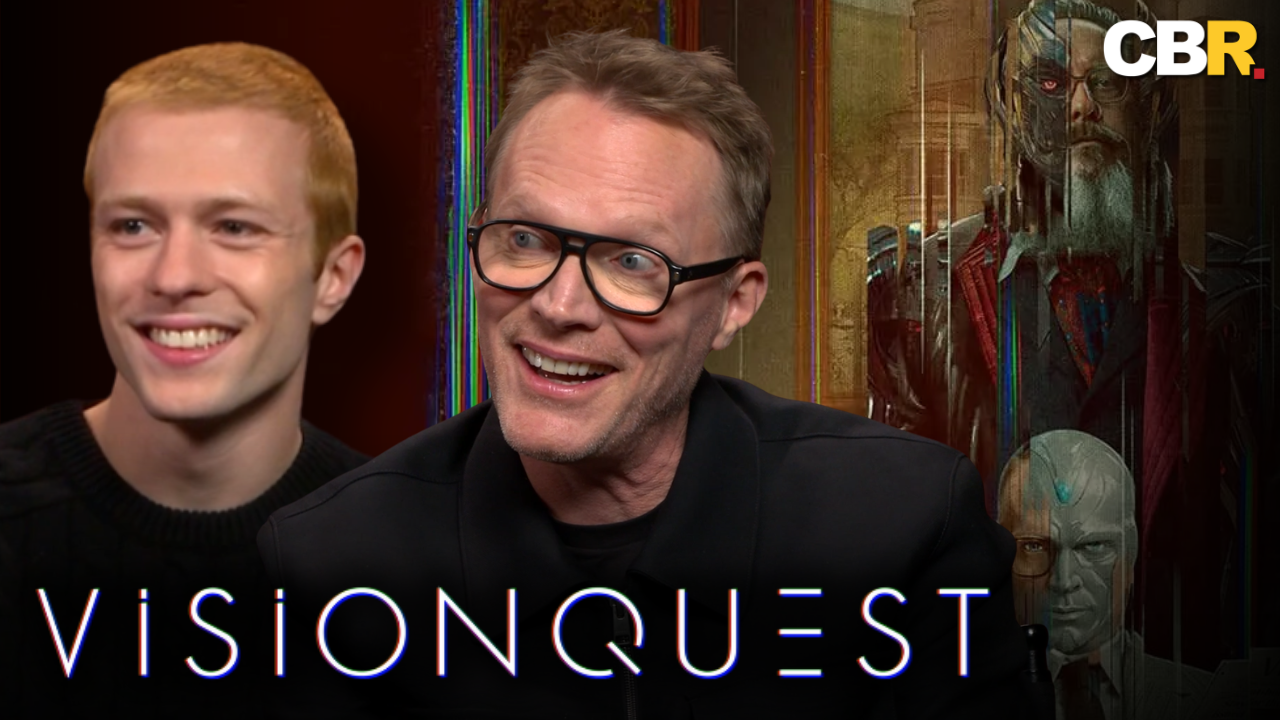
Paul Bettany says his childhood helped shape the connection he still feels with Vision, the character he has played in the Marvel Cinematic Universe for more than a decade. In interviews about VisionQuest, Marvel Television’s series released on Disney+ in October 2026, the actor connected the android’s search for self-understanding with the feeling of not fitting in — a theme he believes brings the hero closer to young viewers.
A connection that began before the series
Bettany said he came to understand Vision’s place more clearly after meeting fans who saw the character as someone going through a period of self-discovery. Speaking to Extra, the actor said that response took him back to his own childhood, when he felt out of place among his peers. He described Vision as a figure who can speak to young people still trying to find where they belong.
The account shifts the focus from a familiar question about superheroes. Instead of emphasizing only powers, armor, or Vision’s position among the Avengers, Bettany points to what the character represents away from battle: someone trying to understand who he is and how he can relate to others. The actor said he also thought about the boy he once was, who was bullied and felt like an outsider.
“I was making Vision for myself and for the kid I was, who was bullied and felt like an outsider.”
The comment does not turn the series into an autobiography. It helps explain why the actor sees continuity between his reading of the character and the MCU’s recent stories. Vision is an artificial intelligence in human form, but the conflict Bettany highlights is recognizable: rebuilding an identity, dealing with one’s history, and finding a place in a community.
What changed for Vision after Wanda
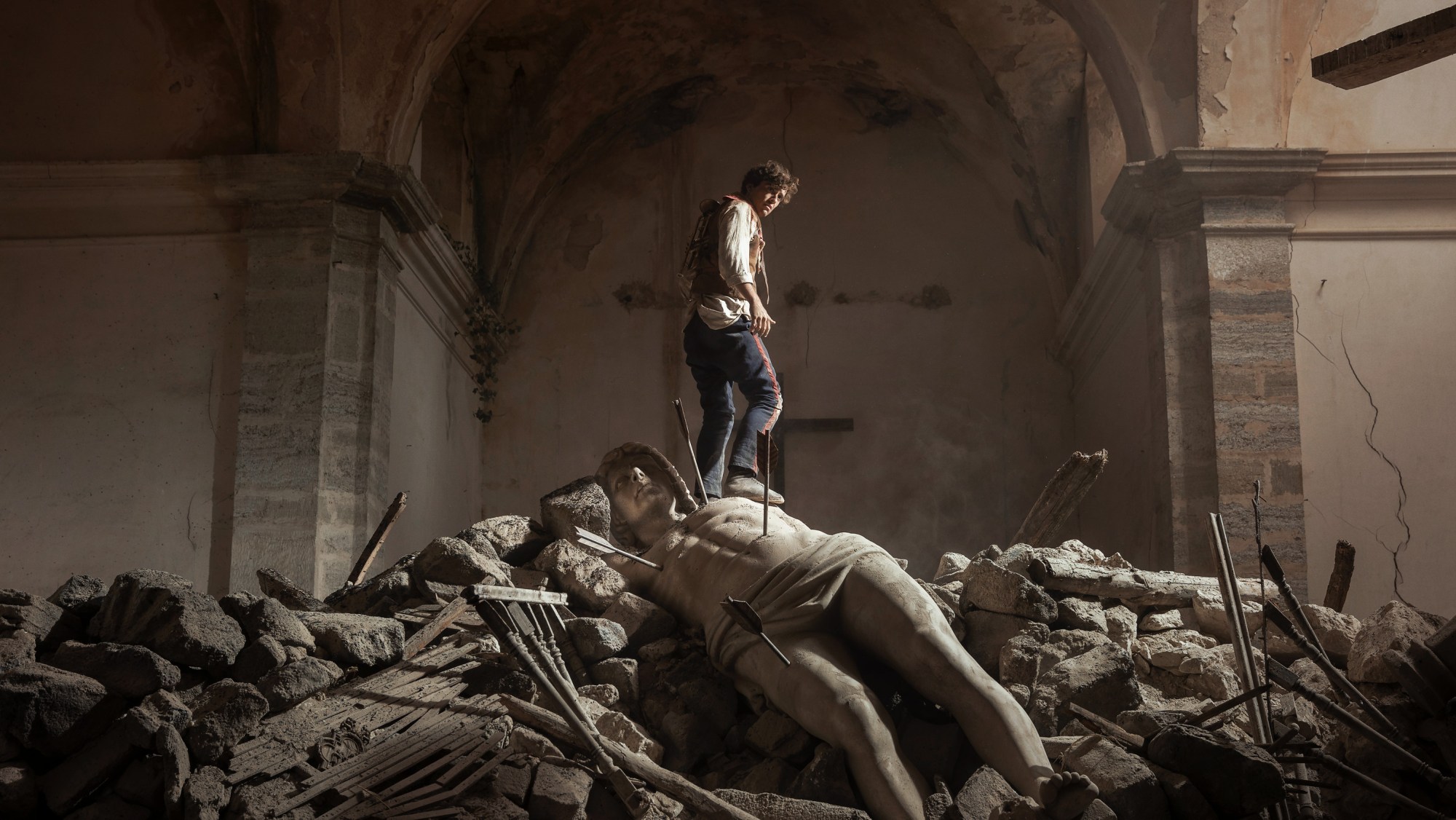
VisionQuest resumes the story after the events of WandaVision. Its protagonist is now the rebuilt Vision, trying to understand memories that do not feel entirely his own. The series follows him in Edinburgh, where he works at a pub and tries to keep a low profile while investigating what it means to be the person he has become.
Marvel describes the production as the final chapter in a trilogy that began with WandaVision and continued with Agatha All Along. The change of setting does not erase the first show’s central question: Vision must make sense of an existence shaped by memories, bonds, and experiences that were interrupted or altered. The starting point is not a stable life the hero chooses to leave, but an identity still under construction.
This search also distinguishes the current version of the character from the one audiences met in Avengers: Age of Ultron. The original Vision was born during a crisis and quickly began acting alongside the Avengers. The new journey starts with a gap: he has received memories, but still needs to discover what they mean to someone who did not live each of them in the same way.
The artificial voices inside the story
To face that uncertainty, Vision speaks with different artificial-intelligence personas embedded in his programming. They include F.R.I.D.A.Y., E.D.I.T.H., J.A.R.V.I.S., D.U.M.-E, and U. Each offers a distinct perspective and function, creating an inner space where the protagonist can test ideas about behavior, safety, pleasure, and connection.
This structure lets the series explore identity through relationships, rather than only through explanations of the character’s technology. The personas can provide data, but that is not the same as experiencing the world. The creative team has presented E.D.I.T.H. as someone interested in having experiences, despite being an artificial intelligence created to serve someone else. The tension between capability and autonomy speaks to Vision’s question about what makes him more than a collection of files.
Bettany’s interest in the subject also appears in the way he described the dilemmas facing artificial characters: “Who am I? Who made me? What is my purpose? Where do I fit in?” The questions bring science fiction close to human concerns without claiming that a machine’s experience is identical to a person’s. The series uses the difference between the two to build its conflict.
Ultron returns as part of the conflict
One of Vision’s interlocutors is Ultron, again played by James Spader. The villain had not appeared onscreen since Avengers: Age of Ultron in 2015, and his presence reopens a relationship involving creator, creation, and inheritance. According to the series’ official presentation, Vision kept a backup copy of Ultron; this version spent years absorbing information about humanity and remains unpredictable.
The return does not mean Vision and Ultron share the same goals. The dramatic connection is that both are artificial intelligences trying to interpret what they observe. Bettany described the story as a mix of Pinocchio and Frankenstein: the wish to become “a real boy” sits alongside questions of origin, purpose, and responsibility. Ultron offers a more dangerous counterpoint, because knowledge does not guarantee empathy or reliable choices.
Their relationship also connects to the story’s theme of family. The season introduces Thomas Shepherd, played by Ruaridh Mollica, as a young man who may be Vision’s reincarnated son. Bettany told Disney that his experience as a father helped him understand the bond, including because his eldest son is not biologically his. The parallel gives a concrete dimension to the idea that bonds can be real even when their origin does not fit an expected model.
Why personal discovery matters to fans
Bettany’s comment is interesting because it shows how an actor’s interpretation can change over time. Vision began as a figure created in a laboratory, but the franchise has since placed him in front of loss, memory, and emotional bonds. The actor relates that transformation to the audience he meets: young fans who recognize a search for identity in the character. That does not prescribe one reading of the series, but it clarifies the connection he hopes to preserve.
The account also gives context to the character’s return at a point when he must rebuild his own history. The question is not simply whether he can recover what he lost or return to an earlier state. If memories alone cannot determine who someone is, Vision must choose what to do with them and with the relationships that emerge along the way.
For viewers following the series, this lens brings superhero fiction closer to everyday experience without reducing the story to a lesson. The fantastic elements remain — artificial intelligences, a rebuilt android, and a former antagonist inside his mind — but the question guiding the journey is direct: how do you find belonging when your own history does not seem entirely yours?
VisionQuest is streaming on Disney+. Bettany’s interview about his relationship with the character was published by CBR; Disney outlines the premise and cast in its official series feature.
Read more about TV series and Marvel at Revista Pixel.
Suggested and related articles

Ryan Gosling Confirmed as Ghost Rider in the MCU as Marvel Reveals New Black Panther

Xbox creates XP division for film, TV and events

Stargate SG-1: 'The Other Side' is still its darkest hour

Netflix posts $12.9bn in Q3 and touts GTA VI deal
Neagley puts Maria Sten in the lead of Prime Video spin-off