The Peripheral: The Prime Video Cyberpunk Hidden Gem
Published on · Updated on
From Westworld creators, The Peripheral reimagined sci-fi time travel on Prime Video, serving as the ultimate cyberpunk prelude to Apple TV's Neuromancer.

In a contemporary streaming landscape dominated by predictable science fiction formula, The Peripheral, an ambitious original series released on Amazon Prime Video's television lineup in late 2022, stands out as one of the most sophisticated and visually stunning speculative dramas of the decade. Developed by executive producer Scott B. Smith and crafted by Kilter Films — the production powerhouse founded by Jonathan Nolan and Lisa Joy, the visionary creators behind HBO's Westworld —, the series adapts the seminal 2014 novel by cyberpunk founding father William Gibson. Far from relying on conventional temporal tropes, the show introduces a profound revolution in time travel mechanics by swapping physical bodily displacement for quantum neural consciousness projection inside high-tech synthetic androids.
Anchored by a compelling lead performance from Chloë Grace Moretz and visually guided by director Vincenzo Natali, The Peripheral builds an exquisite bridge between the socioeconomic anxieties of the near future and the opulent, desolate aesthetics of an aftermath society. For readers fascinated by the resurgence of cyberpunk literature and those eagerly awaiting the arrival of Apple TV+'s upcoming Neuromancer adaptation, Flynne Fisher's perilous journey remains an indispensable study in geopolitical conspiracy, techno-thriller suspense, and cinematic world-building.
The quantum stub: when consciousness replaces physical matter
The vast majority of time travel narratives in cinema and television lean heavily on physical vessels, wormholes, or bodily displacement through chronological space, frequently colliding with grandfather paradoxes or convoluted butterfly effects. In The Peripheral, William Gibson and the show's creative team subvert these tired conventions through the revolutionary concept of peripherals: ultra-advanced biological and mechanical android bodies operated remotely through a quantum data connection bridging two distinct eras separated by seventy years.
The story centers on Flynne Fisher (Moretz), a gifted gamer living in 2032 in the rural Blue Ridge Mountains of North Carolina. While balancing work at a local 3D-printing shop and caring for her terminally ill mother alongside her brother Burton (Jack Reynor), an elite military veteran with neural haptic implants, Flynne takes on an assignment to test an enigmatic new VR prototype headset sent by a mysterious foreign entity. What begins as a high-paying simulation job quickly unmasks itself as a real-time consciousness link to the year 2099 in London. By piloting an android avatar in the future, Flynne inadvertently intervenes in high-stakes oligarchic espionage, fracturing history and creating an alternate quantum timeline known as a stub.
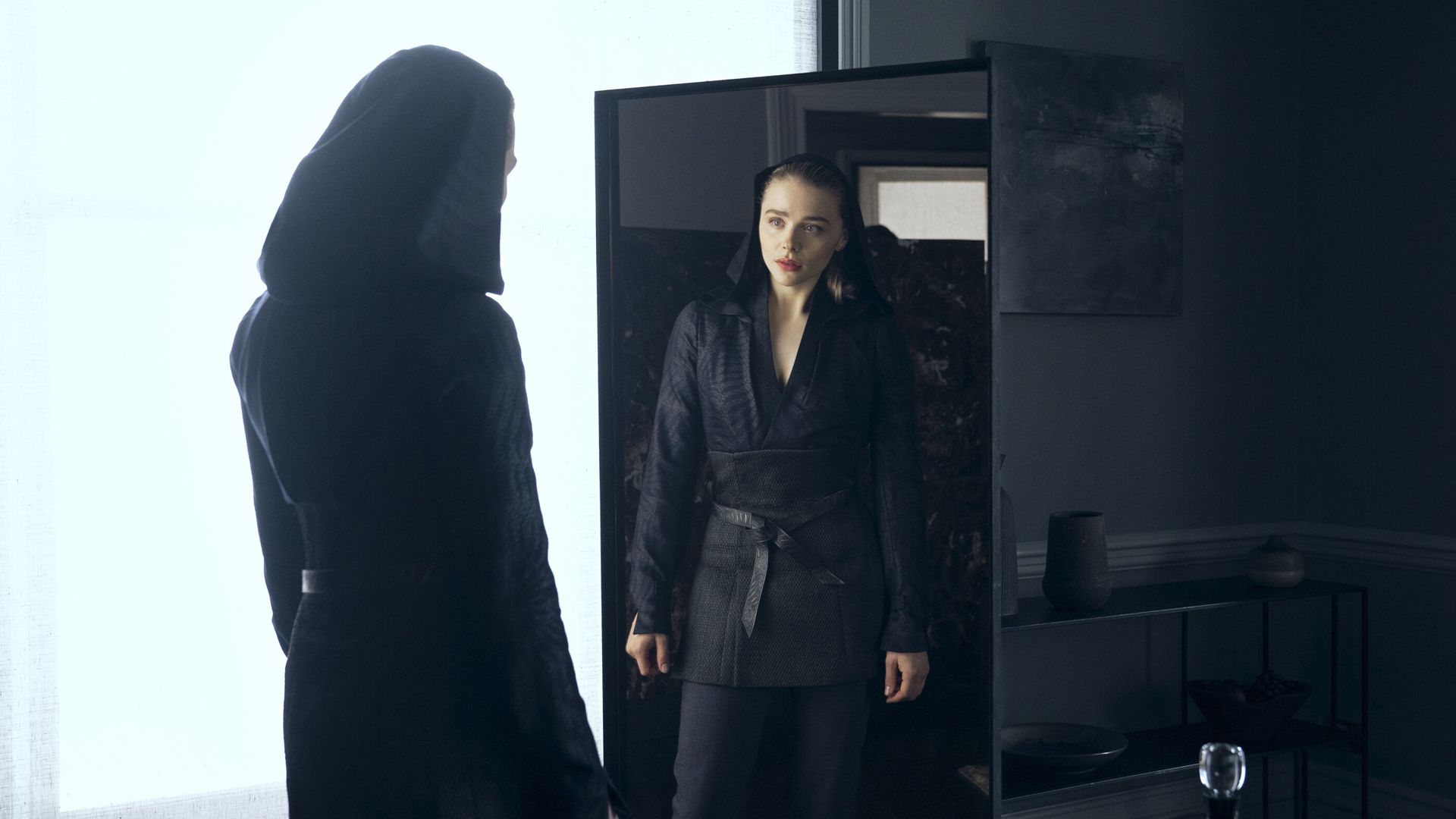
This narrative device strips away physical safety while generating relentless psychological tension. While Flynne's biological body remains seated thousands of miles away and decades in the past, the corporate conspiracies she uncovers in post-cataclysmic London place an immediate, deadly target on her loved ones in 2032. Time transforms into an asymmetrical battlefield where future oligarchs weaponize dark web mercenaries in the past to assassinate witnesses before their discoveries can alter the timeline.
"Flynne doesn't physically travel through time; she projects her consciousness across seven decades into a synthetic vessel. The real terror emerges when you realize that death in the future brings fatal, immediate consequences to your family in the present." — Chloë Grace Moretz
The Jackpot and William Gibson's chilling vision of collapse
Unlike standard science fiction catastrophes caused by sudden nuclear warfare or apocalyptic asteroid impacts, the world of The Peripheral is shaped by the hauntingly plausible concept of The Jackpot. In Gibson's lexicon, the Jackpot represents a slow-motion, cascading societal collapse spanning four decades between the 2030s and 2070s: a relentless combination of droughts, agricultural failures, supply chain breakdowns, global pandemics, and systemic cyber warfare that steadily eliminated over eighty percent of humanity.
The society that inherited this empty globe in 2099 London is dominated by a pragmatic, ruthless tripartite power structure: the Research Institute, the mafia oligarchs known as the Klept, and the Metropolitan Police. Possessing limitless computational resources and advanced matter assemblers, the Research Institute treats the historic stubs of the past as expendable biological sandboxes, experimenting on human populations with zero regard for human rights or ethical accountability.
The production design of The Peripheral captures this terrifying wealth gap with remarkable finesse. Futuristic London is neither neon-drenched nor grime-soaked; it is strikingly clean, classical, monumental, and unnervingly quiet, towering with neoclassical nanotech structures that reflect the cold intellectualism of its ruling elite, echoing the high-prestige tone seen in masterpieces such as The Expanse and modern hard sci-fi.
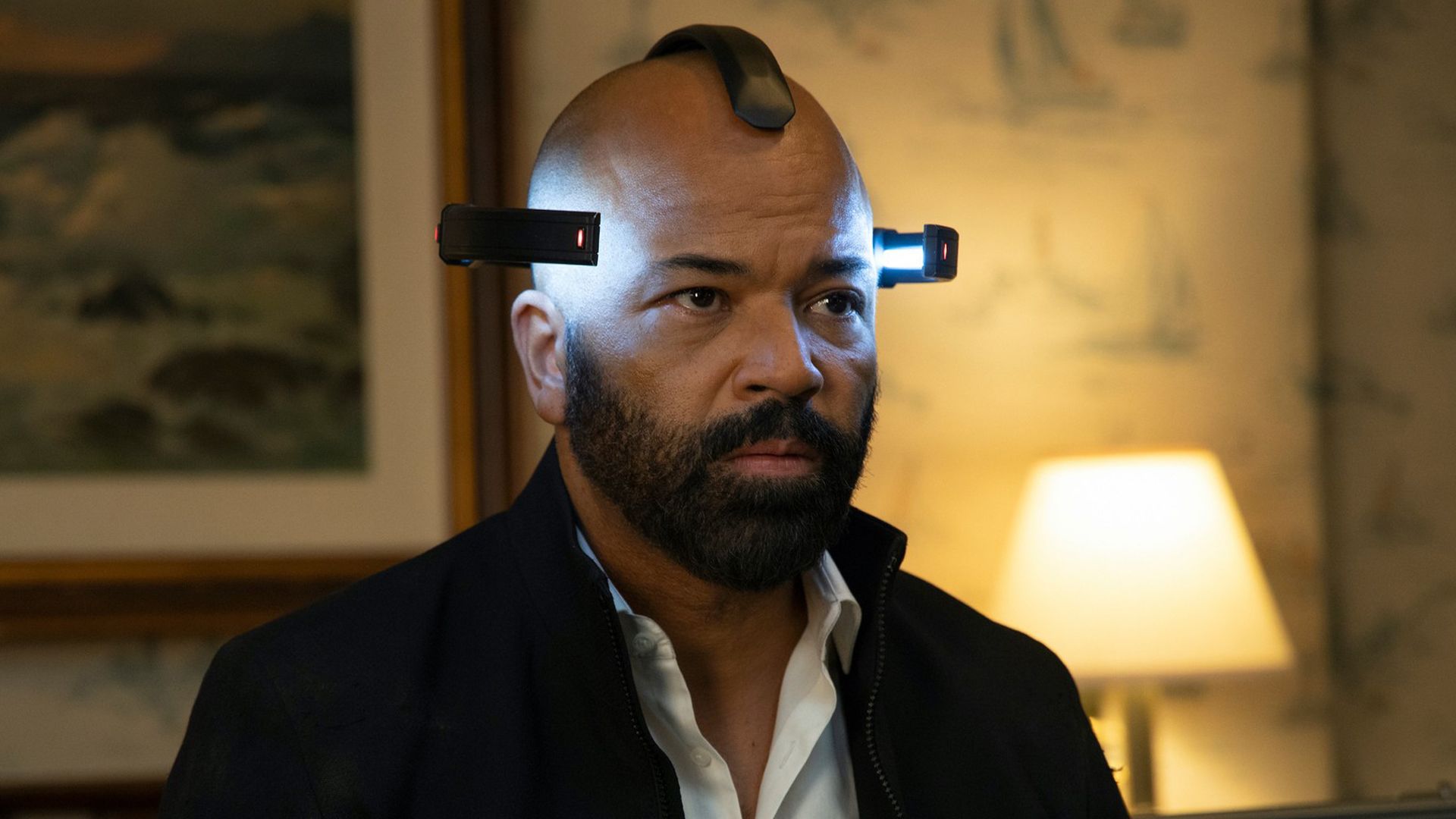
Official trailer and cinematic immersion
For audiences wanting to evaluate the visual craftsmanship, tactical combat choreography, and atmospheric scale of the series, the official trailer released by Amazon Studios highlights its extraordinary scope:
The bridge to Neuromancer and the cyberpunk renaissance
The cultural standing of The Peripheral has gained renewed importance in light of Apple TV+'s flagship upcoming adaptation of Neuromancer. William Gibson, universally celebrated for coining the word cyberspace and creating the blueprint for digital counterculture in his 1984 debut novel, has notoriously challenged visual storytellers. Prior to The Peripheral, few productions had successfully translated Gibson's dense poetic slang, corporate paranoia, and conceptual abstractions into a compelling narrative format.
As detailed in a recent insightful retrospective by CBR's editorial analysis, the Prime Video series delivered decisive proof that Gibson's cerebral world-building can thrive in long-form cinematic television. The meticulous execution of haptic tactical feedback, acoustic deflection weaponry, and corporate surveillance establishes a benchmark for upcoming projects in pop culture and gaming, themes continuously explored across our sister publication O Santuário Geek.
"William Gibson taught us that the future is already here, it is simply not evenly distributed. In The Peripheral, that technological imbalance fuels the most thrilling narrative engine in modern television." — Jonathan Nolan
The strike, the sudden cancellation, and its lasting cult status
Despite receiving widespread critical acclaim and achieving robust global viewership rankings throughout its eight-week release schedule, The Peripheral fell victim to Hollywood's turbulent labor disputes in 2023. Although Amazon Studios had officially renewed the series for a second season in February 2023, the extended production shutdowns caused by the historic WGA and SAG-AFTRA strikes led studio executives to reassess delivery dates, resulting in a controversial cancellation in August 2023.
While the sudden decision left audiences with an exhilarating cliffhanger regarding Flynne's ultimate strategy against the London power brokers, the existing season stands proudly as a self-contained, eight-episode cyberpunk triumph. Rather than diluting its quality, the compressed format delivers a high-octane narrative arc that avoids streaming filler, presenting a complete, satisfying vision of technological wonder, family loyalty, and geopolitical intrigue.
Complete technical specifications for The Peripheral
Review the comprehensive production details, creative crew, and streaming availability of The Peripheral below:
| Production Specification | Official Details |
|---|---|
| Original Series Title | The Peripheral |
| Streaming Network | Amazon Prime Video |
| Showrunner & Executive Producers | Scott B. Smith, Jonathan Nolan, Lisa Joy (Kilter Films) |
| Source Material | Novel by William Gibson (2014) |
| Lead Directors | Vincenzo Natali, Alrick Riley |
| Starring Cast | Chloë Grace Moretz, Jack Reynor, Gary Carr, T'Nia Miller, JJ Feild |
| Format & Episode Count | Season 1 (8 episodes, approx. 60 minutes each) |
| Maturity Rating | TV-MA (Violence, strong language, and substance use) |
For any viewer seeking intellectually stimulating storytelling that honors audience intelligence while reimagining cyberpunk conventions for a modern generation, The Peripheral stands as an extraordinary journey well worth rediscovering on Prime Video.
Suggested and related articles
Neagley puts Maria Sten in the lead of Prime Video spin-off

The Terminal List Season 2 is now on Prime Video

The Dark Tower: Mike Flanagan Details Prime Video Plan

Edgerunners 2: first episode airs free on Twitch today

Blade Runner 2099 Gets Prime Video Release Date and Teaser; Check Out the Details