Who Is Nathan Fielder, Director of You Can See Everything?
Published on · Updated on
From Nathan for You to The Rehearsal, the Canadian comedian turned awkwardness into a method — and now directs the year's most talked-about film.
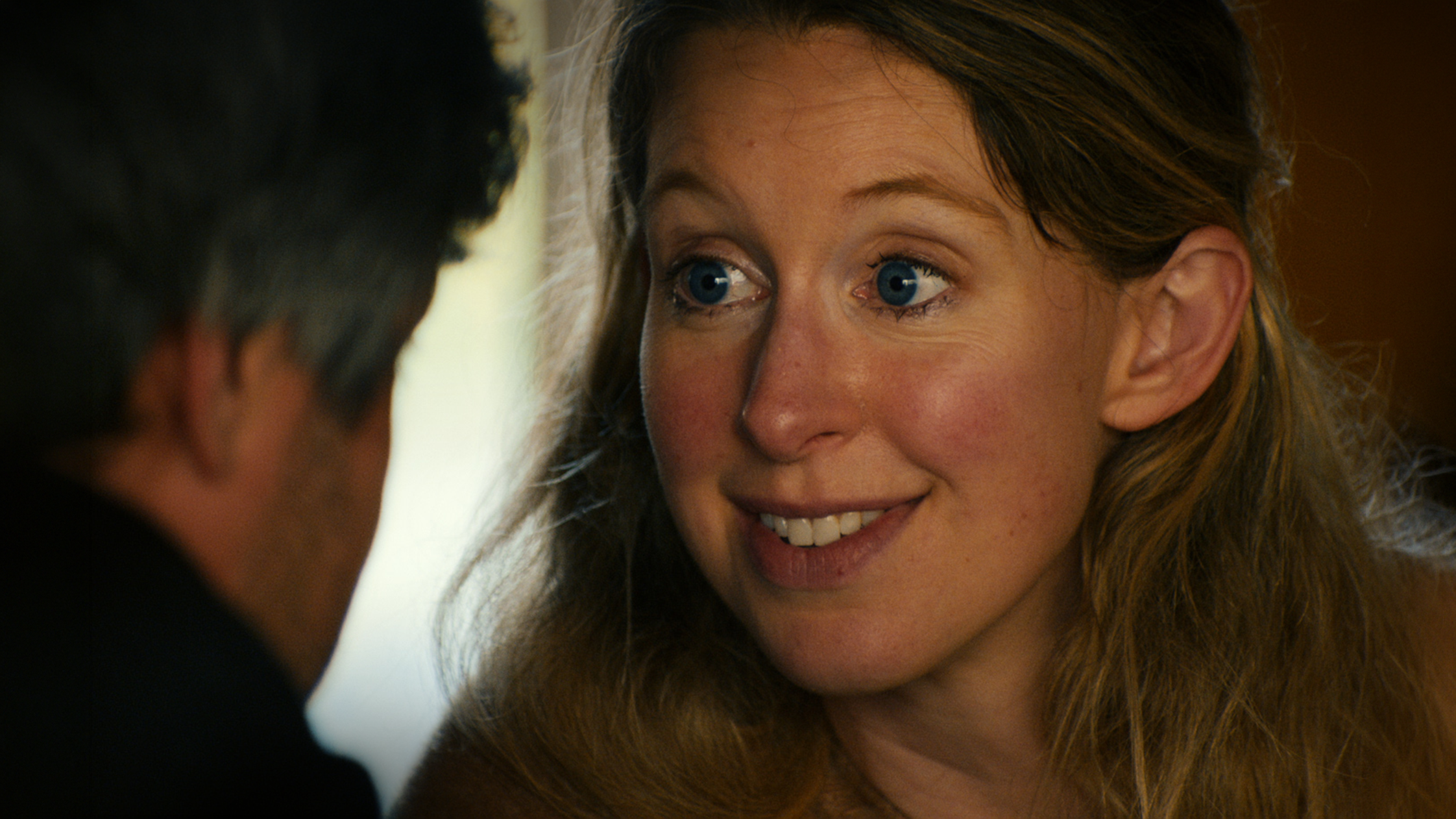
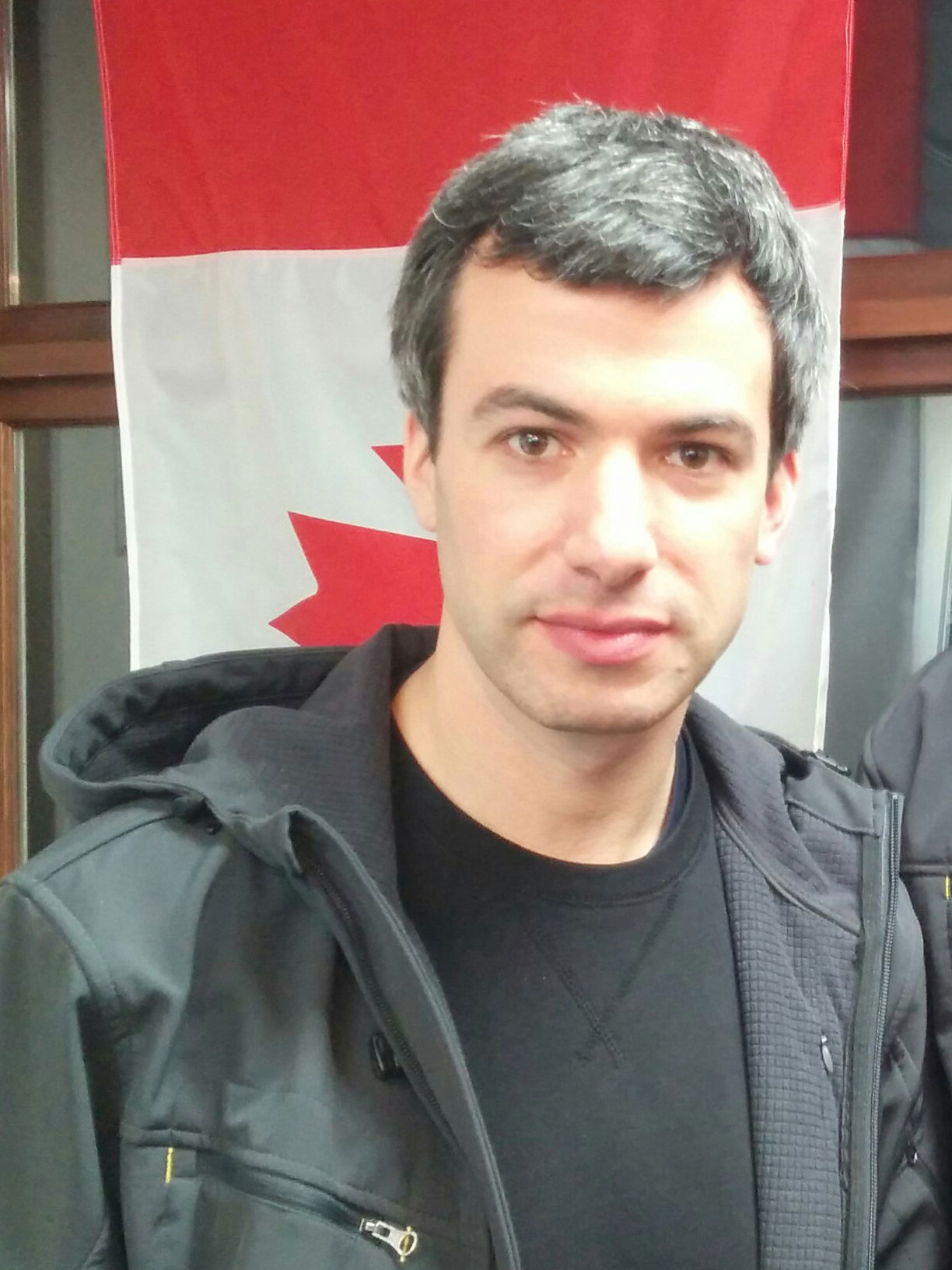
Who is Nathan Fielder? The 43-year-old Canadian comedian and filmmaker, born in Vancouver on May 12, 1983, created Nathan for You and The Rehearsal and directed, with Lance Oppenheim, You Can See Everything, the A24 documentary about Elizabeth Holmes that opens in Brazilian theaters on November 26. He became the most talked-about name in American cinema in 2026 by the same route he has taken since the start of his career: asking uncomfortable questions, holding long silences and letting the camera roll until a situation reveals something nobody arranged. The film's viral success turned a niche comedian into a household topic — and explains why so many people have been searching for who he is.
Fielder is no newcomer who appeared out of nowhere. Before filming the founder of Theranos, he spent nearly two decades building a very specific kind of comedy in which the act of filming is part of the experiment. Understanding that trajectory is understanding why You Can See Everything provokes the reaction it does — and why the film could not have been directed by anyone else.
From Vancouver to Comedy Central: a school of awkwardness
Nathan Joseph Fielder was born in Vancouver, British Columbia, into a Jewish family. His parents, Deb and Eric, are social workers, and he has a younger sister, Becca. He attended Vancouver Talmud Torah and Point Grey Secondary School, where he joined the school's improv group alongside another student who would also go into comedy: Seth Rogen. As a teenager he was obsessed with magic and worked at a mall magic shop.
His university years pointed nowhere near the arts. Fielder began a science degree at the University of British Columbia with the stated goal of making a lot of money as a dentist, dropped it and transferred to the University of Victoria, where he studied entrepreneurship and marketing and graduated with a Bachelor of Commerce in 2005. He briefly worked at a brokerage firm and left saying the environment was depressing and obsessed with money. He moved to Toronto with a self-imposed one-year deadline to make it as a comedian.
The plan worked with a speed he still tends to treat ironically. He joined the Laugh Sabbath collective, enrolled in Humber College's comedy program in 2006 and made hundreds of short films that he presented at the group's weekly shows. The videos caught the attention of Michael Donovan, an executive producer on the CBC comedy series This Hour Has 22 Minutes, who hired him as a field correspondent. That is where Nathan on Your Side was born, airing from 2008 to 2009, with a straight-faced reporter asking absurd questions to real people in complete deadpan.
The segment is the direct ancestor of everything that followed: the posture of someone performing a public service, the monotone voice, the social ineptitude staged as a method. After the CBC, Fielder wrote for and appeared on Comedy Central shows such as the second season of Important Things with Demetri Martin in 2011 and the series Jon Benjamin Has a Van.
Nathan for You and the unlikely business consultant
In 2013, Comedy Central gave Fielder his own show. Nathan for You started from a simple, devastating premise: he played an exaggerated version of himself, a business consultant who "graduated from one of Canada's top business schools with really good grades" — a vague and technically true line, since he does hold a business degree. In each episode he offered small business owners ideas that sounded plausible and ended in impossible situations.
Some of his interventions broke out of television and became news. In February 2014, Fielder opened Dumb Starbucks, a coffee shop parodying the chain without authorization, in Los Angeles's Los Feliz neighborhood. The store gave away drinks, drew a public health investigation and was shut down days later for lacking permits. The following year he created Summit Ice, a jacket brand that called out Holocaust denial and sent all profits to the Vancouver Holocaust Education Centre. The company sold close to $500,000 in its first three months.
The show ran four seasons and ended in 2017 with Finding Frances, a feature-length finale in which Fielder helps a former Bill Gates impersonator reconnect with an old love. It is the first clear sign of what he would do next: using the structure of comedy to reach an emotional territory the format never promised.
The Rehearsal, The Curse and the self-referential turn
After Nathan for You, Fielder widened his range. He was a consulting producer, writer and co-director on Sacha Baron Cohen's Who Is America? (2018) and an executive producer on the HBO documentary series How To with John Wilson (2020–2023). In 2022 he launched The Rehearsal, in which he helps ordinary people rehearse difficult conversations and situations by building replicas of environments and hiring actors. The show won the Independent Spirit Award for best new non-scripted or documentary series and turned the question of the production's ethical limits into part of the spectacle itself.
In 2023, he created The Curse with Benny Safdie, his first scripted series, starring Fielder, Safdie and Emma Stone. The story follows a couple of TV presenters and real estate speculators in a small New Mexico town and pushes the discomfort that has always been his trademark to its limit. That same year, Stone included him on Time magazine's list of the 100 most influential people, describing his ability to move between directing, writing, acting and producing while editing The Rehearsal as "a staggering feat."
| Year | Work | Role | Network |
| 2008–2009 | This Hour Has 22 Minutes (Nathan on Your Side) | Correspondent and writer | CBC |
| 2013–2017 | Nathan for You | Co-creator, director and star | Comedy Central |
| 2018 | Who Is America? | Consulting producer, writer and co-director | Showtime |
| 2020–2023 | How To with John Wilson | Executive producer | HBO |
| 2022– | The Rehearsal | Creator, director and star | HBO |
| 2023–2024 | The Curse | Co-creator, writer and actor | Showtime / Paramount+ |
| 2026 | You Can See Everything | Co-director and interviewer | A24 |
Why Elizabeth Holmes chose him
The origin of You Can See Everything is an anecdote that sounds scripted. In 2023, Fielder and Oppenheim went together to the Magic Castle, a magic club in Los Angeles. In a small room, the magician asked the audience for the name of a celebrity, and someone shouted "Elizabeth Holmes." Oppenheim had just heard that the Theranos founder was looking for a crew to document her life and had approached A24. Fielder was skeptical: to him, the story had already been told in too many books, podcasts, series and documentaries.
He called the studio the next day anyway. A24 confirmed that the conversation with Holmes had happened and fallen apart. Fielder agreed to meet her — and described the encounter as a strange mental experience: at times she seemed genuine; at others he had to remind himself that he was facing a woman convicted of fraud. The line he used at the New York Film Festival panel in October sums up the impasse: "She seems so genuine at times. But then I'm like, no, I know she's a liar."
"We don't know what the story is. But we want to see what happens."
The deal with A24 came with an unusual condition. The directors said they could not promise a film, that they did not know what story this was and that they simply wanted to see what would happen with cameras inside the house. The studio agreed, gave them the freedom to walk away at any time and imposed no deadline. Holmes and her partner, Billy Evans, allowed the crew to live with them in a rented house in Del Mar, California, during the 34 days before she reported to prison in 2023.
The method behind the film's tone
What appears on screen is the direct result of two decades of method. Fielder does not conduct interviews in the traditional sense: he stays in the frame, asks questions nobody would say out loud and lets silence do the work. In You Can See Everything, that presence becomes the film's axis. He lives in the house, takes part in conversations, questions Holmes about Theranos technology and hears a categorical denial. The camera never treats him as a neutral observer, because he never pretends to be one.
The production used three cameras and two small crews, with no more than four people inside the house at any time, shooting up to 16 hours a day. One wide lens covered the entire space and two others could zoom into a face at the exact moment of a reaction. The idea was that Holmes and Evans would not know what interested the crew — because the crew itself did not always know. Fielder and Oppenheim frequently disagreed about what they had just seen, and that disagreement became the film's engine.
"Lance and I would talk about what we thought had happened there, and we'd completely disagree on what it meant. We were like, 'Oh, this is really interesting — if we can't agree on what's happening, there's something here.'"
The method also attracts the criticism. Since Nathan for You, Fielder has faced questions about the consent of the people in his situations and about what they understand is happening. On The Rehearsal, the ethics debate became an explicit theme. In the Holmes film, the question takes on another gravity: a woman convicted of lying to investors agreed to be filmed by a comedian famous for staging fake scams, and the result is a work that refuses to say what is true and what is performance.
Box office, reviews and the Brazil release
The film turned Fielder into a mass phenomenon. Made for roughly $7 million, You Can See Everything had grossed $86.5 million worldwide by November 13, according to Box Office Mojo and The Numbers. Its opening weekend in the United States and Canada brought in $15.6 million, the second-best debut ever for a non-musical documentary, behind only Fahrenheit 9/11. In its third week it reached the top of the American box office.
Critical reception matched the popular success. On Rotten Tomatoes, the film holds a 96% approval rating from 226 reviews with an average of 9.3/10. On Metacritic, it scores 97 out of 100 from 42 reviews. On November 8 it dominated the Critics' Choice Documentary Awards, winning best documentary, directing, cinematography, editing and score. Saturday Night Live parodied the film on November 6, and interest in the director grew alongside it: outlets such as the Los Angeles Times, CNN, WIRED and GQ published guides explaining who the man behind the camera is.
In Brazil, Tudo Pode Ser Visto closed the 50th São Paulo International Film Festival on October 29 and opens on November 26, distributed by Sony Pictures, with advance tickets on sale since November 12. For readers who want the full picture of the film's hybrid format, Revista Pixel has already published an analysis of what is real and what is staged in You Can See Everything.
Interest in Fielder, however, is not explained by the film's success alone. He occupies a rare place in American entertainment: a comedian who directs, writes, acts and produces, but whose signature is hesitation. His characters are never in control. The comedy — and now the discomfort — comes from watching him try to understand situations he created himself. It is a formula that worked in a business-consultant show, in a reality series about rehearsing life and now in a documentary about one of the most discredited women in the United States.
Anyone who arrived through the viral moment and wants to keep going has an obvious path: the four seasons of Nathan for You, the two of The Rehearsal and the single season of The Curse. Watch them in reverse order or in any order at all. The effect is always the same: the feeling that someone is asking a simple question and the answer will take longer than it should. For more film coverage from Revista Pixel, see the movies page and the series section.
Main sources: the official A24 page for You Can See Everything; the directors' interview with Deadline at the New York Film Festival; the Los Angeles Times guide to Fielder's career; CNN's profile; Variety's report; The Ringer's guide to his essential works.
Suggested and related articles
Hugh Jackman The Death of Robin Hood Hits No. 1 on HBO Max
Netflix Buys Joel Coen's 'Jack of Spades' for Fall 2027

50th SP Film Fest awards Colombian drama on armed conflict

Harry Potter: Why Gryffindor is the only chosen house
Hokum: 2026 Psychological Horror Dominates Streaming