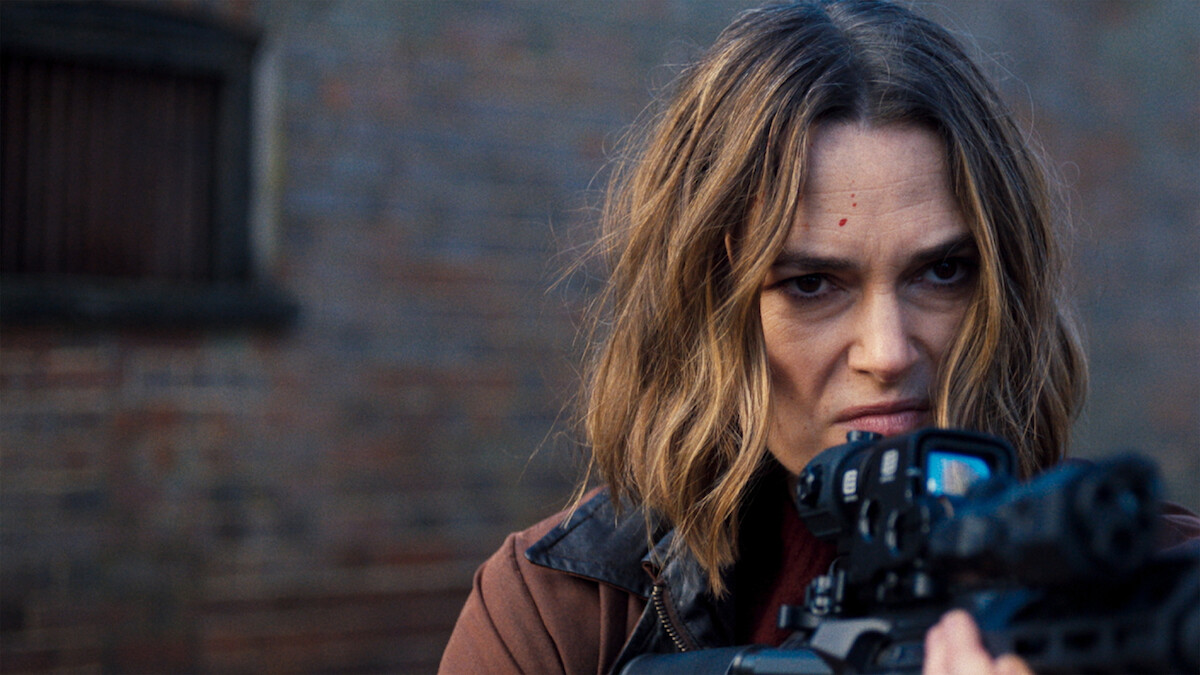
Is The Law of Beasts Based on a True Story? The Real Case
Published on · Updated on
The new Polish Netflix series draws on Mariusz Trynkiewicz's 1988 child murders and on the controversial law that kept him locked up after his sentence ended.
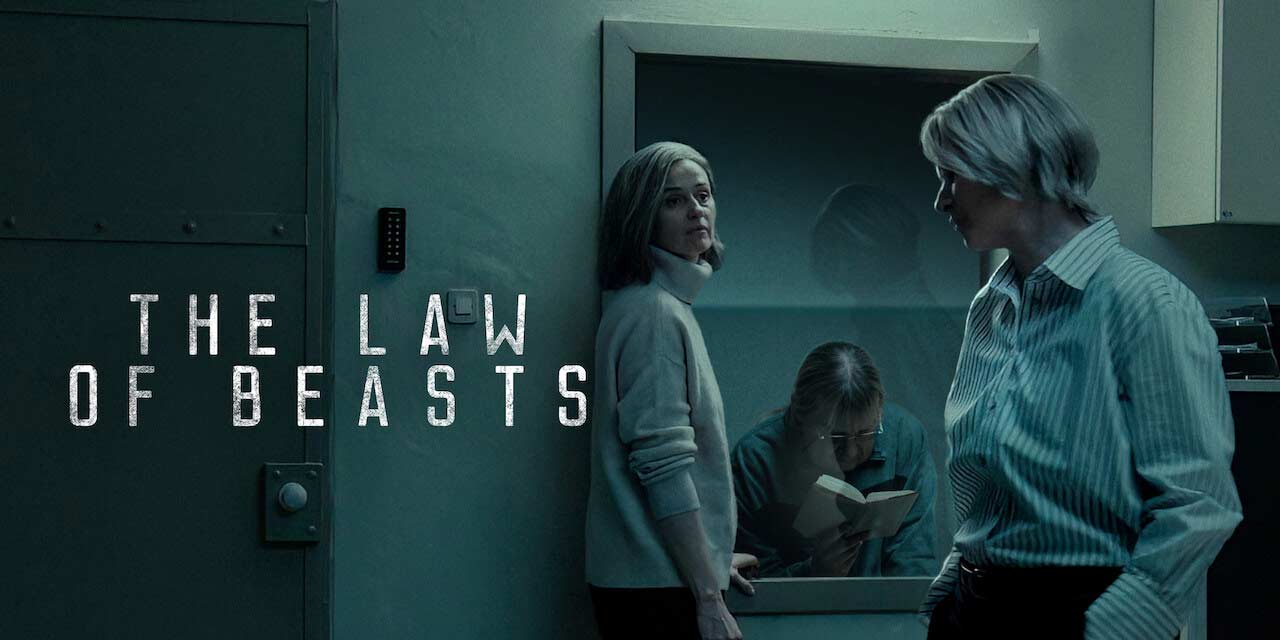
Netflix released “The Law of Beasts” (“Prawo bestii”) on November 18, 2026, a four-episode Polish drama built on one of the most disturbing criminal cases in the country's recent history: the 1988 murders of four boys in Piotrków Trybunalski by Mariusz Trynkiewicz, then a physical education teacher. The series is inspired by real events, but it is not a reconstruction of the crime. Its two leads, investigator Anna Bersz and psychiatrist Agnieszka Grabska, are fictional characters created by director Kasper Bajon and co-writer Anna Kasińska to stage the dilemma that divided Poland in 2014, when the convicted killer finished serving his sentence. That debate produced the so-called “Beasts Act”, which allows the state to keep people detained after their prison term if they are still deemed dangerous.
The crime Poland could not forget
In July 1988, four boys aged 11 to 13 disappeared in Piotrków Trybunalski, a mid-sized city in central Poland. Their bodies were found days later in a nearby forest, partially burned, by a man picking mushrooms. The investigation led to Trynkiewicz, a physical education teacher who had already served time for sexual offences against minors.
According to the account accepted by the Polish courts, he lured the children into his flat, strangled them and later carried the bodies into the woods, where he tried to destroy them with fire. Psychiatrists who testified at the trial found him criminally responsible — able to understand that what he was doing was wrong and to answer for it. On September 29, 1989, he was sentenced to four death penalties.
Those sentences were never carried out. That same year, an amnesty commuted the death penalty to 25 years in prison. It is this legal detail, rather than the brutality of the crime, that drives “The Law of Beasts”: a multiple murderer, sentenced to death four times over, was due back on the streets in 2014 with his sentence fully served and no mechanism in Polish law to keep him behind bars.
Why he walked out in February 2014
The countdown to his release turned the case into a national story. For months, Trynkiewicz's name filled front pages, parliamentary debates and talk shows, and the question was always the same: could the state hand back to society a man it had itself judged extremely dangerous? The legislation of the time offered no form of detention beyond the sentence set by the court, however high the risk of reoffending.
On February 11, 2014, he left prison. The reaction was immediate: politicians demanded action, mental health authorities were called in, and the country watched in real time the limits of a system that could only punish for a fixed period. An answer was already on its way. Parliament had passed a law on November 22, 2013, designed to fill exactly that gap. It took effect on January 22, 2014, three weeks before the release, and became known by the nickname the press gave it: “ustawa o bestiach”, the Beasts Act.
What the Beasts Act actually allows
The official title is a mouthful: the Act of 22 November 2013 on proceedings concerning persons with mental disorders posing a threat to the life, health or sexual freedom of others. It created two measures that apply after a prison sentence has been served, both of indefinite duration: preventive supervision, carried out by the police, and detention at the National Centre for the Prevention of Dissocial Behaviour (KOZZD) in Gostynin, a town west of Warsaw.
To be covered by the law, a person must meet three conditions at once:
- be serving a prison sentence, or a 25-year sentence in a therapeutic regime;
- have shown, during that sentence, a mental disorder in the form of intellectual disability, personality disorder or disorder of sexual preference;
- pose a high or very high probability of committing another violent crime punishable by at least 10 years in prison.
The procedure runs through civil, not criminal, courts. The prison director files the request before the sentence ends, and the court hears two expert psychiatrists and, depending on the case, a psychologist or a sexologist. The person is entitled to a lawyer, either retained or appointed. A judge may order preventive supervision where the risk is high and detention where it is very high. The measure is reviewed at least every six months, and release requires a court decision.
For Trynkiewicz, the law's first test was also its most public one: on March 3, 2014, less than a month after he left prison, a court ordered him detained at the Gostynin centre. The statute nicknamed after “beasts” had its inaugural case — and the country had a laboratory for asking how far a state may go to protect itself from someone who has, on paper, already paid for what he did.
What the series invents — and what it keeps
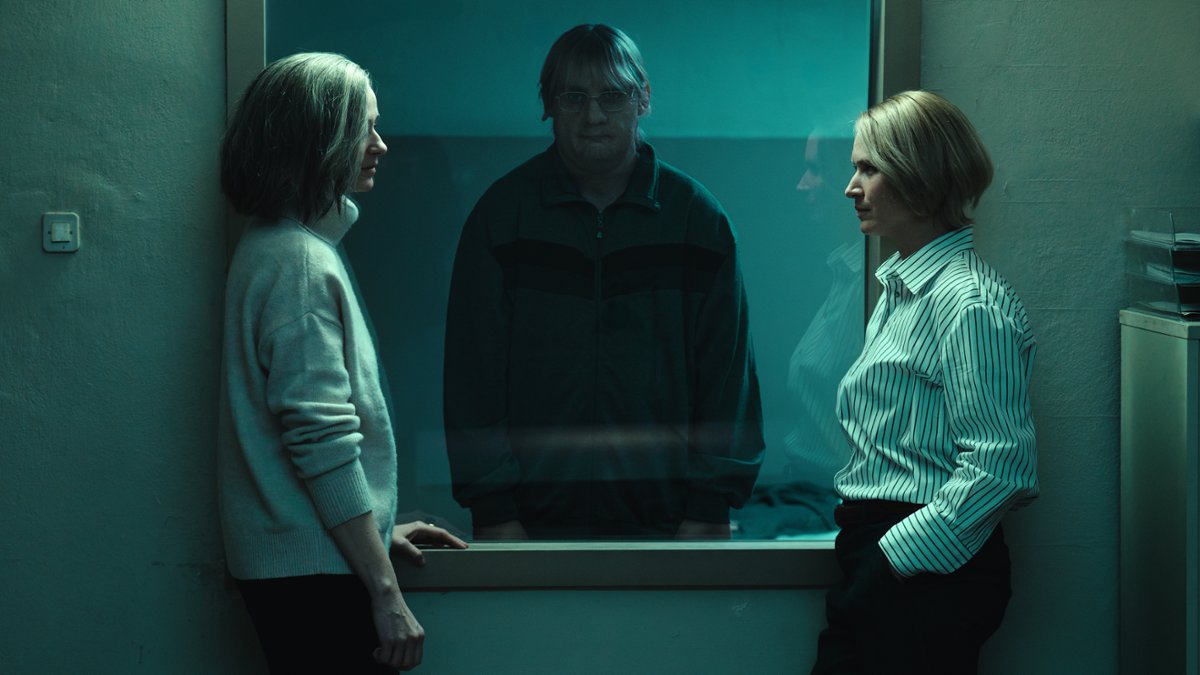
“The Law of Beasts” does not restage the murders. It moves between two timelines: in 1988, Anna Bersz leads the investigation while her friend Agnieszka Grabska assesses the suspect's sanity; in 2014, with the convicted man about to be released, the two women — now a senior prison official and a respected psychiatrist — must revisit the choices they made as young professionals, the ones that ended their friendship.
Neither Anna nor Agnieszka ever existed. Netflix describes the show as “a drama about the limits of friendship and justice”, and the director insists the point is not the crime but the people who, on behalf of the state, have to decide what to do about it.
“This story, although inspired by true events, is for me primarily a story about people who, representing the state and its institutions, face very difficult choices. About what happens when the law, the sense of justice and the need for security cannot be reconciled.”
Bajon was equally clear about his protagonists: they are not based on specific individuals but are composites of traits drawn from the many people the team met during research. “They represent two ways of looking at the world,” he said. Anna believes evil exists objectively and demands a decisive response; Agnieszka does not deny individual responsibility but sees the complex factors behind it.
The killer's name, however, stays. Michał Pawlik plays Mariusz Trynkiewicz, and the episodes use real dates, court decisions and public debate as their skeleton. That choice blends document and invention — and explains much of the negative reaction the series drew in Poland from viewers expecting a police reconstruction and finding a drama about institutions instead. Critic Karina Adelgaard, of Heaven of Horror, summed up the arrangement neatly: the two women are entirely fictional, but they tell the story of what happened.
A law born under fire
The Beasts Act was never consensual. As early as 2013, the Helsinki Foundation for Human Rights asked Poland's Commissioner for Human Rights to consider referring it to the Constitutional Tribunal, citing two core problems: a breach of the principle that laws do not apply retroactively, and a disproportionate restriction of personal liberty without a new conviction. Psychiatric and psychological associations objected to the way the Gostynin centre was presented — as a health facility rather than a security institution — and then-president Bronisław Komorowski announced he would send the statute to the Constitutional Tribunal.
There is also a question of legal vocabulary. The law defines “mental disorders” narrowly — intellectual disability, personality disorder and disorder of sexual preference — and does not cover people with “mental illness” in the clinical and legal sense, which, lawyers argue, leaves out part of the population that needs treatment. The nickname stuck, but it is still criticised for dehumanising the people it targets: researchers note that “beast” is not a legal category but a rhetorical device of penal populism.
Supporters counter that the state has a duty to protect society when every other tool has failed. The argument remains open — and it is precisely what the series dramatises, without offering an easy answer to either side.
What happened to Trynkiewicz afterwards
Trynkiewicz remained at Gostynin and was convicted again in the following years. In 2015 he received five years and six months for possession of child pornography; in 2021 he was sentenced to a further six years for the same type of offence. He died on January 9, 2025, aged 62, in the prison hospital in Gdańsk, never having returned to life outside custody for any significant period.
| Date | What happened |
|---|---|
| July 1988 | Four boys aged 11 to 13 are murdered in Piotrków Trybunalski |
| September 29, 1989 | Trynkiewicz is sentenced to death four times; the penalty is commuted to 25 years |
| November 22, 2013 | Parliament passes the statute that becomes known as the Beasts Act |
| January 22, 2014 | The law takes effect, three weeks before his scheduled release |
| February 11, 2014 | Trynkiewicz leaves prison after completing his sentence |
| March 3, 2014 | A court orders him detained at the Gostynin centre |
| January 9, 2025 | He dies aged 62 in the prison hospital in Gdańsk |
Why the series lands now
“The Law of Beasts” is Netflix's bet on repeating the reach of other Polish productions that have entered the global catalogue in recent years, such as “Anaesthesia”, the country's first medical drama on the platform. Kasper Bajon directs and wrote the script with Anna Kasińska; the production is by Entrego, with Edyta Krajewska producing. There are four episodes of roughly 45 minutes each, all released at once.
For international viewers, the show works less as a lesson in criminal history and more as an invitation to a debate that is not exclusively Polish: what do you do when the sentence ends and the risk does not? Anyone looking for traditional true crime will find a different kind of tension — two women discovering that they were right and wrong at the same time, and that the price of state decisions is paid by people of flesh and blood.
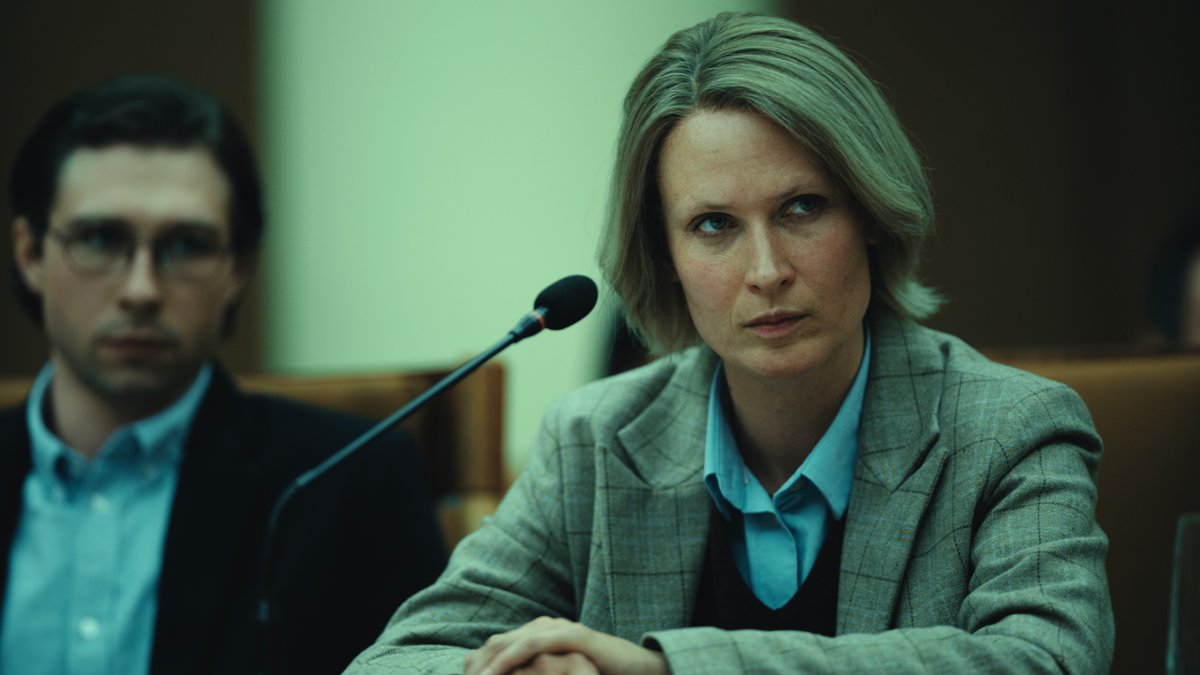
The series has been on Netflix since November 18, with original Polish audio and English dubbing and subtitles. Readers who want to compare it with other Polish productions can check out the platform's first Polish medical drama, and to see how streaming turns real cases into fiction, revisit what “The Body” made up. More titles are in our series and TV coverage.
[object Object]
Key facts
- Original title: Prawo bestii
- Director: Kasper Bajon
- Writers: Kasper Bajon and Anna Kasińska
- Producer: Edyta Krajewska, for Entrego
- Cast: Agnieszka Grochowska, Agnieszka Żulewska, Michał Pawlik, Kamilla Baar, Andrzej Chyra
- Episodes: 4, about 45 minutes each
- Release: November 18, 2026, on Netflix
Details about the series were confirmed in Netflix's official press release and on the title's page on the platform. Information about the case and the law can be checked in the official text published in Poland's Journal of Laws.
Suggested and related articles
Netflix in December: Cliff Booth and Emily's Goodbye

Why Netflix stock is at its lowest in two years
Minimum Wage on Netflix: Release Date and How to Watch
Planeswalker: When Does the Magic Series Hit Netflix?

HBO Max Reaches 3.1M UK Homes in Barb Debut